
Conservation Fund announces protections of forestlands
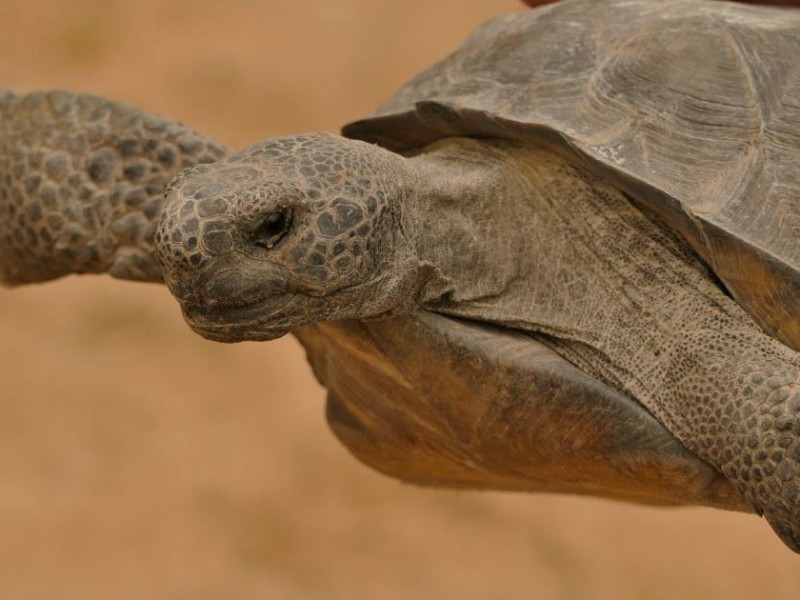
The U.S. Endowment for Forestry and Communities and partners will offer conservation easements and habitat restoration and maintenance activities on private forest land to protect gopher tortoise populations living in longleaf pine ecosystems in Georgia.
Special Photo: Bruce GranerFrom staff reports
ATLANTA — The Conservation Fund, USDA’s Natural Resources Conservation Service and the Georgia Department of Natural Resources have announced the permanent protection of more than 7,700 forestland acres in Georgia’s Coastal Plains region. Comprising two properties, the land has been protected with conservation easements and is now part of two new state wildlife management areas providing numerous benefits, including increased public recreational opportunities, protected habitat for the gopher tortoise, longleaf pine restoration and support for local timber-based economies.
The two properties include:
♦ 4,361 acres in Webster County, protected with an NRCS conservation easement and managed as the new Lanahassee Creek WMA;
♦ 3,375 acres in Bulloch and Bryan counties, now protected with an NRCS conservation easement and added to the new Canoochee Sandhills WMA.
The Conservation Fund, in coordination with its partners, purchased these lands as an initial step in a larger longleaf pine and gopher tortoise conservation strategy. Together, the Fund and partners are ensuring the protection of these large forestlands by helping NRCS acquire conservation easements on each property that permanently limits development, including further protection from DNR, and require longleaf pine restoration.
Lanahassee Creek WMA is open for the 2019-2020 hunting season. Work is being done to make Canoochee Sandhills WMA available, although an opening has not been scheduled, according to DNR. For details, see www.georgiawildlife.com and the 2019-2020 Hunting Seasons and Regulations guide.
Gopher tortoise habitat in the southeastern U.S. is highly threatened by development, conversion to non-forest uses and a lack of prescribed burning. These conditions put the gopher tortoise at risk of becoming a federally endangered species. Seen as a keystone species, the tortoise digs burrows that provide shelter for more than 350 other wildlife species.
“Considering that the gopher tortoise is a priority species in our State Wildlife Action Plan, one of DNR’s key conservation goals is to keep gopher tortoises as an integral part of south Georgia now and for future generations,” DNR Commissioner Mark Williams said. “These properties, with the habitat they offer for tortoises and hundreds of other native animals and plants, plus the outdoor recreation opportunities they provide the public, is a tremendous step toward that goal.”
NRCS provided a major source of funding for the conservation and restoration efforts via a Regional Conservation Partnership Program award to the U.S. Endowment for Forestry and Communities. The award allowed NRCS to acquire Healthy Forest Reserve Program conservation easements on these properties. The RCPP is a voluntary program that supports collaborative projects by leveraging partner resources to improve wildlife habitat, soil and water quality, and other natural resource values. The HFRP helps landowners restore, enhance and protect forestland resources on private lands through conservation easements and financial assistance.
“Partnership efforts like this are tremendous,” Terrance O. Rudolph, state conservationist for USDA-NRCS for Georgia, said in a news release. “Being able to work together to help protect, restore and manage these forested landscapes for rare species is a win-win for conservation and for our citizens in Georgia.”
The Conservation Fund’s purchases of the properties advance the goals of its Working Forest Fund, an innovative program that permanently protects ecologically and economically significant forestland and plays a vital role in safeguarding important wildlife habitat. During its temporary ownership, The Conservation Fund sustainably managed the lands, providing time for its partners to secure funding to keep these forests protected and working, supporting the local timber-based economies.
“Working forests play a critical role in the economic and ecological state of the Southeast,” Andrew Schock, Georgia state director at The Conservation Fund, said. “With proper management, longleaf pine forests can support economic vitality for an entire region and serve as an ecological buffer for several threatened species like the gopher tortoise. Thank you to the Georgia DNR, NRCS, the Endowment, U.S. Senators Johnny Isakson and David Perdue, U.S. Representatives Sanford Bishop Jr., Rick Allen, Buddy Carter and all of the supporters who enabled these impactful projects to become a reality.”
Longleaf pine forests once stretched across 90 million acres in the Southeast, but due to development and changes in timber management, only 4.7% of the original forests remain. Nearly 900 plant species are found in longleaf forests, as well as 26 species federally listed as endangered or threatened. Longleaf forests are also beneficial in cleaning the water and air, and acting as an economic driver for the community. Protecting longleaf pine and habitat for the gopher tortoise are critical steps in combating habitat loss across the Southeast and is part of a larger effort to restore important longleaf pine ecosystems across the region.
Related Articles

My Grandpa Was Killed in World War II. I Met Him Through His Letters Home
Gina Wolf’s grandfather died before she was born. His letters sent to her grandmother from Europe during World War II made it possible to know what kind of man he was.

‘Sounds Like a Mutiny.’ Secret Recording Exposes Claims of Toxic Leadership After a Marine’s Suicide
This week’s War Horse story follows the systemic failures before and after the death of Cpl. Drew Mobley who was the third in two years at Marine Corps Base Quantico to die by suicide.
Southwest Georgia artists recognized at packed opening of exhibition
The annual juried exhibition, one of the region’s largest showcases of visual art, features approximately 46 artists and nearly 90 works spanning painting, sculpture, ceramics, photography and mixed media.
