
Cooperatives empower black farmers amid historic discrimination, land loss struggles
Staff Photo: Lucille Lannigan
By Lucille Lannigan
[email protected]
This story is part of Agents of change: Community efforts to overcome racial inequities, an editorial series created in collaboration with Report for America, with support from the W.K. Kellogg Foundation, that highlights the efforts of local communities to address racial inequalities through grassroots approaches.
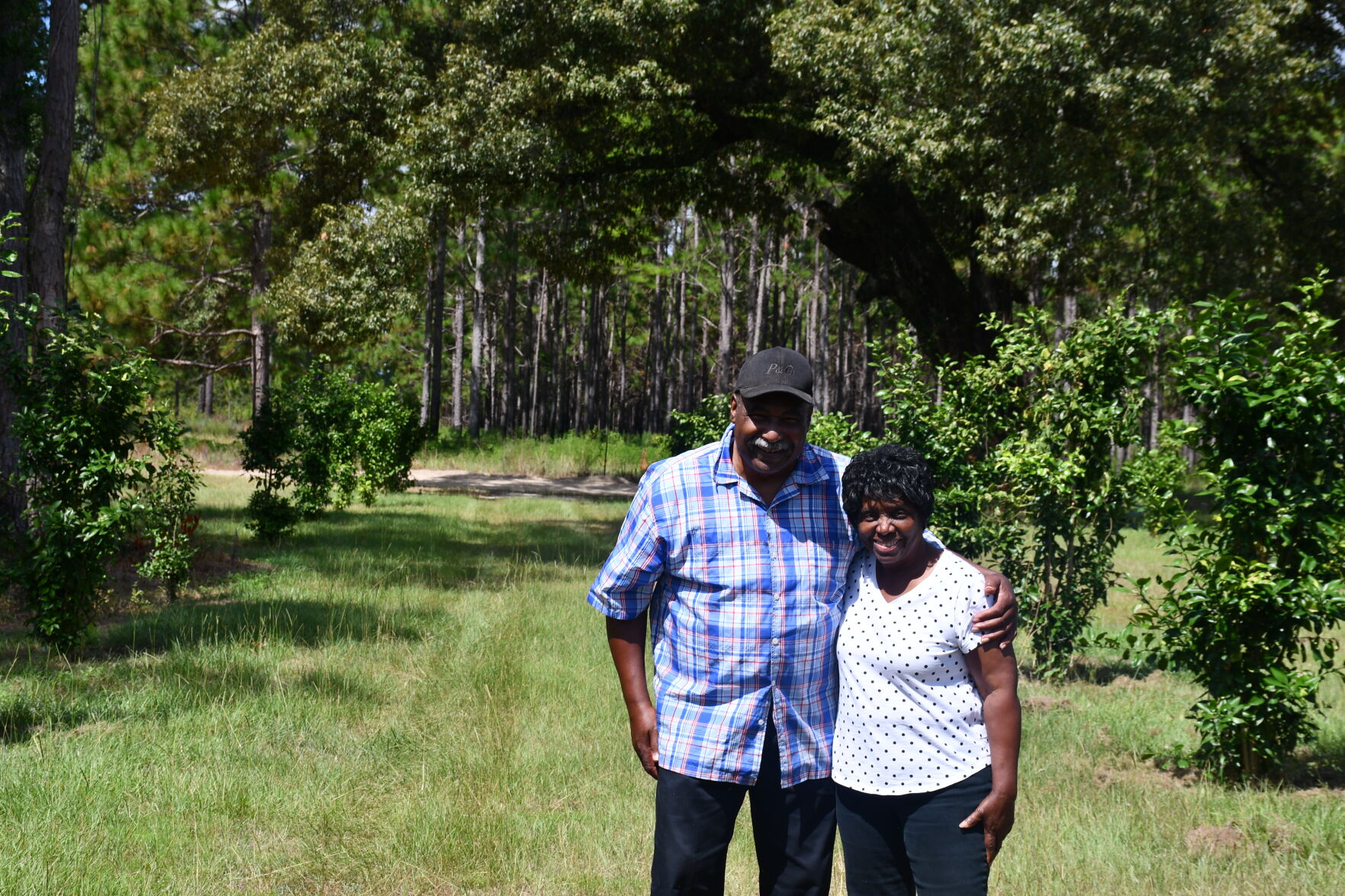
NEWTON – On the five-minute drive down a dusty dirt road toward his farm in Baker County, James Williams can point out parts of his family history like marks on a timeline.
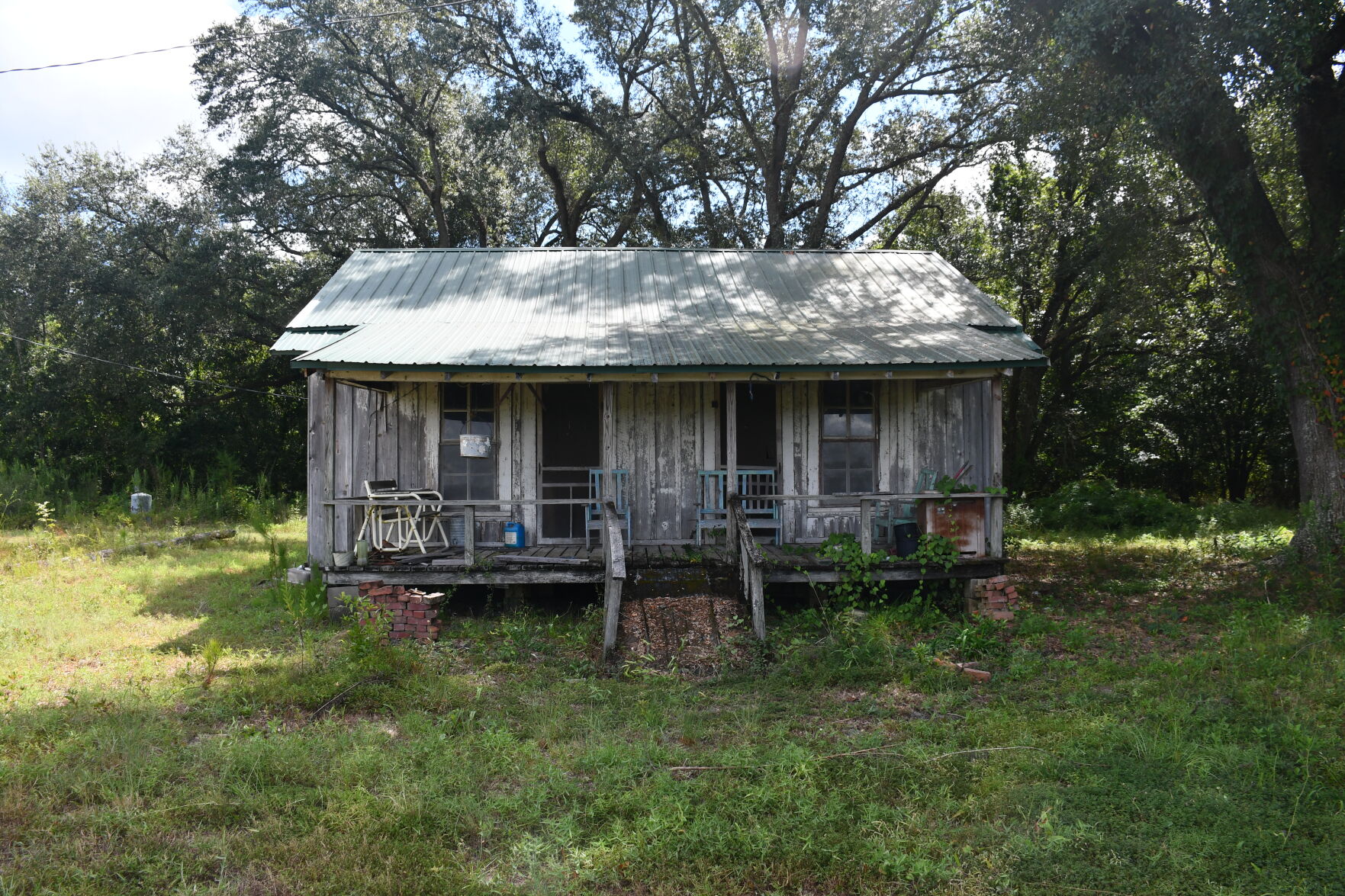
At the entrance, the cemetery where his ancestors are buried. Take a left turn on Julius Williams Road, and there’s the grapefruit tree his mother planted from the seeds of a teacher’s gift. In the fall, its branches sag with large, sweet fruit. Further along is a tall magnolia tree, a shotgun home next to it, the one Williams was born in. Tucked farthest back is the rickety old sharecropper’s home his grandmother lived in until she died.
More than 100 years ago, Williams’ grandfather farmed the land and built his home there. Three generations of black farmers later, Williams and his wife, Bessie Williams, have spent nearly 35 years fighting to hold onto it. They worked multiple jobs, maxed out credit cards and drove cars until they couldn’t run anymore in order to pay for property made more expensive by the discrimination James Williams’ grandfather faced.
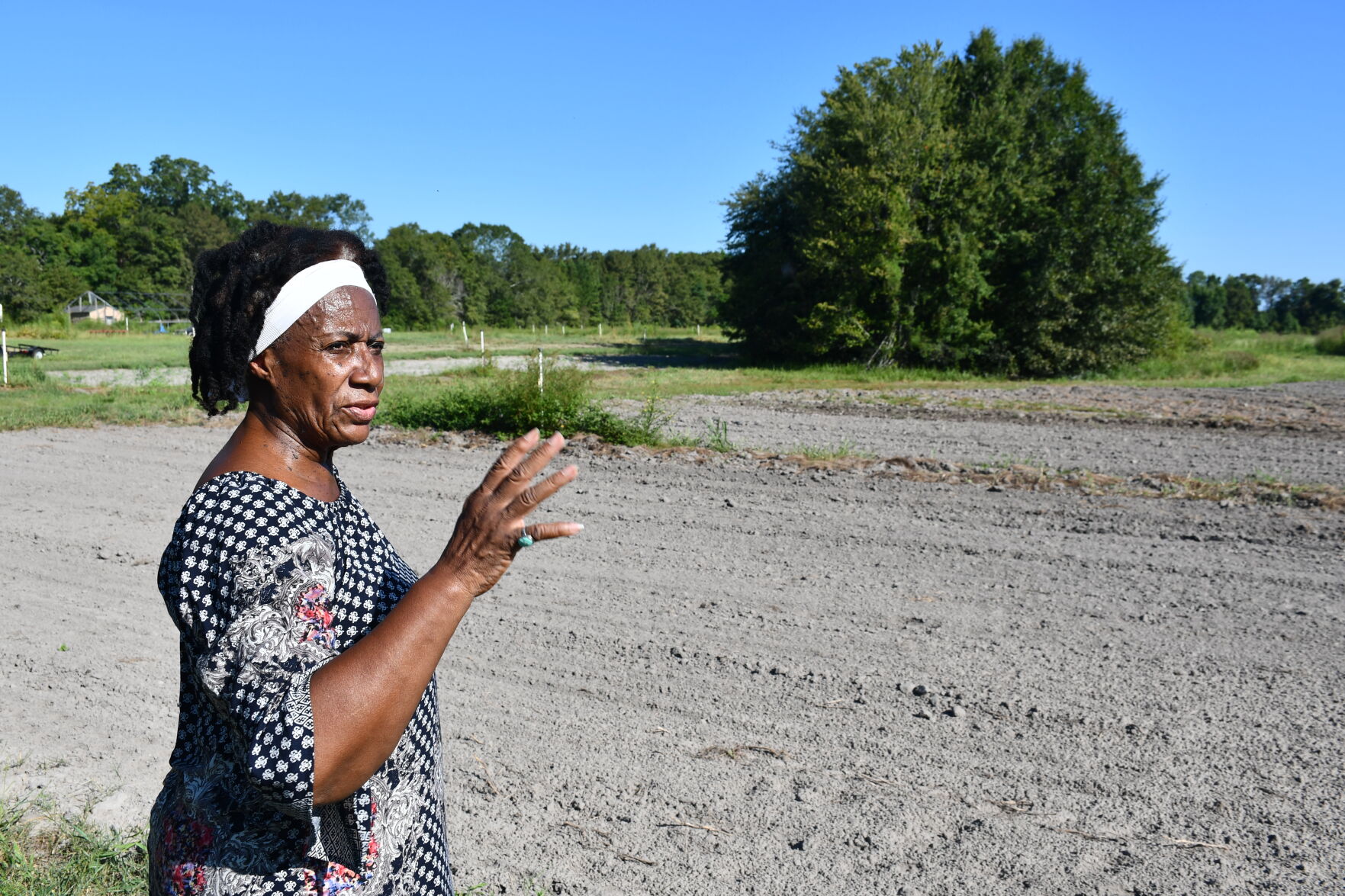
“No one expected us to save the property all these years,” Bessie Williams said. “But when I look across the field, I know it was all worth it.”
The fight to retain black-owned land is ongoing in the U.S. as farmers grapple with a system that barred them from government lending programs. In southwest Georgia, black-owned farmland is clustered in pockets of small towns.
The USDA has a lengthy history of approving smaller loans for black farmers compared to white farmers, simply denying loans to black farmers or pointing them in the direction of assistance with high interest rates. This systemic discrimination resulted in those farmers struggling to keep their operations afloat, ultimately contributing to a decrease in black-owned land from 16 million acres to 4.7 million over the last century.
On July 31, 43,000 individuals received checks ranging from $5,000 to $500,000 through the Inflation Reduction Act’s Discrimination Financial Assistance Program (DFAP). Those who were eligible to apply had to provide documentation and a narrative illustrating the discrimination they faced prior to January 2021.
Georgia had the third-highest number of recipients after Mississippi and Alabama, with 2,170 individuals receiving payouts. James Williams was one of those recipients.
“It gave us something we would’ve had if we’d been treated fairly,” Bessie Williams said.
USDA Secretary Tom Vilsack told reporters the DFAP aid “is not compensation for anyone’s loss or the pain endured, but it is an acknowledgment by the department.”
A safe haven for black farmers
During the 1960s, the Albany Civil Rights Movement was formed as a method of survival. The movement counted more than a thousand arrested demonstrators across the southwest part of the state. As black residents mobilized to vote or enroll their kids in white schools, white community members forcibly removed black demonstrators from the land they lived and worked on. They burned farms and destroyed homes. Police committed violent attacks.
As a result, a group of southwest Georgians came together and acquired some 6,000 acres of land in Lee County. Together, they formed New Communities, a vision executed by Shirley Sherrod and her husband, Charles, as a solution to generations of discrimination against black farmers in the region. At the time, it was the largest single land holding for black people in the country. Widely recognized as the original model for land trusts in the U.S., it served as a safe haven for people involved in the Albany Movement.
James Williams’ grandfather was one of the people who tried to register to vote in the late 1950s and early ’60s. As retribution, a group of people blew up his porch with dynamite in an effort to push him out of the area.
“We wanted to put something together where we would always have the land, so that’s how we came up with … owning the land together … as a community,” Shirley Sherrod said.
When New Communities was formed in 1969, the members wanted to develop a functioning community with education, health care and industry systems. While they were developing the community, agriculture became the endeavor that financially sustained the initiative.
Sherrod said they grew peanuts, corn, soybeans, wheat, muscadine grapes, watermelons and other vegetables. They maintained a herd of cattle and hogs, becoming known for their cured meats, which they cooked in an old-fashioned smokehouse on the side of the road.
A committee made up of three members from the organization’s Board of Directors and all farm workers ran the farming operation. They convened in “public” meetings each Monday.
“Everyone involved in a farm had the opportunity to have a say,” Sherrod said. “We would not have that typical plantation boss and worker system.”
Dealing with discrimination together
At its peak, New Communities Inc., was farming 1,500 active acres, a level of production that Sherrod said was impressive for any farmer at that time, but especially black farmers. However, discrimination from the local Farm Service Agency office they relied on eventually drove them out.
“We could not look to any of them because they worked against us at every turn,” Sherrod said. “They pulled all kinds of stuff to try to keep us from being successful on the land. In spite of all that, we just kept moving.”
The “stuff” started with small pricks of sabotage. Sherrod said corn fields would grow at staggered heights, and tests revealed low-grade quality in what should have been a high-quality crop. The farmers realized their fertilizer had been toyed with.
When a period of drought attacked farms across the region, the farmers applied for emergency loans. However, Terrell County FSA agents denied black farmers despite granting the same loans to their white counterparts.
When a black farmer did finally acquire a loan, a lien was placed on their land, and it was eventually repossessed. Sherrod called such action a “slow walk into foreclosure.”
The majority of black landowners have property passed down through family members by inheritance, usually without a will or estate planning strategy, according to the USDA. It’s an insecure form of title, so the land is always vulnerable to speculation and loss, said Cornelius Blanding, the executive director for the Federation of Southern Cooperatives, a historic regional cooperative for black farmers.
Government is the backbone of agriculture in the U.S. but relies on subsidies and support, more so than any other nation, he said. When a farmer operates on a smaller acreage or has inherited property, it becomes more difficult to access that support. The barrier to access is often discrimination, Blanding said.
“It might be because of discrimination, and it might be because they don’t have what the traditional banker is looking for in terms of the right kind of collateral or the right kind of character, or whatever they’re looking for,” he said.
Cooperatives provide a vehicle for farmers to overcome these barriers, allowing them to aggregate and provide credit through credit unions or through access to more stable, larger markets. Cooperatives also provide instruction and support to confront these challenges.
“In cooperatives, people deal with it together, and usually you can deal with problems better when you’re dealing with them together,” he said.
Bessie Williams said she and James are a part of every cooperative they can join. Outreach workers from the Southwest Georgia Project, a collaborative effort stemming from New Communities, help them obtain funding for their operations. They attend workshops on growing techniques through Feed My Sheep at Wilburn Farms, a newer cooperative made up of farmers across the southwestern part of the state. They learn about important implications from the 2018 Farm Bill through meetings with the Federation of Southern Cooperatives.
In the black farming world, the majority of farmers tend less than 100 acres, Blanding said. They may own large swaths of land but rent out significant portions to other farmers because they are unable to farm large acres of row crop for financial or health reasons. The USDA reported that about one-third of black farmers are 65 or older.
Blanding said when you look at the context of agriculture in the U.S. today, large farming operations are perceived to be the only way to gain efficiency and to supply a certain demand.
A decades-long setback
In 1985, the county sold each acre of New Communities to a white man for $1 million. Even though he was not a farmer, the man was able to borrow $950,000 to acquire the land. Sherrod called it one of the most devastating days of her life.
“I spent all of my days — about 15 years — out there on that property,” she said. “I couldn’t even drive up U.S.(Highway) 19 for many years because I couldn’t stand to drive by the land we once had owned.”
Ten years later the Sherrods filed a claim in the Pigford v. Glickman class action lawsuit, a major USDA settlement of discrimination suits by black farmers. It took another decade, but in 2009, the Sherrods learned they’d won their case and would receive the largest payout from the lawsuit.
Today, New Communities includes several initiatives, one being Resora, a 1,638-acre farm on land formerly known as Cypress Plantation. The Sherrods purchased the land in 2009 with the money they won in the lawsuit. They later learned that the land had been one of the largest plantations in the state.
The farm has 200 acres in pecan production in a corner of the state known as the “Pecan Capital of the World.” But more than that, it serves as a collaborative resource and land-based training center for underserved farmers and communities.
On sections of Resora, experimental crops grow for demonstration in partnership with 1890 land grant universities like Tuskegee, Florida A&M and Fort Valley State. The farm institute hosts about 12 workshops per year to more than 300 farmers who travel from around the region and provides more targeted one-on-one assistance to 100 underserved farmers in the southwest part of the state.
The year culminates in an annual Farm Field Day. This year’s event broke an attendance record with more than 500 participants. Its keynote guest was Vilsack. Black and brown farmers, young and old, braved the May heat and southwest Georgia gnats to hear USDA representatives talk about commitment to equity.
At one booth, farmers from Holsey Farms, a produce operation out of Leesburg, laid out their produce in an assorted rainbow for people to buy. The couple began farming about eight years ago but struggled as a new small farm to receive funding. The Sherrod Institute’s Southwest Georgia Project helped them apply for grants to kick-start their operations.
One agent helped the Williamses complete their application for DFAP, which James Williams said was vital to them successfully submitting their application.
“We couldn’t have completed it if we had to guess,” Bessie Williams said. “With her, we didn’t have to guess. We had all of the paperwork.”
Outreach workers provide hands-on help
The Southwest Georgia Project outreach agent visited the Williamses’ home four separate times, sorting their required paperwork and documented narrative, which illustrated the discrimination James Williams’ father faced.
In the 1980s, Williams’ father farmed about 226 acres of row crops. He applied for assistance through the USDA’s Farmers Home Administration, which was an agency created to help dispense loans to farmers and rural communities after the Great Depression. Like many black farmers at the time, he was denied access to low-interest assistance and instead steered in the direction of funding that his family would later struggle to pay off.
For three decades, the Williamses hustled to make ends meet.
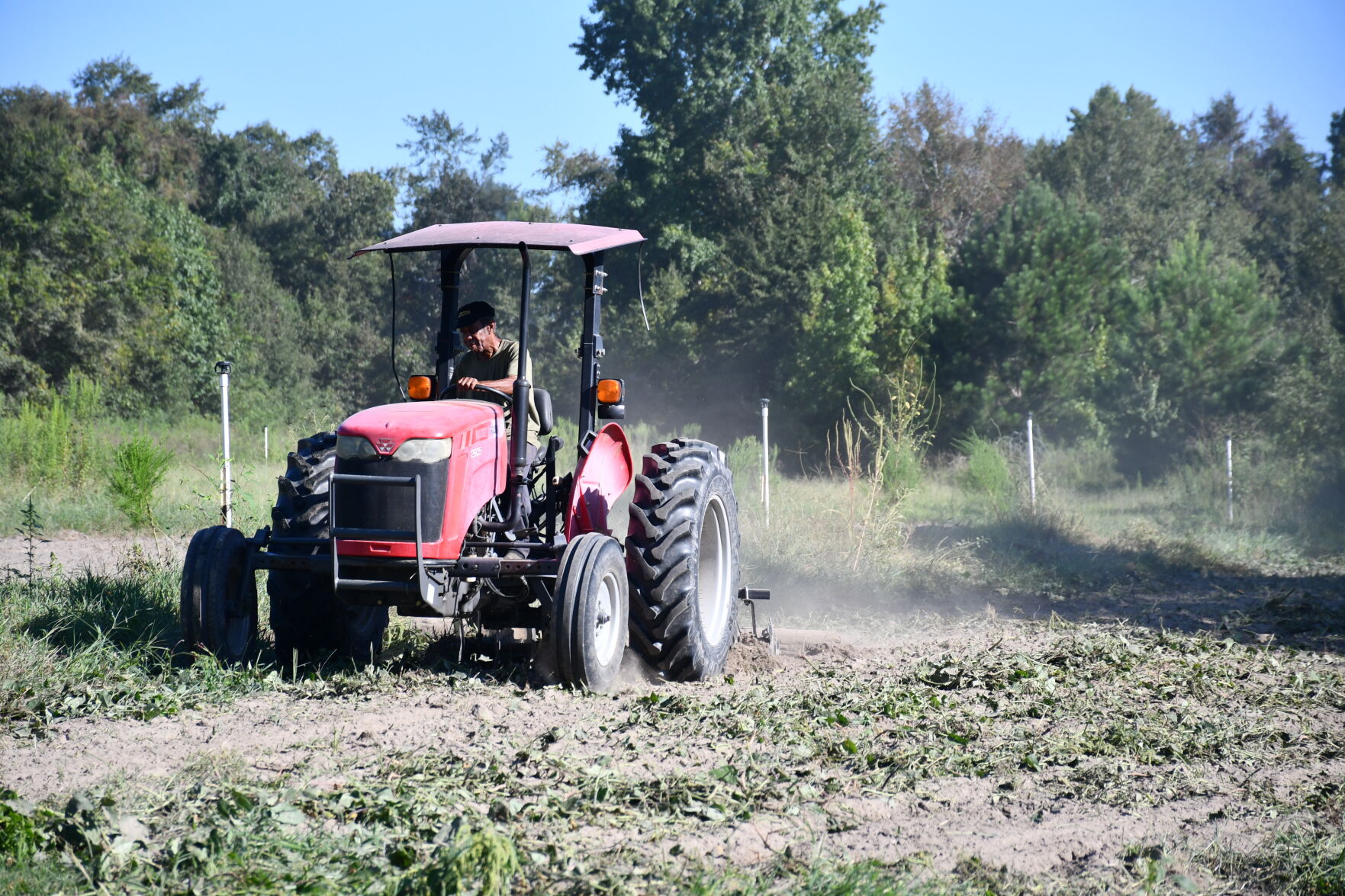
James Williams worked the field in the early morning, then rushed off to drive a school bus and teach physical education to students. Bessie Williams spent 30 years doing social work. James Williams developed health issues due to stress and lack of sleep, forcing him to retire from row crop farming in 2012. Today, the Williamses still own 190 of the original 226 acres; they rent out a large portion of their land to other farmers.
“It’s been a lot of turmoil that we’ve had to live through and deal with just to keep trying to pay that debt off,” Bessie Williams said.
James Williams may no longer farm row crops, but they revived an old pecan orchard, caring for the old-growth trees and planting new ones. At a far end of their land, more than 100 baby grapefruit trees reach toward the sun. It’ll be about three years before they are mature enough to bear fruit for the Williamses to sell.
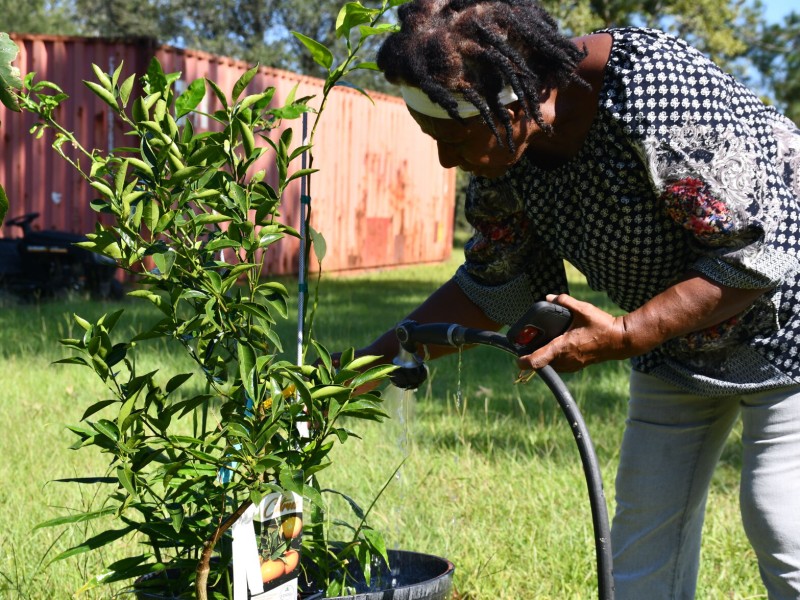
This year, Bessie Williams attended events hosted by the Southwest Georgia Project. She took pictures of how other farmers set up “hoop houses” or greenhouses with planter boxes and neatly spaced rows with irrigation systems. She used the pictures to set up her own. She said being able to learn from other farmers through these cooperative efforts inspires her on her own land.
For her, the fight to keep their land is worth it because it means having a space for her family to come back to and connect with nature and family history. She said the DFAP money was a relief, a sure sign that the USDA was trying to make amends for its discrimination.
Bessie Williams said cooperatives give black farmers nothing but knowledge and direction; she wouldn’t have known to apply for DFAP if it hadn’t been for the Feed My Sheep co-op.
“They instill in us how important it is to retain this property, all of them,” she said.
Hope for the future of black farmers
Feed My Sheep at Wilburn Farms was established in 2019 by Erma Wilburn, one of the original members of New Communities in the 1960s.
It’s made up of several small black farming operations from across the region. Wilburn provides them with opportunities like conferences or workshops throughout the year, teaching them about value-added products, climate-safe strategies or growing unique crops like mushrooms. It’s a cooperative effort she says she hopes to expand.
Wilburn’s no stranger to loss of land. She and her then-husband raised their children at the original New Communities until they had to leave due to foreclosure. The systems that forced them off the land still exist today, Wilburn said.
“I think it’s something we have to take seriously,” she said. “We have to find ways to make sure we can keep feeding our people.”
Her current husband, Lawton, inherited land in Worth County from his first wife’s family, a black-owned parcel known then as Battle Farms. There they grow leafy green vegetables. Collard greens are Wilburn’s favorite, but they dabble in watermelons, onions, rutabagas and more.
Often the two farmers have help. Cooperative members, learning about soil health for the first time, support them in preparing their fields for the next harvest. Young men from the Atlanta-based Gangstas to Growers program, which builds worker-owned cooperatives that provide opportunities for agricultural work for formerly incarcerated youths, help the Wilburns clear their fields for planting.
Wilburn said she envisions her land as a space like the original New Communities, where black farmers can live, work and learn agricultural skills through annual conferences. She helps farmers with smaller operations, like the Williamses, buy seed for better varieties and cheaper prices. When the small farmers come together as a cooperative, they’re able to buy in bulk and sell to larger markets.
Wilburn has spent a lifetime encouraging black people to farm and supporting those who do. For her, it’s about independence.
“When you don’t have farmland, you don’t have the ability to grow food for yourself, you’ve lost a huge part of your culture,” she said. “Coming out of slavery and into the reconstruction period, that’s how we survived, being able to grow our own food.”
In June, Wilburn hosted a Juneteenth celebration on land that had recently been “taken back” or reverted from row crop rental to acreage that would be used to grow produce.
Wilburn said she is hopeful for the future of black farming through cooperatives, especially as young people seem to have piqued an interest in coming back to their family farmlands. Her sons and grandsons return to Wilburn Farm frequently to aid in the operations. A few have started farms of their own. She said working as a community — as a cooperative — only makes these efforts stronger.
“If you do nothing for the next two or three years, just grow your own food and share it with your family and your neighbors,” Wilburn said. “At least have some sense of independence in your ability to survive.”
Author

Related Articles
From cotton to cloud: In the data center debate, is rural Georgia once again being asked to carry the cost?
Across much of rural Georgia, the abandoned cotton warehouses and shrinking tax bases remain — enduring reminders that industries built to serve distant markets do not necessarily stay rooted in the communities that first sustained them.
My Grandpa Was Killed in World War II. I Met Him Through His Letters Home
Gina Wolf’s grandfather died before she was born. His letters sent to her grandmother from Europe during World War II made it possible to know what kind of man he was.

‘Sounds Like a Mutiny.’ Secret Recording Exposes Claims of Toxic Leadership After a Marine’s Suicide
This week’s War Horse story follows the systemic failures before and after the death of Cpl. Drew Mobley who was the third in two years at Marine Corps Base Quantico to die by suicide.
