
CREEDE HINSHAW: Searching for signs of church life post-COVID
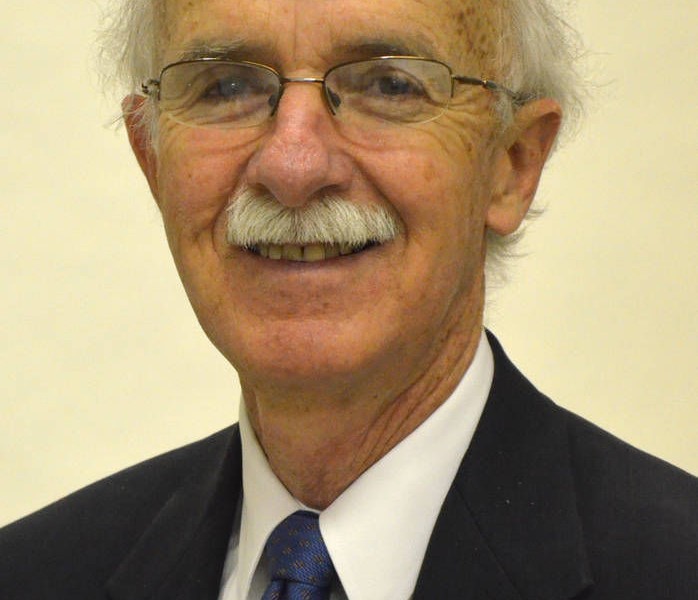
By Creede Hinshaw
Before the onset of the pandemic, I drove faithfully to a local health club where I worked out twice a week and played racquetball twice a week. The four days at the gym contributed greatly to my physical and mental health.
In response to COVID, the gym closed its doors for quite a few months. When they finally re-opened, they did so on a limited basis. More than half the exercise machines were shrouded; the main workout room felt more like a morgue than a gym. Participants had to wear a mask during exercise. Locker rooms were roped off, drinking fountains were closed, etc. I’m sure this sounds very familiar to many readers.
Now the gym is fully opened again. Except even after their re-opening, things don’t feel completely the same. Users must show their vaccination card each time they enter the building. The racquetball courts will probably never open again. Other subtle changes are also permanent.
I haven’t returned to this facility, even though to do so would be good for my wellness. My absence has nothing to do with anger at the club; they did what they had to do and they did it professionally. (I am disappointed by the disappearance of the racquetball courts, but that’s part of life.)
Why haven’t I returned? To my shame, my absence is because I got out of the habit of exercise. Even when I was lifting weights and using the exercise machines twice per week, I had to force myself to go. It was never something I was eager to do. I knew I needed it and always felt better for having gone.
The analogy isn’t perfect, but I suspect you have gathered where I am headed with this column. Weekly worship — even when it is done well and offers hope, inspiration and challenge — requires a determined habit. Some people have learned how to go eagerly while others attend knowing the value even when they have to force themselves to go.
Conservative pastors were right about one thing and wrong about the other at the pandemic’s onset. What they were wrong about was their determination to plow right ahead with corporate worship in the face of a crippling virus. Those churches that insisted on continuing to worship in the face of a deathly virus were short-sighted. Loving one’s neighbor and caring about the world demanded that worship services be suspended until safe to re-gather.
But where conservative pastors and churches were correct was in their insistent warning that church members are creatures of habit and that cancelling church services would create havoc and long-term damage to the strength and witness of the church. These pastors, wise observers of human nature, understood that even the most faithful Christians, weekly attendees of Sunday worship, would fall away given half a chance.
This is where the church finds itself now. To a large degree churches, along with the rest of society, are re-opened almost fully. But the worship spaces are far less full and offering plates are emptier. People have figured out other ways to worship or have concluded (wrongly, in my opinion) that they don’t need to worship at all on the Sabbath.
The church going forward will need to work hard to prove again it’s value and worth. The hyper-faithful have returned. The semi-faithful or mildly faithful have dropped away and a congregation can’t simply re-open its doors, freshen up its webpage and expect to “return to normal.” Are there signs of new life in your congregation?
Related Articles
My Grandpa Was Killed in World War II. I Met Him Through His Letters Home
Gina Wolf’s grandfather died before she was born. His letters sent to her grandmother from Europe during World War II made it possible to know what kind of man he was.
‘Sounds Like a Mutiny.’ Secret Recording Exposes Claims of Toxic Leadership After a Marine’s Suicide
This week’s War Horse story follows the systemic failures before and after the death of Cpl. Drew Mobley who was the third in two years at Marine Corps Base Quantico to die by suicide.
Southwest Georgia artists recognized at packed opening of exhibition
The annual juried exhibition, one of the region’s largest showcases of visual art, features approximately 46 artists and nearly 90 works spanning painting, sculpture, ceramics, photography and mixed media.
