
CREEDE HINSHAW: When the Holy Spirit enters court proceedings
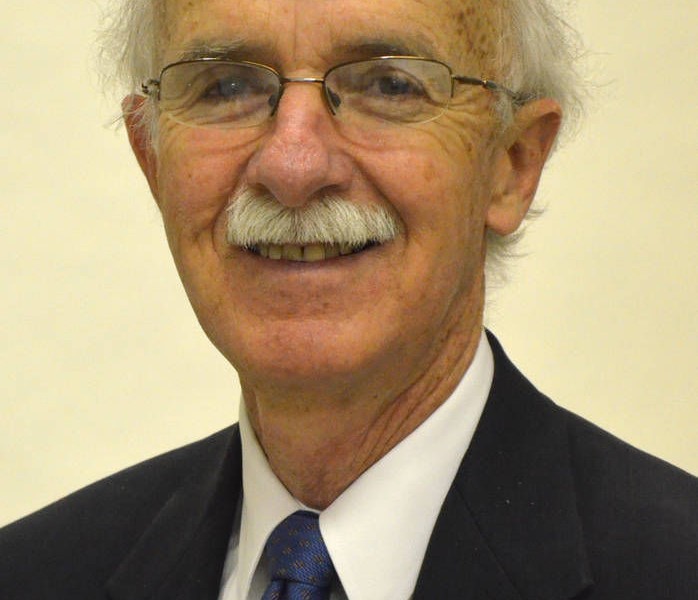
By Creede Hinshaw
[email protected]
Should the Holy Spirit be banned from the jury room? Can a juror express his/her faith openly during deliberations or must that person remain silent?
I offer a scenario that made the news and ask you to put yourself in the situation.
A Florida jury trial was held where a U.S. Congresswoman was accused of creating a fake charity and using the contributions to purchase luxuries for herself. This – if true – is a despicable scam.
After closing arguments, the judge gave final instructions to the jury and charged them to find a verdict
Soon thereafter one juror announced words to this effect, “The Holy Spirit has told me the Congresswoman is innocent.” This statement upset some jurors, who reported it to the judge, who ruled the juror in question had to be dismissed from the jury and replaced with an alternate juror.
My assignment, faithful reader, is to insert yourself into this story, either as the juror who heard from God, as the other 11 jurors, or as the judge. Is it possible for a juror to be guided by faith when deciding a matter of guilt or innocence?
If you were on a jury, would it be acceptable to hear another juror using such language? If you were the juror in question, would you remain silent about your faith so as not to upset the other jurors? As a judge would you dismiss a juror because he/she used religious language in relationship to his/her conclusion?
The jury, with its new member, voted 12-0 to convict the Congresswoman, who was sentenced to prison. But the defense lawyers appealed the verdict, claiming that jury would have not reached a unanimous verdict if the original juror had not been removed wrongly.
A Federal Appeals court ruled 7-4 that the juror was erroneously stricken from the jury. This ruling did not exonerate the Congresswoman, but now the prosecution will have to decide whether to prosecute her again.
I write as one who has heard people speak in religious language in the South my entire adult life. I can easily imagine hearing a juror speak in precisely such terms. Religious language, however, does not necessarily preclude a person’s use of reason. One can (gasp!) be both religious and logical.
The judge seemed to assume the juror who employed religious language automatically ignored the evidence presented in the trial. But claiming to have heard the Holy Spirit or the Spirit of God does not mean a person has stopped listening to a lawyer’s reasoned arguments. It is entirely possible to be guided by the Trinity and simultaneously using the brains the Good Lord gave us.
It turns out two people were on trial in that proceeding. The Congresswoman may or may not have been guilty. But the juror who employed religious language was wrongly rejected, a conclusion I have reached both through reason and God’s spirit testifying to my spirit.
Related Articles

My Grandpa Was Killed in World War II. I Met Him Through His Letters Home
Gina Wolf’s grandfather died before she was born. His letters sent to her grandmother from Europe during World War II made it possible to know what kind of man he was.

‘Sounds Like a Mutiny.’ Secret Recording Exposes Claims of Toxic Leadership After a Marine’s Suicide
This week’s War Horse story follows the systemic failures before and after the death of Cpl. Drew Mobley who was the third in two years at Marine Corps Base Quantico to die by suicide.

Southwest Georgia artists recognized at packed opening of exhibition
The annual juried exhibition, one of the region’s largest showcases of visual art, features approximately 46 artists and nearly 90 works spanning painting, sculpture, ceramics, photography and mixed media.
