
Current free time perfect opportunity to create composting system
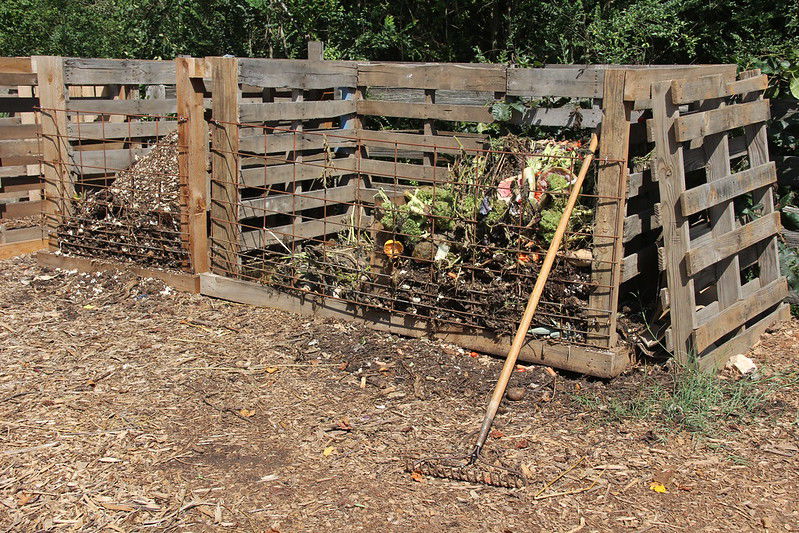
Special Photo: Stephanie Schupska
By Maria M. Lameiras
CAES News
ATHENS — With more time at home on many people’s hands these days, lots of yard work is being tackled, offering a perfect time to create a home composting system.
For the new composter, first find an ideal spot on your property to locate your composting pile or receptacle, composting expert and Agriculture and Natural Resources Program Development Coordinator Amanda Tedrow, who represents University of Georgia Cooperative Extension’s Northeast District, said.
“If you are just starting out, go for the pile,” Tedrow said. “The ideal minimum size for a compost pile is four by four by four (4 feet wide by 4 feet long by 4 feet deep). That is the right size to reach the temperatures needed for decomposition. A smaller pile will decompose at a slower rate due to lower temperatures.”
Locate the compost pile downhill and away from vegetable gardens to prevent potential runoff from the compost pile, which could transmit plant diseases to the garden.
While heat is an important element to composting, the heat is generated within the composting pile, so it is not necessary to locate a composting system in direct sun. A compost pile located in direct sun may need additional supplemental water during the heat of the summer months.
Next, it’s important to add the right mix of materials to the pile.
“The general recommendation is to do two-thirds to three-quarters browns and one-third to one-quarter greens,” Tedrow said. Brown materials — such as dried leaves, sticks and old mulch — are a source of carbon, while green materials — such as grass clippings, vegetable and fruit scraps, coffee grounds and egg shells — are sources of nitrogen, both important for proper composting to occur.
Avoid adding any kitchen waste that contains meat, dairy products or greasy substances, Tedrow warns.
“Vegetable peelings, fruit rinds, stalks from broccoli, things like that are all fine,” she said. “Something like peach pits might take a long time to compost, but they are perfectly fine to put in.”
Moisture is essential, but a compost pile should only stay “as wet as a wrung-out sponge,” Tedrow said.
“In an ideal world, a compost pile should be turned when the temperature in the center of the pile starts dropping (below the ideal temperature of 130 to 160 degrees Fahrenheit),” she said. “Most people don’t have a compost thermometer, so many composters will turn their pile every week to two weeks to keep the process moving.”
Compost thermometers are available in stores or online starting at about $20, she added.
If wildlife is a possible concern, an enclosed composting bin may be a better option. If you have a free-form compost pile and you are having a hard time keeping compost materials together, consider using a piece of fencing or other material to make a hoop around the pile to keep it contained, Tedrow added.
While creating a compost pile can, in time, produce material usable for gardening, the best thing about a compost pile is keeping unnecessary waste out of landfills, as landscape refuse, such as leaves, grass clippings and trimmings, accounts for up to 20% of the waste being placed in landfills.
For more detailed information on composting, visit extension.uga.edu/publications and search for UGA Extension Circular 816, “Composting and Mulching.”
Related Articles

From cotton to cloud: In the data center debate, is rural Georgia once again being asked to carry the cost?
Across much of rural Georgia, the abandoned cotton warehouses and shrinking tax bases remain — enduring reminders that industries built to serve distant markets do not necessarily stay rooted in the communities that first sustained them.
My Grandpa Was Killed in World War II. I Met Him Through His Letters Home
Gina Wolf’s grandfather died before she was born. His letters sent to her grandmother from Europe during World War II made it possible to know what kind of man he was.

‘Sounds Like a Mutiny.’ Secret Recording Exposes Claims of Toxic Leadership After a Marine’s Suicide
This week’s War Horse story follows the systemic failures before and after the death of Cpl. Drew Mobley who was the third in two years at Marine Corps Base Quantico to die by suicide.
