
Dogs on the hunt
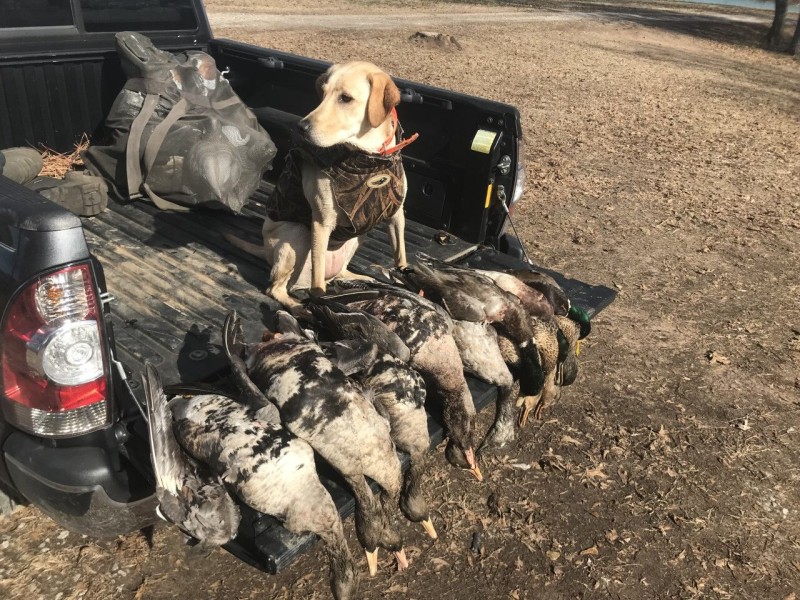
Special Photos Courtesy of Doug Porter
By Doug Porter
Special to The Albany Herald
ALBANY — When the last of our dogs died of natural causes a few years ago, we decided to take a break from dog ownership for a while. Aging parents and the potential need for spur-of-the-moment travel was the primary reason. I miss having a dog around and will someday invite one or two back into my home but, in the meantime, I have a marvelous substitute — a grand-dog.
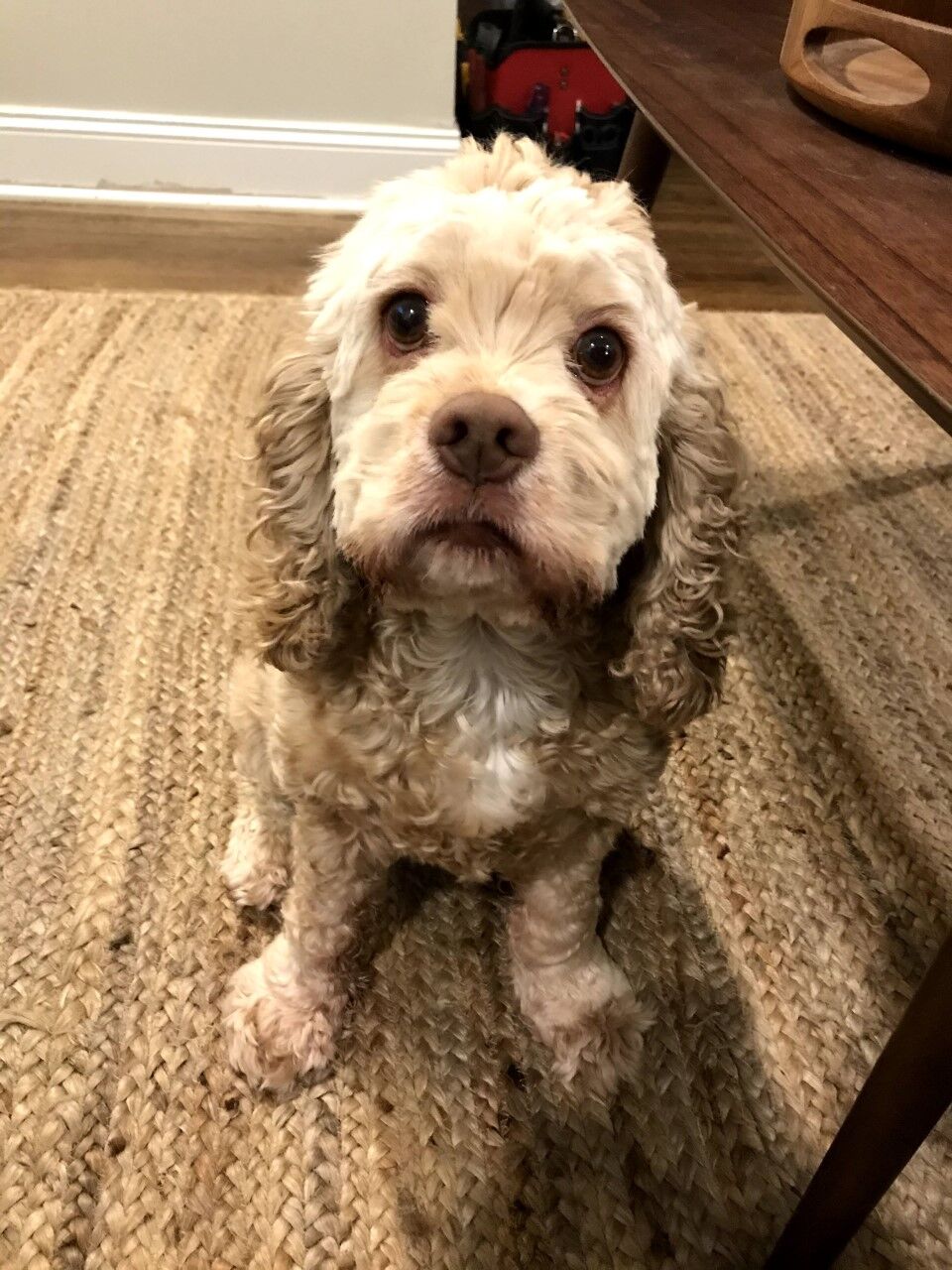
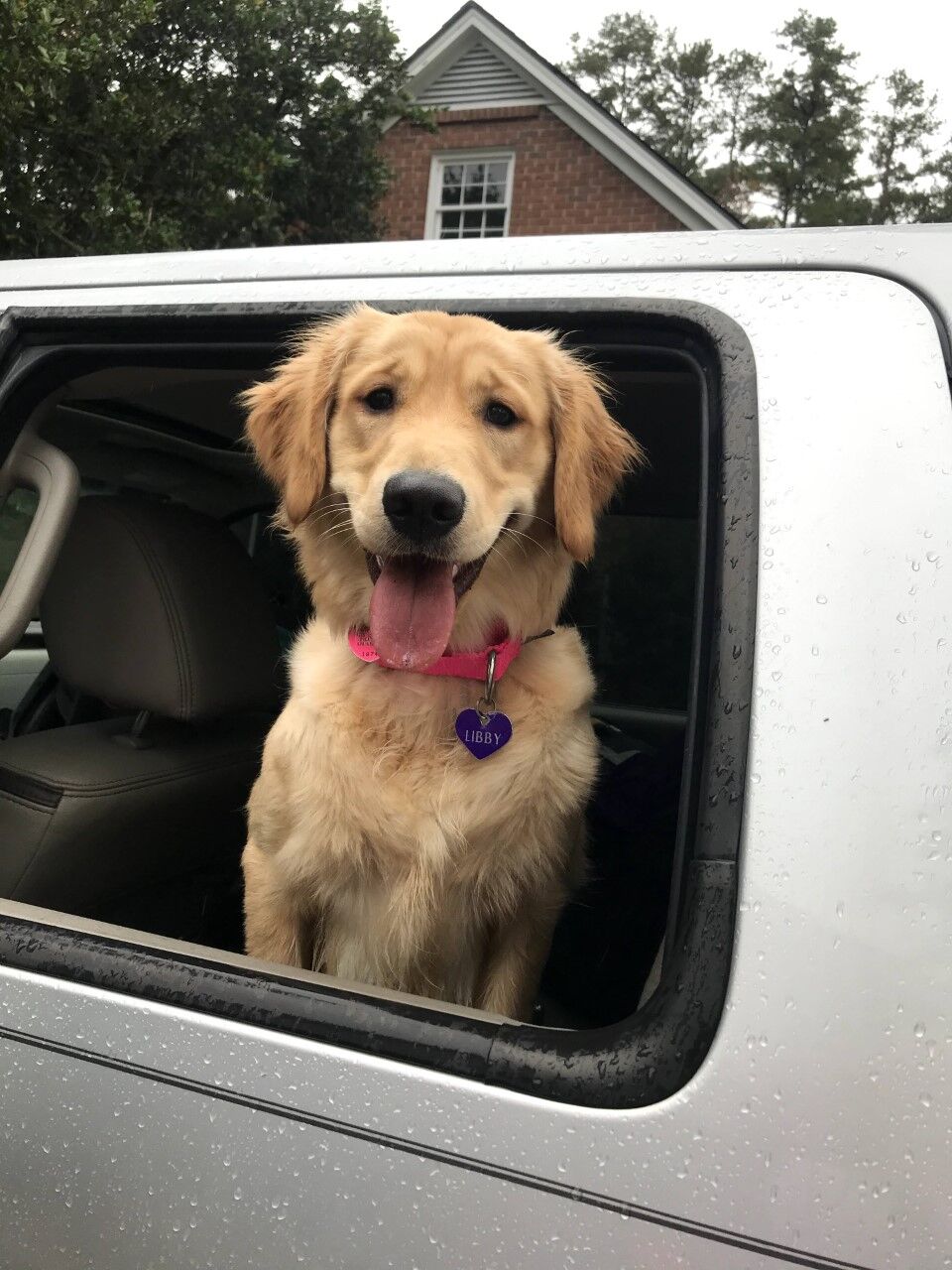
Our son in Atlanta acquired a golden retriever puppy last year and Libby has become part of the family. His girlfriend also has a dog, a 7-year-old English cocker spaniel named Alice. What a pair Alice and Libby make.
According to the American Kennel Club, the golden retriever is an exuberant gun dog that was developed as a breed in Scotland in the mid-1800s. They are serious workers at hunting and field work, a breed built to find and retrieve waterfowl. The English cocker, on the other hand, is a compact sporting dog that is famous the world over for the ability to find, flush and retrieve game birds. The contrasting characteristics of these two breeds became apparent to me on a recent walk. Libby, the retriever, walks with her head up and nose twitching as she carefully watches the world around her. Alice, on the other hand, keeps her nose to the ground, seemingly oblivious to anything that doesn’t smell.
Observing how these two dogs interact with the world around them helped me appreciate the diversity of dogs and how we have shaped and bred dogs to be much more than just pets and companions. Dogs are our partners at a variety of jobs, and I have a soft spot for working dogs.
The earliest dogs appeared about 15,000 years ago when humans began displacing Neanderthals in Northern Europe and Asia. But the explosion of diversity in shape and size only occurred about 200 years ago with a breeding craze in Europe and the advent of kennel clubs in the 1800s. Dogs are great companions and have been bred to hunt, herd and protect. But they also can learn an astonishing variety of tasks. They assist us in therapy, in search and rescue, in policing, and even in war — jobs I may explore in future articles.
Most surprising to me is the recent speculation that humans did not domesticate wolves. Wolves domesticated themselves. They accomplished this by staying in proximity to human settlements, scavenging our leftovers, and adapting to our ways over generations. Wolves evolved into dogs and became hunting companions that were a perfect complement to humans. Dogs were the chasers, and humans were the finishers. We both shared in the spoils of the hunt.
At this point, I should confess that Libby and Alice will probably never share in the spoils of any hunts. Both are house dogs. They are pets that provide companionship. But they also represent the diverse traits and abilities that we humans have shaped into working partnerships.
For thousands of years, humans have bred dogs for specific traits. As humans became more sophisticated, so did their dogs. Eventually, specific breeds of dogs emerged, custom-bred to suit the breeders’ local needs and circumstances. Huge mastiff types were bred as guard dogs and warriors. Sleek greyhound types were bred to chase fleet-footed prey.
So then, when is a breed a breed and not just a type of dog? The simplest way to define a breed, according to the AKC, is to say it always breeds true. Breeding a purebred golden retriever to another purebred golden retriever will always produce golden retriever puppies. The AKC recognizes hundreds of breeds and classifies them into eight or nine groups. These groups include sporting dogs, herding dogs, hounds, terriers, and more.
Most of the dogs I have owned have been mutts. They were rescued from an animal shelter. But I do appreciate dogs that were bred for a specific purpose. Now that I am back driving the mule wagon, I have a ringside seat to some of the most enthusiastic sporting dogs on the planet — the pointers, which the AKC calls the unquestioned aristocrats of the sporting world, and the English cockers, the champions of find, flush and retrieve.
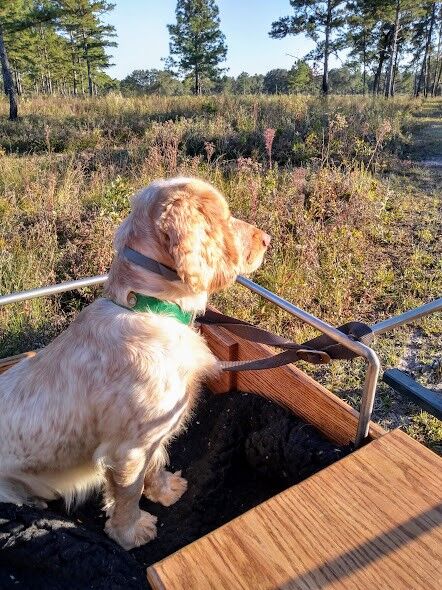
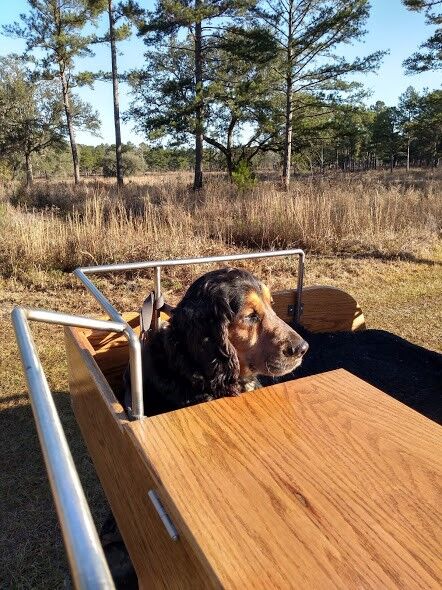
Millie and Shep are the English cockers that ride with me on the wagon. They are in their first year and still are in training, but these pups have picked up the art of finding birds with amazing quickness. It must be in their genes. They have helped me appreciate the talent of Joy, my original wagon-dog, who died in December 2020 at the age of 15. Unlike Joy, who would never leave until called, these young dogs must be clipped to the wagon, so they don’t rush out and spoil the hunt. And when they do hunt, Joy could have taught them a thing or two.
I recall one cold January morning several years ago when we were hunting near a water-filled low area called a “bottom.” When one of the birds fell in the middle of that bottom in a foot or two of water, I marked where it splashed down but assumed it was lost. Nobody was likely to wade out into the freezing water to retrieve that bird.
The hunter and guide gathered at the water’s edge to gaze out to their lost quarry, and to my great surprise the guide turned back to the wagon and called for Joy. The excited cocker had been watching intently. She scrambled down off the wagon without hesitation to join the hunters, but she did not stop at the water’s edge. She blew past the men, jumped into the water, and splashed out to where the bird had fallen. A few moments later, she was back on the wagon soaking wet with a quail dangling from her mouth and muddy ice-water dripping all over my seat.
Our 30-pound cocker had no trouble bounding through the water to retrieve a six-ounce quail. But what if we were hunting waterfowl? Joy couldn’t possibly retrieve a three-pound mallard. That would be a job for a big dog like Libby, my son’s golden retriever — a breed built to find and retrieve waterfowl. Libby, however, is not a trained hunting dog and will not be swimming after any downed ducks. But I do know another Porter dog that can retrieve — my nephew Jared’s yellow Labrador retriever. Penny lives up to her AKC description as an enthusiastic athlete that requires lots of exercise, like swimming and marathon games of fetch to keep physically and mentally fit.
I thought of Penny when I saw Joy go after the quail that fell in the water. Penny’s skill at marking birds was evident at just one year of age, when Jared and Penny were hunting the greater white-fronted goose during a trip to Louisiana. The specklebelly is a large species that weighs in at more than five pounds. Jared managed to hit a bird, but it sailed a good two-hundred yards.
“Penny marked it the whole way,” Jared told me, “and when I sent her after it, she disappeared over a levee. A minute later, back she came, toting a goose that looked as big as she was.”
Jared is an avid outdoorsman and hunter who knew he wanted a hunting dog that had the drive to hunt but that could also live inside as a companion dog. He and his wife acquired Penny about four years ago from a breeder who specializes in hunting retrievers. Penny apparently inherited all the right traits because her drive to hunt is intense.
I don’t see that drive in all of the young cockers that are trained on my wagon. Though they all have the same natural instincts, some dogs like Shep and Millie show interest in the hunt and love to find birds. Others are content to lick themselves and try to climb into my lap. These dogs end up going home to some family. A few lucky dogs, like Penny, get to be family dogs and hunters.
“I think people who see her lounging around our house and yard in a pink collar would be surprised to know that she relishes chasing down geese at a hundred yards,” Jared said. “I do look at (her) like two different dogs: a spoiled house pet, and an attentive and driven field dog.”
When I began my retirement career as a wagon driver about five years ago, part of the morning routine was driving the wagon to the kennel to load all the dogs — all the dogs, that is, except Joy. Joy did not sleep at the kennel during hunting season. She slept on the seat of the wagon. She was there every morning when I arrived, curled up on the blanket I had prepared the evening before. She refused to be lured into the kennel or the barn on cold nights, so we had to rig up makeshift tents and heat lamps. I’m not sure how or why the practice began, but that’s just the way it was. Joy was about as pure a hunting dog as I ever saw.
I don’t believe she would have been happy sleeping on someone’s couch. Penny the Labrador retriever, on the other hand, seems to enjoy both worlds. She sleeps in a comfortable house but is a formidable hunting dog.
Like most dogs, Penny arrived with her hunting instincts preloaded. At just a couple of months old, she was bounding after and retrieving her stuffed penguin in the house. Soon after, she was introduced to bumpers, which are plastic or rubber dummies that are used to train retrievers. She quickly learned how to “heel,” or stand at the trainer’s hip, and to wait until her name was called to retrieve the bumper. Jared hunts out of a wide kayak known as a layout boat, so Penny had to learn where to sit and how to jump back in the boat after she retrieves ducks.
A hunting dog has a lot to learn and will thrive on training and practice, so I wonder if there is a trade-off by having a hunting dog live in the house. Jared wonders that, too. Perhaps, he suggests, if he were stricter or “kept it more businesslike,” Penny would be even better in the field. But her being a mix of family dog and gun dog is what he and his wife want. So Penny must make up for her lack of intense training with some instinct and a good bit of skill. And one of the best illustrations of her combination of instinct and skill was illustrated on a recent trip.
“Wood ducks were the main bird we hunted,” Jared recalled, “and we had to work hard to sometimes scratch out one or two. This day ended up being … especially noteworthy because one duck actually dove, and Penny went under as well and came up with it. That’s definitely not a trained skill.”
As a dog owner, it is useful for me to know what makes my dog happy. Dogs like Libby and Penny are retrievers, so they want to, well, retrieve. Penny is an expert at retrieving ducks from water-filled swamps, while Libby is constantly trying to sneak sticks into the house after a walk. Cockers like Millie, Shep and even Alice enjoy an opportunity to take their time and have a good sniff around their world.
And which of these hunting dogs has it best? My son’s dogs Libby and Alice, who live a life of ease and comfort; Joy, who slept on a wagon seat and knew nothing but the hunt, or Penny, who appears to have the best of both worlds? There is no right answer to this. Dogs are our original hunting companions — our oldest canine partners. They just want to be with us, doing what we do.
Come to think of it, these hunting dogs are a little bit like me. I love the hunt and am attentive when on the wagon — perhaps because people are waving loaded shotguns in my direction — but I also enjoy stretching out on the couch after the hunt like a spoiled house pet. And, contrary to what my wife says, I require very little training.
Related Articles

From cotton to cloud: In the data center debate, is rural Georgia once again being asked to carry the cost?
Across much of rural Georgia, the abandoned cotton warehouses and shrinking tax bases remain — enduring reminders that industries built to serve distant markets do not necessarily stay rooted in the communities that first sustained them.
My Grandpa Was Killed in World War II. I Met Him Through His Letters Home
Gina Wolf’s grandfather died before she was born. His letters sent to her grandmother from Europe during World War II made it possible to know what kind of man he was.

‘Sounds Like a Mutiny.’ Secret Recording Exposes Claims of Toxic Leadership After a Marine’s Suicide
This week’s War Horse story follows the systemic failures before and after the death of Cpl. Drew Mobley who was the third in two years at Marine Corps Base Quantico to die by suicide.
