
Helping Hands Ending Hunger nonprofit fights food insecurity in Dougherty County schools
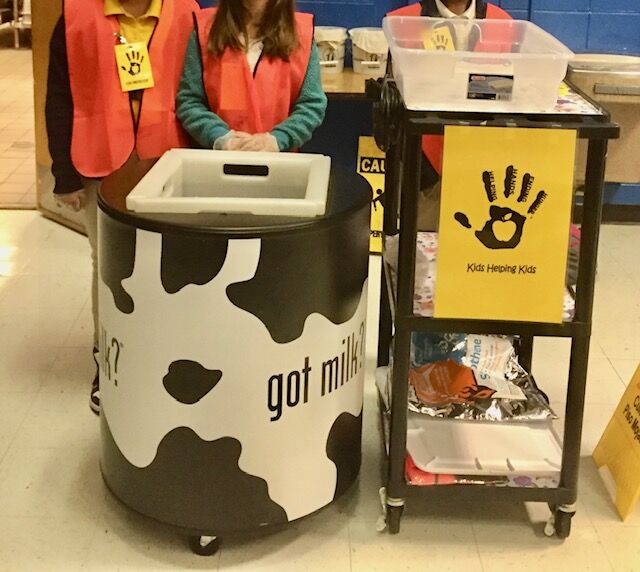
Photo Courtesy of Cathy Revell
Photo Courtesy of Cathy Revell
Photo Courtesy of Cathy Revell
By Lucille Lannigan
[email protected]
ALBANY – As retired educators, Cathy Revell and Catherine Whitfield used to be face-to-face with the food insecurity issues facing families in the Dougherty County School System.
“A lot of people might not realize the need,” Whitfield said. “I think it surprises people that in every area there are people who come from poor circumstances and may not get the food they need.”
The educators also were face-to-face with the large amount of food waste generated in the cafeteria each day.
They watched sealed cartons of milk and juice, unopened packages of crackers, fruit cups and apple sauce get tossed aside after students completed their meals. So when Revell heard about Helping Hands Ending Hunger Inc., a nonprofit that focuses on alleviating childhood food insecurity and reducing school food waste, she connected with the organization’s founder.
HHEH began in a rural town in northwest Georgia, where the founder noticed students would come to school hungry on Mondays after lacking food at home. The organization operates by taking the food that students would usually throw away after a meal and instead collects it and channels it to families in need. It operates under a “Kids Helping Kids” initiative in which student leaders are primarily in charge of repurposing the uneaten food.
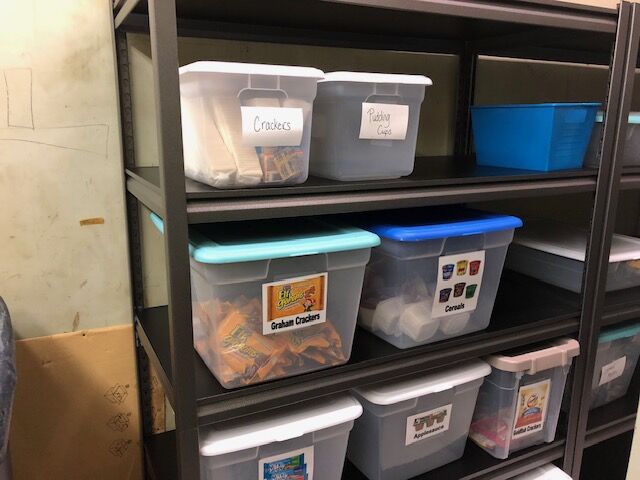
HHEH now offers the only program operating in Georgia that has been approved by the departments of Public Health and Education/School Nutrition to rescue cold storage food (milk, cheese, yogurt, fruit, etc.) along with dry packaged foods and give it to children when they need it the most – over weekends.
When Revell learned how she could start the program locally, she went to DCSS Superintendent Kenneth Dyer. She and Whitfield started with one pilot school, Morningside Elementary.
Revell said the program began on the Tuesday after Labor Day in 2018, and by Wednesday, coolers and shelves designated as storage space for collected food were completely full.
Six years later, Helping Hands Ending Hunger has been able to serve 43,861 DCSS families, save 432 tons of food from the landfill and aid 18 nonprofits with excess food.
The organization was able to do all this with the help of community donors and volunteers. The program comes at no cost to DCSS and falls into the normal school day schedule seamlessly. Donated coolers and shelves sit by cafeteria trash cans for students to load unopened items they didn’t eat.
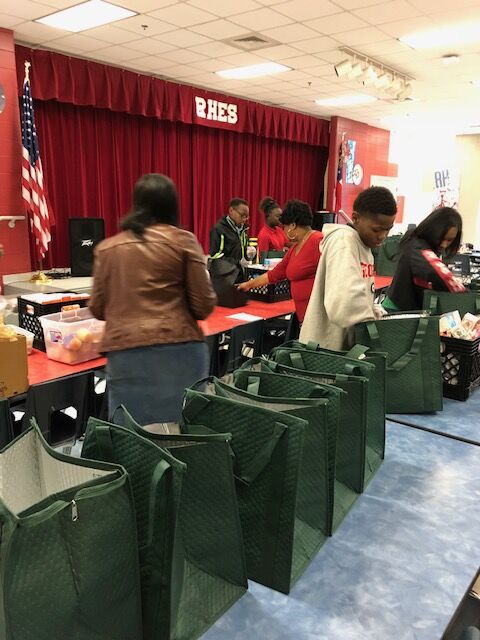
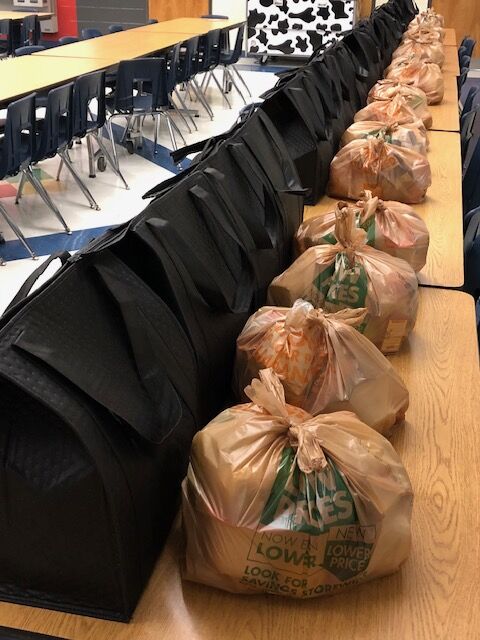
Each school has a space where these items are stored for the entire week on shelves or in a refrigerator/freezer. On Fridays, community volunteers come in and sort the foods into insulated bags for the students to take home on the weekend. There are two different colored bags, and each bag is filled and sent home every other weekend.
Students who wish to receive food must have their parents sign and return a form handed out at the beginning of each year. The first 70 students to return the form receive a bag every other week. Some schools have waitlists up to 150 students for the program. HHEH volunteers hand out about 35 bags per school each week.
Revell said volunteers are excited to work within the schools because it introduces them to different parts of their community.
“It’s been a blessing for people to see all of the different schools and what’s going on in Dougherty County’s school system,” she said.
Dyer said the program “perfectly aligns” with the DCSS mission of meeting the academic and non-academic needs of its students. He said DCSS families live in an area impacted by high poverty rates, and many students rely on school meals for nutrition. DCSS students receive universal free breakfast and lunch. The HHEH program works to fill the gap on weekends when students can’t get school lunch or breakfast.
Revell said the program’s success has been a blessing. She receives thank-you notes from parents and students. People who grew up with food struggles have reached out to her, applauding the program.
“One man that collected food for me said he didn’t have enough food growing up when he came home,” she said. “He said, ‘Nobody needs to be hungry, and children can’t do work if they’re hungry.’”
Whitfield said it’s been a joy working with students again after her retirement. She and Revell are fondly known among the students as the “Helping Hands Ladies.”
“It’s wonderful when they come up and give you a hug and say ‘I can’t wait until it’s time to get my bag,’” she said.
Dyer said he first worried about the potential stigma surrounding the students who received the free food, but the program has actually had the opposite effect. Students are excited to be involved in the process, whether they’re receiving the food or leading its operations.
There are student captains at each school who help community volunteers to organize the food at the throwaway line and help arrange it to be picked up on distribution days. Dyer said it’s enhanced student leadership and service.
Helping Hands Ending Hunger also prioritizes dispelling the stigma, encouraging the whole school community to get involved. Applications are handed out to each student and don’t ask income-based questions.
Revell said if there is a need, families fill out the form. Whitfield said there’s an understanding among students that their peers might be bringing home the food for themselves or even for their grandparents, their siblings or their next-door neighbor.
HHEH’s touch goes beyond just DCSS. Revell said excess food that can’t be distributed to students ends up at local nonprofits.
Tom Wilbourn, the executive director of local food bank The Lord’s Pantry, said the partnership is a big help. His pantry receives milk, juice, cheese sticks, and pre-packaged PB&Js.
“It really helps because a lot of the people who come in here asking for something like milk are people with children who need it,” he said.
The pantry also serves a large number of homeless people.
Wilbourn said there’s a great issue locally with food insecurity. Last month, his pantry gave out food boxes to about 1,200 people.
Dougherty County’s HHEH organization is the second-largest in the state, having grown to serve 18 schools. Dyer said DCSS schools have become a model with other school systems wanting to visit the sites and see how the program works. He said he encourages any school system with a need to serve hungry families to look into the program.
The superintendent said he is also looking forward to the program’s growth. In this upcoming school year, HHEH will serve its first high school in the county, Monroe High School. Revell said she hopes to one day be able to expand to all of the high schools.
Dyer said he wants to maximize the program.
“I don’t want one piece of food that could be saved to get thrown away, and I don’t want one family who could get food on the weekends to go hungry,” he said.
Dyer also expressed gratitude to volunteers, staff, student leaders and community donors dedicated to making the program work.
Revell called it a powerful partnership between the schools and community.
“It couldn’t work without both sides,” she said. “It’s just such a good thing that impacts the entire community.”
Author

Related Articles
From cotton to cloud: In the data center debate, is rural Georgia once again being asked to carry the cost?
Across much of rural Georgia, the abandoned cotton warehouses and shrinking tax bases remain — enduring reminders that industries built to serve distant markets do not necessarily stay rooted in the communities that first sustained them.
My Grandpa Was Killed in World War II. I Met Him Through His Letters Home
Gina Wolf’s grandfather died before she was born. His letters sent to her grandmother from Europe during World War II made it possible to know what kind of man he was.

‘Sounds Like a Mutiny.’ Secret Recording Exposes Claims of Toxic Leadership After a Marine’s Suicide
This week’s War Horse story follows the systemic failures before and after the death of Cpl. Drew Mobley who was the third in two years at Marine Corps Base Quantico to die by suicide.
