EDDIE SEAGLE: Easy landscaping plants still need some attention
GEORGIA CLIPPINGS: A weekly look at home gardens and landscapes
By Eddie Seagle
“Nothing is more memorable than a smell. One scent can be unexpected, momentary and fleeting, yet conjure up a childhood summer beside a lake in the mountains …”
— Diane Ackerman
The month of July counts its days as the summer season rolls right along. Our outdoors focus continues to surround both recreation under the sun and curb appeal in the landscape. We identify and implement ways and means to have fun in the sun. As we focus our attention on the home landscape, we search for low maintenance plants with curb appeal in the choices we make.
Easy landscaping with low maintenance plants could be an oxymoron because low maintenance plants need limited maintenance. Do not ignore even minimal needs. Never interpret low maintenance as no maintenance. Therefore, here are some interesting low maintenance plants that you should find most interesting and “easier” to maintain in the landscape.
Bloody cranesbill or bloody geranium (Geranium sanguineum var. striatum) is a flowering, hardy hebaceous perennial with palmate foliage and light pink (magenta) papery flowers in summer. The ferny leaves (with darker veins) are deeply divided and add texture to its round form. Reaching about one foot in height and spread, plant in full sun to part shade in a well-drained soil. Any plant division should be done in the spring. Bloody cranesbill exhibits good heat tolerance.
Bowles Golden Sedge (Carex elata “Aurea”) is a semi-evergreen to evergreen, bunch-type perennial with grass-like variegated foliage (yellow and green). Its bright yellow new leaves in the spring are attention-getting, but will vary in color throughout the year. Reaching a height of about 2 feet and a width of 3 feet, plant Aurea in full sun to full shade and moist soils. Best color results are obtained in partial sun settings. Prune to about 4 inches in height before new growth appears in the spring. Any necessary division can be practiced every other year or so. For more intense effects, install alongside a plant such as Hosta which provides a contrasting, deep green foliage.
Dianthus or pinks (Dianthus gratianopolitanus “Firewitch”) is a mounding, evergreen perennial groundcover with silver foliage (ice blue) and brilliant pink single flowers with frilled petals that resemble small carnations. Reaching a height and width of 12 inches, plant Firewitch in full sun and well-drained soils. Cutback after flowering to promote further blooming. These plants attract butterflies, release a pleasing clove fragrance, and offer a good humidity tolerance. Firewitch is a previous recipient of the Perennial Plant of the Year award.
Feather Reed Grass (Calamagrostis x acutiflora “Avalanche”) is a herbaceous perennial grass with variegated foliage (white center and green margins) and pink flowers in summer that fade to brown in winter. Reaching a height of 4 feet and a width of 2 feet with 6 feet flower stalks, plant Avalanche in full sun and well-drained soils. Create spectacular vertical effects with its feathery stalks that emerge reddish-brown in spring and turn golden in fall. These stalks also make attractive cut flowers. Prune to the ground in late winter and water as needed throughout the growing season.
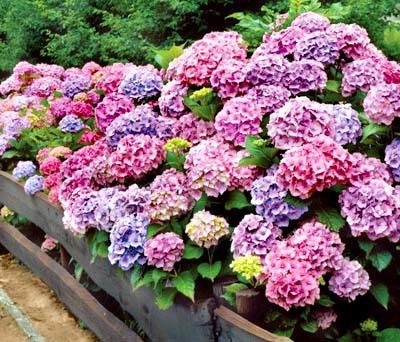
Hydrangea (Hydrangea macrophylla “Endless Summer”) is a deciduous shrub with lime green flowers that change to pink during summer. This bigleaf hydrangea sets blooms on both old and new wood, and will continue blooming for over six months if dead-headed properly. Reaching a height and spread of 10 feet, plant Endless Summer in full sun to part shade in a well-drained soil. Any pruning should be done while dormant during the winter season. Endless Summer attracts deer so take the necessary precautions to discourage any invitation to these creatures of the wild.
Japanese Barberry (Berberis thunbergii ‘Rose Glow’) is a mounding, deciduous shrub with red leaves, white to yellow flowers, and thorns. Its graceful branching characteristics help make it an ideal hedge, barrier planting or single accent plant. Rose Glow has deep rose-red foliage that is mottled with white and green in spring and freely exhibits bright red berries in fall and winter. Slowly reaching a height of 5 feet and a width of 4 feet, plant in full sun to part shade in well-drained soils. Practice plant division and apply fertilizer in the spring, and prune after the first frost.
Liriope or lilyturf (Liriope muscari “Big Blue”) is a bunch-type, evergreen groundcover with grass-like foliage and lavender flowers (summer). Its abundant blue flower spikes reach above the attractive, tufted arching, foliage followed by clusters of black berries. Growing to a height of 12 to 18 inches and a width of 12 to 24 inches, plant Big Blue in full sun to full shade and well-drained soils. Works well in edging, border or groundcover settings and tolerates drier conditions after establishment. Any necessary pruning should be practiced in the fall while plant division is best during the spring months.
Peony (Paeonia lactiflora “Jules Verne”) is a herbaceous perennial with fragrant double pink flowers. Reaching a height of almost 3 feet and a width of about 30 inches, plant in full sun and well-drained soils. Any needed plant division can be practiced in the fall and prune back the foliage after frost occurs. Apply a complete fertilizer after new growth appears in the spring.
Smoke Tree (Cotinus coggygria “Velvet Cloak”) is a large deciduous shrub or small tree with deep purple leaves during the growing season and pink flowers in early summer. Its brilliant deep red to purple leaves are nearly black with carmine red fall color. Also, its rose-tinted plumes are borne in profusion and diminish to a smoky gray haze. Reaching upward and outward 10 to 15 feet, plant Velvet Cloak in full sun and well-drained soils.
Thornless Common Honeylocust (Gleditsia triacanthos var. inermis “Suncole”) is a deciduous, irregular, non-messy, fast-growing tree with fern-like golden compound leaves and white flowers in spring. Its new foliage is yellow in the spring then transitions to a greenish-yellow and to light green in the summer. In the fall, the leaves return to the yellow color that pronounced them in spring. As with the Bloodgood Japanese maples, Suncole (Sunburst) offers good foliage color for two different seasons of the year. Reaching upward and outward to about 40 feet, plant in full sun and well-drained soils.
Always think in terms of native and sustainable plants in the landscape. Keep your hanging baskets and potted plants refreshed with water and food. Remember to feed and water the songbirds. Give your pets the care they need. Do not leave them unattended in a hot car or tied to a tree all day long. Also, be on lookout for children playing and bicyclists riding along the streets and roadways throughout our communities this summer. Don’t drive distracted or impaired, and don’t text while driving. Help the homeless every chance you get. Let’s keep everyone safe! And a very Happy Birthday to my earthly father in heaven!
Many thanks to all who read this column which is an effort to provide each reader with timely and useful information which is a small contribution on my part in “paying it forward” to my readers. As we prepare for a mission trip to the Andes Mountains in Peru this month, we would appreciate your prayers for a safe and successful journey for our team.
Eddie Seagle is a sustainability associate, Golf Environment Organization (Scotland); agronomist and horticulturalist, CSI: Seagle (Consulting Services International); professor emeritus and honorary alumnus, Abraham Baldwin Agricultural College, and associate editor of The Golf Course, International Journal of Golf Science. Direct inquiries to [email protected].