Gourd birdhouses not just for martins
Gourds are superior bird homes over commercially manufactured houses
By Bob Kornegay
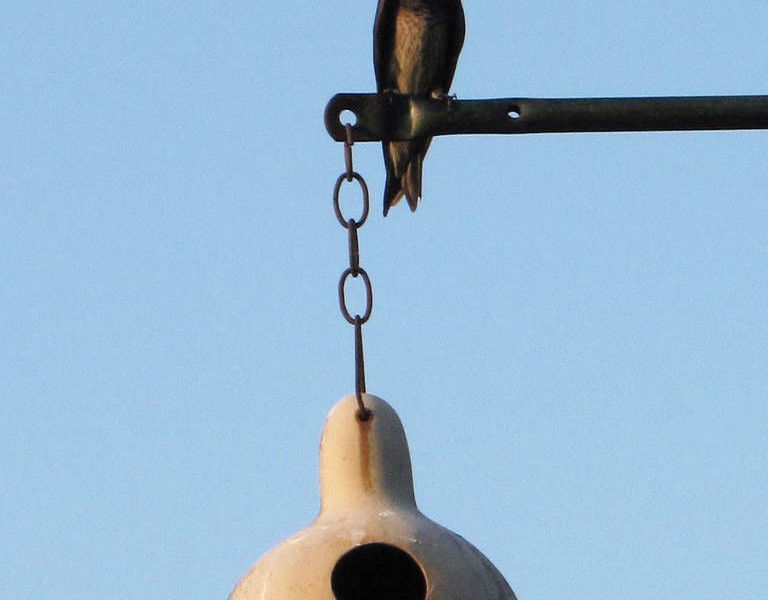
According to most experts, a natural gourd is still one of the best and most economical birdhouses available. Its bird-housing qualities are excellent and prices generally run just a few dollars each when purchased from a grower, harvested straight from the field.
Some gourd producers and suppliers sell gourds pre-drilled with entrance holes pre-cut. Some even offer them painted and decorated, like the ones seen at local flea markets and roadside stands. If one does not wish to go this “fancy” route, it is a relatively easy task to make one’s own gourd birdhouses simply by cutting the proper entrance holes, drilling a few drainage holes in the bottom, and drilling a hole at the top for attaching a hanging wire. Result: simple, affordable, bird-friendly housing.
“While they’re traditionally used for attracting purple martins to your home, gourds can attract other cavity-nesting birds as well,” said wildlife biologist Mark Sasser. “You can enhance the opportunity for attracting certain bird species simply by the size of the gourd, the size selected for the entrance hole, and the location and height above the ground. Another important factor that greatly affects the type of birds attracted to gourds is their placement associated with availability of habitat. For example, a grouping of gourds with 2-inch entrance holes placed in fields or openings will likely attract purple martins, whereas a single gourd with a 2-inch hole placed in a wooded area is more likely to attract a red-headed woodpecker.”
According to Sasser, it is important to select the size gourd from the grower that best suits the needs of the species one wishes to attract. Large gourds, for example, are the best for purple martins, while smaller gourds work better for bluebirds or wrens. If the gourd has not been harvested long enough to be seasoned, dry it by placing it in a sunny area and turn it every few days until the seeds can be heard rattling inside it when shaken. Once the gourd is completely dry, turning it into a birdhouse is relatively simple.
“To prepare a gourd for a birdhouse,” Sasser explained, “begin by marking a properly sized entrance hole. Be sure the bottom of the entryway is not too close to the bottom of the gourd itself. This will prevent fledgling birds from falling out of the gourd before it is time for them to leave the nest. Cut out the hole with a keyhole saw, a jig saw, or use a hole saw bit on your drill. I prefer the hole saw bit because it’s quick and makes a smooth, uniform hole. Bore several ¼-inch holes in the bottom for adequate drainage, clean out the dried seeds, and drill another ¼-inch hole through the top. Attach a wire hanger through the top hole and the birdhouse is ready for hanging. A gourd birdhouse will normally last two years, a bit longer if you varnish or paint it with light-colored paint.”
Gourds are superior bird homes over commercially manufactured houses for a number of species for a variety of reasons. Weather, for example, is a major cause of mortality for many birds, especially purple martins. Natural gourds offer far better insulation against heat and cold than aluminum or plastic housing. Sasser observes that martins, in particular, always prefer natural gourds over any other type of commercial birdhouse. When given the choice, he says, they will invariably nest first in a natural gourd before using a plastic gourd or an aluminum house.
“Studies using sophisticated temperature probes have shown that martin nests in natural gourds stay several degrees cooler in hot weather and several degrees warmer in cool weather,” he stated. “These same tests have also shown consistently higher bird-occupancy rates in natural gourds over manufactured housing. Since they often heat up to higher temperatures, aluminum houses and plastic gourds do not possess the same insulation qualities as natural gourds do. Natural gourds also provide a larger, deeper nesting compartment than the typical 6-inch by 6-inch compartment houses available from birdhouse suppliers. These deeper nesting cavities offer better protection against predators and greatly reduce egg losses. All of this adds up to martins and other cavity nesters having their highest reproductive success in gourds.”
According to Sasser, each of the following cavity-nesting birds can be attracted to and will readily use natural gourds if positioned and hung properly.
Bird Species Diameter of Hole Height
Eastern Bluebird 1 ½ inches 5 to 10 feet
Carolina Chickadee 1 1/8 inches 6 to 15 feet
Tufted Titmouse 1 ¼ inches 6 to 15 feet
Nuthatches 1 to 1 ¼ inches 6 to 10 feet
Northern Flicker 2 ½ inches 6 to 20 feet
Carolina Wren 1 ½ inches 6 to 10 feet
Tree Swallow 1 ½ inches 10 to 15 feet
Downy Woodpecker 1 ¼ inches 6 to 20 feet
Red-Headed
Woodpecker 2 inches 12 to 20 feet
Purple Martin 2 to 2 ½ inches 12 to 20 feet
“Making your own birdhouses from natural gourds is easy, inexpensive, and something the whole family can enjoy,” Sasser concluded. “And if you think a gourd house works only for purple martins, just go out and drill your hole properly and hang it correctly. You’ll be pleasantly surprised.”