
Hunters must know and follow applicable hunting laws
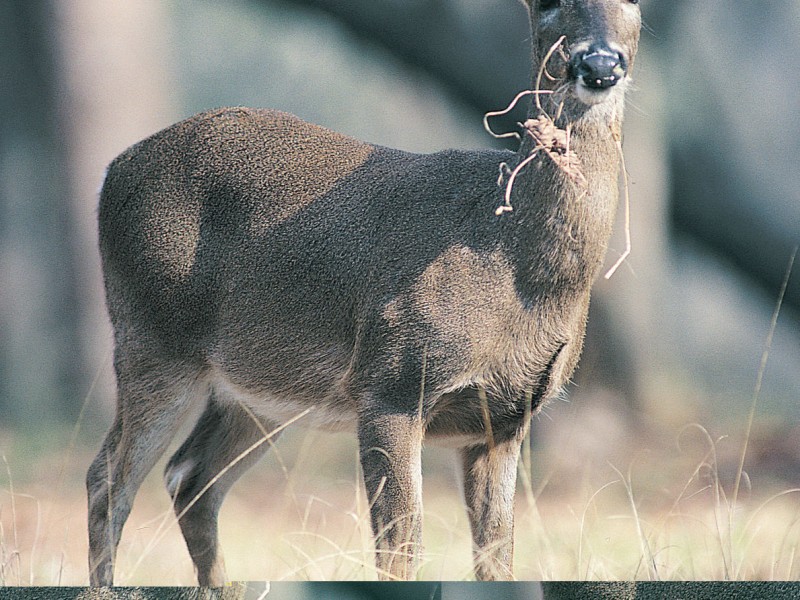
Special Photo
Special Photo: Georgia DNR
By Tara Dyer Stoyle
[email protected]
ALBANY — Time to hunt is just around the corner. So The Albany Herald has gathered some information to help Georgia hunters prepare for the 2019-20 hunting seasons.
Before you hunt, you’ll need a license, and if you were born after Jan. 1, 1961 (residents and non-residents) you must successfully complete a hunter education course prior to obtaining that license. Hunter education courses certified or mandated by any state agency or Canadian province are accepted. Hunter education is not required to hunt on your own land, and there are different requirements according to the age of the hunter.
Hunters under age 12 are not required to complete a hunter education course. However, no one under 12 is allowed to hunt without the direct supervision of a licensed adult. Hunters ages 12 to 15 must complete a hunter education course prior to hunting unless hunting under the direct supervision of a licensed adult hunter.
Hunters age 16 to 25 must present a hunter education certificate when purchasing a season hunting license and must possess the certificate while hunting. Hunters older than 25 and born after Jan. 1, 1961, must meet hunter education course requirements but need not present their hunter education certificate when buying a season hunting license or possess it while hunting.
There are four approved online hunter education courses for Georgia residents who choose not to attend a classroom course. There are varying costs for the online classes that can be taken at hunter-ed.com, hunteredcourse.com, beasafehunter.org or huntercourse.com. To find a free classroom course, go to www.license.gooutdoorsgeorgia.com.
Once you have met the educational and licensing requirements, you’ll need to know when and what you can hunt in this region.
DEER: Archery season is Sept. 14-Jan. 12; firearms is Oct. 19-Jan. 12; Limits: 12 per season — no more that 10 may be antlerless, and no more than two may be antlered. One of the antlered deer must have at least four points, 1 inch or longer, on one side of the antlers.
BEAR: Sept. 19-21, Sept. 26-28, Oct. 3-5, Oct. 10-12; there is a limit of 1 bear per season.
TURKEY: March 21-May 15 (2020); there is a limit of three gobblers.
ALLIGATOR: Aug. 16 (sunset)-Oct. 7 (sunrise); limit one per quota permit;
CROWS: Nov. 2-Feb 28; there is no limit.
DOVE: Sept. 7-30, Nov. 23-Dec. 1, Dec. 6-Jan. 31; there is a 15-per-day limit and you may have only 45 in your possession.
FOX AND BOBCAT: Dec. 1-Feb. 29; no limit.
GROUSE: Oct. 15-Feb. 29; limit three per day;
OPPOSSUM: Oct. 15-Feb. 29; no limit.
QUAIL: Nov. 16-Feb. 29; no limit.
RABBIT: Nov. 16-Feb. 29; limit 12 per day.
RACCOON: Oct. 15-Feb. 29; limit 3 per day.
SNIPE: Nov. 15-Feb. 28; there is a limit of eight per day and you may have only 24 in your possession.
SQUIRREL: Aug. 15-Feb. 28; limit 12 per day.
If you are a trapper, trapping season for fur-bearing animals is Dec. 1-Feb. 28. There is no closed season for the trapping of coyote or beaver in the state of Georgia. Fur-bearers include the following animals: mink, otter, raccoon, fox, oppossum, muskrat, skunk, bobcat and weasel.
All bobcats and otters trapped in Georgia and exported out of Georgia must be tagged with a federal export tag. That tag must be attached by state personnel no later than 10 days after the close of trapping season. A trapping license is required for trapping and selling furs, hides and pelts.
Trappers must inspect their traps at least once every 24-hour period and remove any trapped animals. All traps must be legibly stamped, etched or tagged with the owner’s permanent trapper identification number. Trappers must carry a choke stick or similar device while tending traps to use to release domestic animals.
It is unlawful to fail to carry a weapon of .22 caliber rimfire while tending traps.
Snares may be used for trapping beaver provided the snares are set in water or on land with 10 feet of water, including swamp, marshes and tidal areas. All snares must be marked with the trapper’s name or identification number.
Within 10 days after the close of trapping season, all trappers must report in writing the number of furs, hides or pelts that have been taken during the open season and the name of the person who purchased them. For more information about hunting in Georgia, contact your local Department of Natural Resources agent or visit www.GADNR.org online.
Related Articles

From cotton to cloud: In the data center debate, is rural Georgia once again being asked to carry the cost?
Across much of rural Georgia, the abandoned cotton warehouses and shrinking tax bases remain — enduring reminders that industries built to serve distant markets do not necessarily stay rooted in the communities that first sustained them.

My Grandpa Was Killed in World War II. I Met Him Through His Letters Home
Gina Wolf’s grandfather died before she was born. His letters sent to her grandmother from Europe during World War II made it possible to know what kind of man he was.

‘Sounds Like a Mutiny.’ Secret Recording Exposes Claims of Toxic Leadership After a Marine’s Suicide
This week’s War Horse story follows the systemic failures before and after the death of Cpl. Drew Mobley who was the third in two years at Marine Corps Base Quantico to die by suicide.
