
LORAN SMITH: Jack Kehoe’s legacy in Cortona will live on
LIFESTYLES COLUMNIST: Cortona recalls a friend with honor
By Loran Smith
The flags in Cortona, Italy, were at half-staff last week when a hilltop town in Tuscany mourned the passing of an American whom they considered their best friend.
It wasn’t a government connection, or a financial connection — but an expression of friendship which was engendered by respect, goodwill and enlightenment on the part of the founder of the program that would align the city with the oldest state chartered university in the U. S. When Jack Kehoe settled in Cortona as the head of the studies abroad program, the Cortonese took note that he expected to be a good neighbor and become a part of the fabric of the community. He embraced the populace, and its inhabitants embraced him back.
If you recall the history of the University of Georgia, you conclude that there was a small fraternity of men, which, while exclusively male at the time but has come to include women, were so especial that they were soulful difference makers. They didn’t carp about the way it was. Modest pay, limited resources for the discipline with which they were associated. They became pacesetters, who made life better for countless Georgians, even those who were so provincial they couldn’t comprehend what was being done on their behalf, and in many cases would have spoken out against intellectual gifts from learned men. A man of the arts got no respect in those days. And while Lamar Dodd, the distinguished artist who was head of the UGA Art Department, supported Kehoe, he was also the bearer of bad news. In essence, “You are on your own.” There would be no financial support. Nonetheless, the visionary Kehoe preserved.
A roll call of some of the luminaries who brought signature achievement include D. W. Brooks, who gave agriculture in our state a shot in the arm for over five decades; Gene Odum, father of modern ecology; the aforementioned Dodd, whose highly acclaimed art gave Georgia an exalted image which knew no borders; Dean John E. Drewry, the journalism dean who founded the Peabody Awards which the titans of broadcast television treasure as much as an actor does an Oscar; Glenn Burton, a genius scientist at Tifton, whose research and development are legend in agricultural grasses; O. C. Aderhold, former president who fought diligently to improve education in the state; Merton Coulter, the penultimate historian; Dean Rusk, the former secretary of state under presidents, Kennedy and Johnson, brought international prestige to the Georgia campus.
The name of Jack Kehoe should be added to that illustrious list. It was he who birthed the international class room for Georgia. Universities across America have studies abroad programs everywhere from South Samoa to Timbuktu. Georgia has a plethora of such programs around the globe, but the first and the inspiration for the rest was Jack Kehoe’s founding of the Cortona program.
Talk about a bare bones budget — none has ever been more depressing — Jack was forever pulling his program up by his bootstraps. He was a study in perseverance and commitment. Buoyed by faith and by accentuating the positive, the Cortona program not only became the model for future programs at UGA, other institutions adopted Jack’s model as well.
When the Cortona program became established, a couple of institutions made overtures to see if they could unseat the University of Georgia. They quickly were rebuffed by the Cortona city elder elders. The loyalty that existed between the citizenry and Kehoe was not available to the highest bidder. Jack’s gentlemanly ways and subordinated ego, his intellectual, but modestly driven insightfulness enabled him and Cortona to flourish when there were Communist mayors.
Cortona would evolve from a summer program to a three semester (plus a Maymester) curriculum. Then the University of Georgia purchased property there and appropriately named a building for him—The John D. Kehoe Cortona Center.
Jack and his charming wife, Marilyn, bought an apartment there. It was high up in the village which kept him and Marilyn in peak physical condition. They always walked, never taking a taxi. It afforded the most emotionally smashing views.
An accomplished sculptor, Jack spoke near-fluent Italian. He was a well-rounded connoisseur of life—a fine piece of art, a seasoned bottle of Chianti, a Bulldog victory between the hedges, laboring with beloved chisel and a block of Carrara marble, knowing he would be proud of the finished product.
His death doesn’t really leave a void, except emotionally. His legacy of Cortona will live on as one of the truly remarkable contributions ever inspired by a Georgian who gave of himself for the benefit of others, especially those who appreciated the arts.
Related Articles
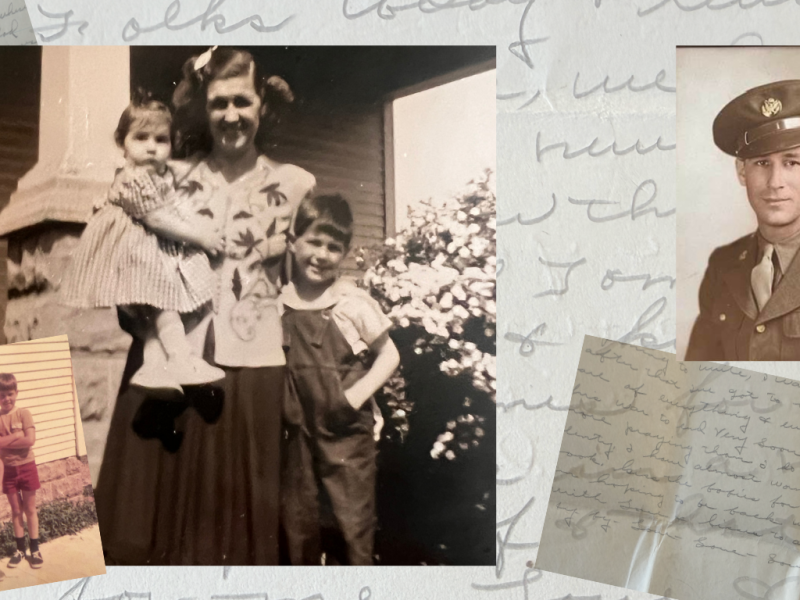
My Grandpa Was Killed in World War II. I Met Him Through His Letters Home
Gina Wolf’s grandfather died before she was born. His letters sent to her grandmother from Europe during World War II made it possible to know what kind of man he was.
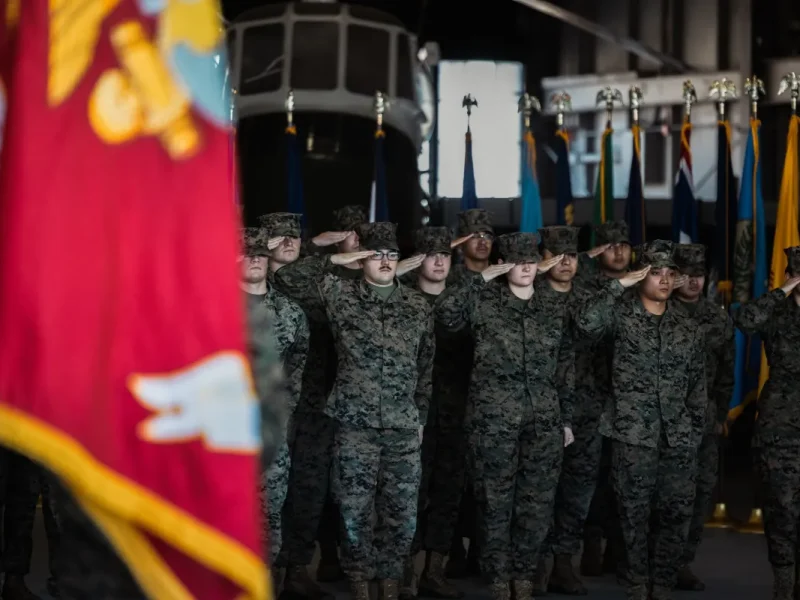
‘Sounds Like a Mutiny.’ Secret Recording Exposes Claims of Toxic Leadership After a Marine’s Suicide
This week’s War Horse story follows the systemic failures before and after the death of Cpl. Drew Mobley who was the third in two years at Marine Corps Base Quantico to die by suicide.

Southwest Georgia artists recognized at packed opening of exhibition
The annual juried exhibition, one of the region’s largest showcases of visual art, features approximately 46 artists and nearly 90 works spanning painting, sculpture, ceramics, photography and mixed media.
