
MARY BRASWELL: Looking back at cotton
HISTORY: Eli Whitney learned about cotton on a Georgia plantation.

By Mary Braswell
Scientists searching caves in Mexico found bits of cotton bolls and cloth they believed to be at least 7,000 years old. In Pakistan, it is known that cotton was grown, spun and woven into cloth as far back as 3,000 B.C. In Egypt, at about that same time, natives of the Nile River Valley were making and wearing cotton clothing. Christopher Columbus found cotton growing in the Bahamas.
Florida had cotton planted as early as 1556 and Virginia had cotton fields by 1607.
And now, a look back at all things 100 percent cotton.
The cotton gin
— Before 1793, cotton and its seeds had to be separated by hand. On average, only about one pound of cotton per day could be cleaned by an individual.
— Because the harvest of cotton was so labor intensive, it was not looked upon as a cash crop like indigo and tobacco.
— Eli Whitney, a native of Massachusetts, showed great talent with machines and mechanics from a young age. After leaving Yale, he came south as a tutor. When the job fell through, Whitney met Catherine Greene, a widow.
— Greene owned a large and heavily indebted plantation along the Savannah River called Mulberry Grove. Phineas Miller was the plantation manager.
— Miller and Whitney became business partners and with plans devised mostly by Whitney, decided to produce cotton gins in great number.
— Whitney envisioned growers paying one pound of cleaned cotton for every five pounds ginned. He built a large model gin on Mulberry Grove.
—Whitney’s saw-tooth gin (short for engine) could do 50 times the work of one man in a day.
— Instead of paying the exorbitant percentage asked by Whitney and Miller, other machines began popping up everywhere. Although Whitney received a patent for his gin in 1794, a loophole in the wording allowed copycat designs to be made. By 1800, with a short time left on the patent, Whitney and Miller sold out, barely making a profit on an invention that changed history.
— Within the first decade of the cotton gin, the value of U.S. cotton went from $150,000 to $8 million.
— The increased production of cotton required more labor. The demand for slaves increased so much from 1790 to 1808 that 80,000 more were brought to the South to work the cotton fields.
— It is estimated that in 1860, the value of the slave population in America was 48 times the total expenditure of the federal government that year.
— Zachariah Winkler bought Mulberry Grove out of bankruptcy in 1856, which included about 2,400 acres and 2,000 slaves. Gen. William Tecumseh Sherman’s troops burned Mulberry Grove to the ground on Dec. 10, 1864.
— In 1985, the Georgia Ports Authority acquired the 2,400-acre property. It later sold half for warehouse development and put the rest into an easement prohibiting development. Little remains of the cotton gin’s birthplace today.
— At the end of the Civil War, tenant farmers and sharecroppers, both black and white, provided the labor for cotton farmers. Their lives were just a notch above slavery.
What’s so special about cotton?
— Cotton is the most abundantly produced natural fiber in the world.
— Little to none of the cotton plant is wasted. There are uses for the lint, linters, seeds and seed hulls; the stalks are usually cut back into the ground for nutrients.
— Cotton fabric is soft, absorbent and breathable, making it cool in the summer and warm in the winter.
— Cotton is non-allergenic and contains none of the chemicals found in synthetics.
— Because of its inability to hold an electric charge, 100 percent cotton clothing has no annoying static cling.
— Cotton becomes stronger when wet and holds up to 27 times its own weight in water.
— Linters, the short fibers left on the cottonseed after ginning, are used for bandages, archival paper, bank notes and cotton balls.
— The lint (longer fibers) are spun into woven or knitted fabrics, such as velvet, jersey, corduroy and flannel.
— Lesser known uses for cotton lint include fish nets, book binding, tents, car tire cord and in-flight space suits.
— Cotton seed oil is cholesterol-free and high in anti-oxidants (vitamin E).
— Food uses of cotton seed oil include deep-frying, salad dressings and margarine.
— Cotton seed oil is also used to make soap, cosmetics, pharmaceuticals, rubber paint, water-proofing agents and candles.
— After the oil is extracted, the by-product is a high protein meal which is used in animal feed.
This ’n’ That
— The first attempts at a mechanical cotton picker or combine were patented as early as 1850. Over the next nearly 100 years, there were more than 1,800 different patents issued for cotton harvesting machines. None of them were successful until International Harvester built the Model H-10-H in 1942, the middle of World War II. Because of restrictions on steel, production did not begin in earnest until 1948. By then, an updated model, the M-12-H, was ready to start picking.
— Between 1948 and the late 1960s, mechanical harvesting jumped to 96 percent of the crop. The machines reduced the man-hours required to produce a cotton crop from 125 hours per acre to 25.
— One 500-pound bale of cotton can produce, on average, 215 pairs of blue jeans, 1,200 T-shirts, 4,300 pairs of socks or 680,000 cotton balls.
Speaking of cotton balls …
— Saturate a cotton ball in in an essential oil or vanilla or almond extract and allow them to dry. These can be used as deodorizers for the trash can, car, sock drawer, etc.
— Use cotton balls as seed starters. A simple way is to use an egg carton, preferably cardboard. Once seeds are up, plant cardboard, cotton ball and seeding.
— Ants dislike the smell of peppermint. Soak cotton balls in peppermint oil and place them near windows, doors or any other place the pests like to enter.
— Mice, on the other hand, will eat just about anything. Instead of using food in a trap, which also attracts insects, use a cotton ball soaked in almond or vanilla extract.
QUIK QUIZ ANSWER: d) 2,910,000 bales
Each week Albany Herald researcher Mary Braswell looks for interesting events, places and people from the past. You can contact her at (229) 888-9371 or [email protected]. Follow @ABH_MBraswell on Twitter.
Related Articles
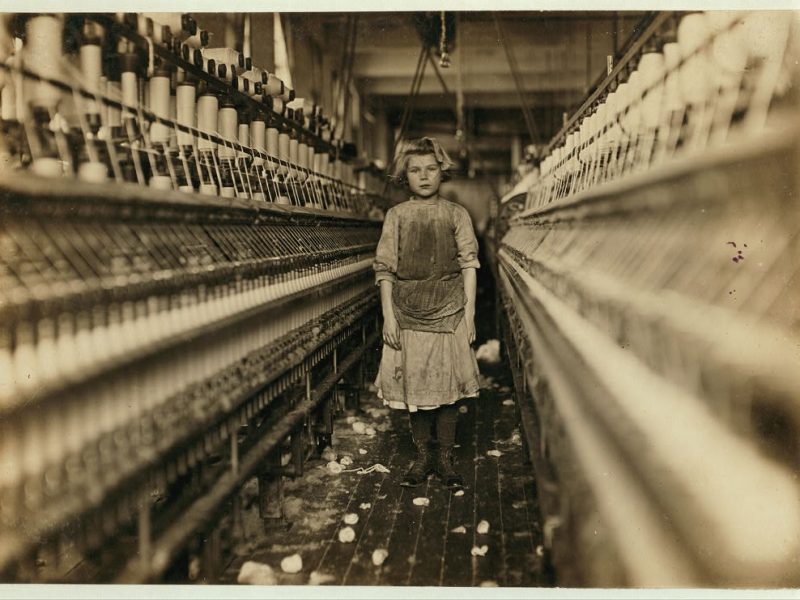
From cotton to cloud: In the data center debate, is rural Georgia once again being asked to carry the cost?
Across much of rural Georgia, the abandoned cotton warehouses and shrinking tax bases remain — enduring reminders that industries built to serve distant markets do not necessarily stay rooted in the communities that first sustained them.
My Grandpa Was Killed in World War II. I Met Him Through His Letters Home
Gina Wolf’s grandfather died before she was born. His letters sent to her grandmother from Europe during World War II made it possible to know what kind of man he was.

‘Sounds Like a Mutiny.’ Secret Recording Exposes Claims of Toxic Leadership After a Marine’s Suicide
This week’s War Horse story follows the systemic failures before and after the death of Cpl. Drew Mobley who was the third in two years at Marine Corps Base Quantico to die by suicide.
