
MARY BRASWELL: Looking Back at FFA
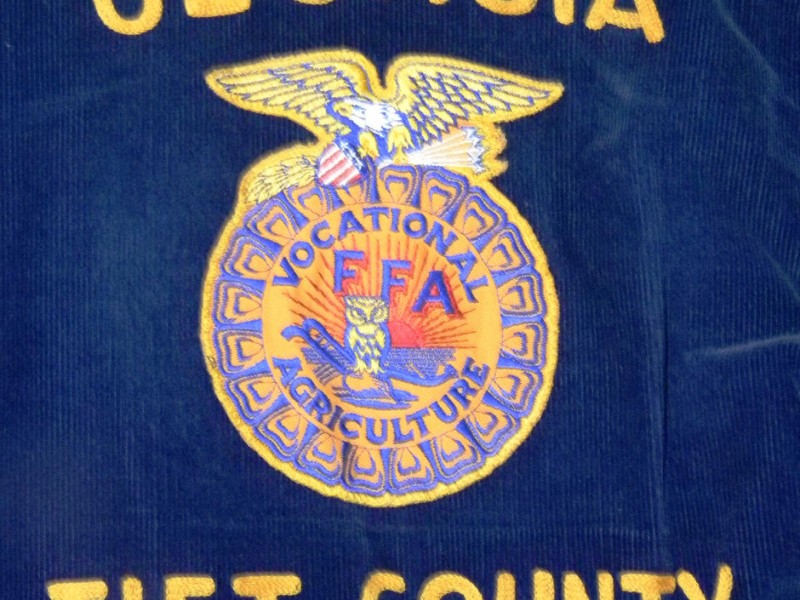
HISTORY: The first gathering of what became the FFA was held 1928.
By Mary Braswell
Each week Albany Herald researcher Mary Braswell looks for interesting events, places and people from the past. You can contact her at (229) 888-9371 or [email protected]. Follow @ABH_MBraswell on Twitter.
The week of George Washington’s birthday has been celebrated as National FFA Week since 1948. Here is a look back at the ever-changing organization.
THE TIMELINE
1917
— The Smith-Hughes National Vocational Education Act established vocational agricultural courses. Both Smith and Hughes were members of the Georgia Congress.
1925
— Agricultural education teachers at Virginia Tech organized the Future Farmers of Virginia. The FFV served later as the model for the Future Farmers of America.
1927
— The constitution and bylaws were written for the New Farmers of Virginia (NFA), an organization for African-American agriculture students.
1928
— The Future Farmers of America was established with 33 delegates (boys) from 18 states at the FFA first National Convention in Kansas City.
1929
— At the Second National FFA Convention, 33 states were represented by 64 delegates.
1930
— The first official dress uniform was adopted. It included a dark blue shirt, blue or white pants, a blue cap and a yellow tie.
— At the convention, delegates voted to restrict membership to boys only.
— The first official FFA manual was printed.
1933
— Designed after jackets worn to the National Convention by an Ohio chapter, the blue corduroy jacket was adopted as part of the FFA’s official dress.
1935
— The New Farmers of America (NFA) was founded in Tuskegee, Ala., for African-American boys interested in agriculture.
— Active FFA membership exceeded 100,000 for the first time.
1939
— Land was purchased near Alexandria, Va., for the first FFA-owned national headquarters. The 28.5 acres was part of George Washington’s estate.
1942
— The world was at war and only 217 people attended the national convention. Within two years, more than 138,500 active FFA members were serving in the Armed Forces.
1948
— FFA membership jumped to 260,300, an increase of 22,000 from the previous year. So many members attended the National FFA Convention that a folding-cot hotel was set up in the basement of the Kansas City Municipal Auditorium for the overflow.
— FFA Week was celebrated for the first time. The week of Georgia Washington’s birthday was, and still is, National FFA Week.
1950
— Congress granted FFA a federal charter, making it an integral part of public agricultural instruction under the National Vocation Education Acts. The organization, however, receives no federal funding.
1952
— The first issue of The National Future Farmer magazine was published.
1953
— The U.S. Postal Service issued a commemorative stamp to celebrate FFA’s 25th anniversary.
1965
— New Farmers of America and Future Farmers of America merged.
1969
— Membership was opened to girls. Females now account for just under 45 percent of all FFA members.
1976
— Alaska became the last of the 50 states to obtain a national FFA charter.
1982
— Jan Eberly of California became the first female national FFA president.
1988
— Future Farmers of America changed its name to the National FFA Organization to reflect diversity in the industry of agriculture.
1994
— Corey Flournoy of Illinois became the first African-American national FFA president.
1996
— The official website for FFA made its debut at www.FFA.org.
2004
— The first live webcast of the national convention was available at the official FFA website.
2005
— The National FFA launched Seeds of Hope, a fundraising campaign to help rebuild agricultural education and FFA programs along the Gulf Coast following Hurricane Katrina. A total of $835,699 was distributed to affected programs.
2016
— There are 610,240 FFA members in grades 7-12 who belong to one of 7,665 local FFA chapters throughout the U.S., Puerto Rico and the Virgin Islands.
THE JACKET
— The official colors of FFA are national blue and corn gold (adopted in 1929).
— More than 50,000 FFA jackets are manufactured every year.
— The jacket is to be worn only by members.
— The jacket should only be worn to places that are appropriate for members to visit.
— Members should refrain from use of tobacco and alcohol while wearing the FFA jacket or officially representing the organization.
— When an FFA jacket becomes faded and worn, it should be discarded. If the jacket is to be worn, given or sold to a non-member, the emblems and lettering are to be removed.
THE EMBLEM
— The cross section of the ear of corn provides the foundation of the emblem, just as corn has historically served as the foundation crop of American agriculture. It also is a symbol of unity, as corn is grown in every state of the nation.
— The rising sun signifies progress and holds a promise that tomorrow will bring a new day glowing with opportunity.
— The plow signifies labor and tillage of the soil, the backbone of agriculture and the historic foundation of our country’s strength.
— The eagle is a national symbol that serves as a reminder of our freedom and ability to explore new horizons for the future of agriculture.
— The owl, long recognized for its wisdom, symbolizes the knowledge required to be successful in the industry of agriculture.
— The words “Agricultural Education” and “FFA” are emblazoned in the center to signify the combination of learning and leadership necessary for progressive agriculture.
OFFICIAL DRESS
— Female members are to wear a black skirt, white blouse with official FFA blue scarf, black shoes and official jacket zipped to the top. Black slacks may be worn for traveling and outdoor activities, such as judging contests and camping.
— Male members are to wear black slacks, white shirt, official FFA tie, black shoes, black socks and official jacket zipped to the top.
MOTTO
Learning to do,
Doing to learn;
Earning to live,
Living to serve.
FORMER FFA MEMBERS
— Willie Nelson (Abbott, Texas)
— Jimmy Carter (Plains, Ga.)
— Jim Davis, creator of Garfield (Fairmount, Ind.)
— Taylor Swift (Hendersonville, Tenn.)
QUIK QUIZ ANSWER: (c) Dodge Ram trucks. The company was so pleased with the YouTube hits that it donated $1 million to FFA.
A Super Bowl commercial in 2013 (“So God Made a Farmer”) exceeded 18 million views on YouTube for what company?
a) John Deere
b) Roundup
c) Dodge
d) Purina
Answer at the bottom of Mary’s column.

Related Articles
From cotton to cloud: In the data center debate, is rural Georgia once again being asked to carry the cost?
Across much of rural Georgia, the abandoned cotton warehouses and shrinking tax bases remain — enduring reminders that industries built to serve distant markets do not necessarily stay rooted in the communities that first sustained them.
My Grandpa Was Killed in World War II. I Met Him Through His Letters Home
Gina Wolf’s grandfather died before she was born. His letters sent to her grandmother from Europe during World War II made it possible to know what kind of man he was.
‘Sounds Like a Mutiny.’ Secret Recording Exposes Claims of Toxic Leadership After a Marine’s Suicide
This week’s War Horse story follows the systemic failures before and after the death of Cpl. Drew Mobley who was the third in two years at Marine Corps Base Quantico to die by suicide.
