
MARY BRASWELL: Looking back at November news through the years
HISTORY: Bugs Bunny appeared in the Herald’s comics for the first time in November 1948.
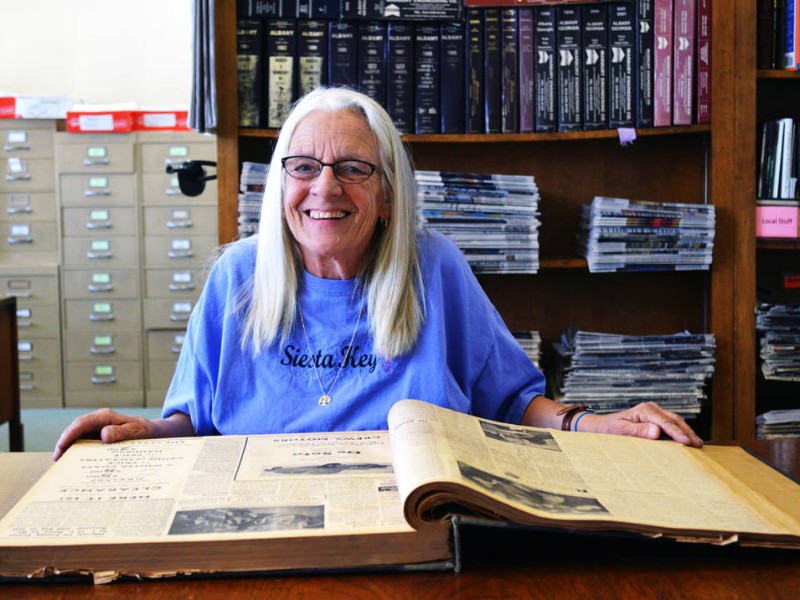
By Mary Braswell
November has Thanksgiving, shopping, friends, family, travel and more. See what was making the news during this month across the years.
1891
— The entire city shut down for the funeral of Col. Nelson Tift, founder of Albany. Tift died on Nov 21 at the age of 82. The line of march for the services followed this order, first to last: officiating ministers, pall bearers in carriages, hearse, escort of honor, family members in carriages, mayor and council, Confederate veterans, Board of Trade, Albany Guards and white fire department, Colquitt Guards and the black fire department. The lineup ended with the general procession of friends and acquaintances.
1913
— Albany’s newest bank, the Merchants and Farmers Bank, opened its doors on Pine Street. The building’s interior, with the exception of the wall coverings and desks, showed no woodwork but was instead all marble.
— For sale or rent: The plantation known as the Cruger Place, 7 miles south of Albany, includes a total of 1,432 acres with 100 acres in open land plus 26 tenant house (no price listed).
1924
— Shopping at the Great Atlantic & Pacific Tea Company (A&P) in Albany found the following items on special: Snowdrift shortening, 8-pound can — $1.47; 10 pounds of white potatoes — 19 cents; Fresh hams — 24 cents per pound; Lemons — 25 cents per dozen, and 24 pounds of flour — $1.03.
1925
— Albany Realty-Development Corp. announce the opening of Avalon, Albany’s Master Subdivision. Located at the end of Highland Avenue west of Slappey Drive, the residential area offered every restriction possible to preserve its “high character.” Lots averaged 70-by-150 feet and were priced from $550 to $650. All building sites were eligible for running water, sewerage and electricity.
1931
— The Dougherty County Grand Jury gave its recommendations. One on the list read: “That further attention be given to the feasibility of consolidation of the county and city governments, saving the taxpayers $75,000 or more annually.”
— Reporting on expenditures for the month of October, the Dougherty County Welfare Department stated the expenditures had been the highest yet for the year. A total of 211 families were issued relief costing the department $361.47.
1941
— A mandatory blackout was ordered for all merchants in Albany for Nov. 2. The order included show windows, signs, outline and ornamental lighting, as well as interior and exterior lighting for decorative and advertising purposes. The order also prohibited the use of flood or field lights for sports or entertainment events.
— Immediate re-establishment of the Lee County chain gang was recommended by the grand jury. Commissions agreed with a unanimous vote and action was expected before the end of the month.
1949
— The Albany City Commission’s Police Committee instructed city police to arrest ambulance drivers exceeding the 40 mph speed limit set for emergency vehicles. It was stressed that any arrests be made after patients were dropped off at the hospital.
1956
— The U.S. Supreme Court ruled that racial segregation on public buses was unconstitutional.
1959
— From Oct. 1 until mid-November, 16 new cases of diphtheria were reported by the Dougherty County Health Department. Parents were reminded to have their children vaccinated against the highly contagious disease. Diphtheria causes weakness, fever, difficulty breathing, swollen glands in the throat and in some cases, death, especially in those under the age of 15.
1963
— Dougherty County voters gave overwhelming support to a $1.6 million junior college bond issue. In support of Albany Junior College (later Darton, now Albany State University West Campus) were 7,151 voters with 864 voting against the bond issue.
1968
— Westover High School’s football team finished its inaugural season with a perfect record.
1969
— The largest anti-war rally in U.S. history took place when 250,000 people gathered in Washington, D.C. to protest the Vietnam War.
1978
— The largest mass suicide in history occurred as the Rev. Jim Jones led more than 900 followers to their deaths at Jonestown, Guyana. Members of his People’s Temple religious cult were directed to drink a cyanide-laced fruit drink, which all but a few did, including Jones and his wife.
1986
— The growing popularity of Automated Teller Machines (ATMs) in Albany was giving robbers a new way to get quick cash. In a week’s time, three robberies occurred after cash was removed from the machine. Each of the robbers showed guns to the victims and took place at three different banks, always between 7 and 9 p.m.
1992
— Live music was available at numerous locations in the Albany area Friday and Saturday nights. Some of venues were Nab’s Tavern, Acree Lounge, Eastside Kountry Klub, POB Lounge, House of Jazz, Charley B’s, Gargano’s East, Henry’s and Fat Daddy’s.
1999
— Albany State University head football coach Hampton Smith coached his last game of his 24th and final season with a 24-21 victory over Fort Valley State. Smith wrapped up his career with a 156-89-4 record.
Each week Albany Herald researcher Mary Braswell looks for interesting events, places and people from the past. You can contact her at (229) 888-9371 or [email protected]. Follow @ABH_MBraswell on Twitter
QUIK QUIZ ANSWER: c) $2.52 million
FYI: The Final Jeopardy! answer was: “Most of this firm’s white-collar employees work only four months a year.” Ken Jenning’s question was “What is FedEx?” The correct question was “What is H&R Block?” After the show, H&R Block offered Jenning lifetime financial services.
Related Articles
From cotton to cloud: In the data center debate, is rural Georgia once again being asked to carry the cost?
Across much of rural Georgia, the abandoned cotton warehouses and shrinking tax bases remain — enduring reminders that industries built to serve distant markets do not necessarily stay rooted in the communities that first sustained them.
My Grandpa Was Killed in World War II. I Met Him Through His Letters Home
Gina Wolf’s grandfather died before she was born. His letters sent to her grandmother from Europe during World War II made it possible to know what kind of man he was.
‘Sounds Like a Mutiny.’ Secret Recording Exposes Claims of Toxic Leadership After a Marine’s Suicide
This week’s War Horse story follows the systemic failures before and after the death of Cpl. Drew Mobley who was the third in two years at Marine Corps Base Quantico to die by suicide.
