
National Novel Writing Month is a global challenge
A reporters experience participating in National Novel Writing Month
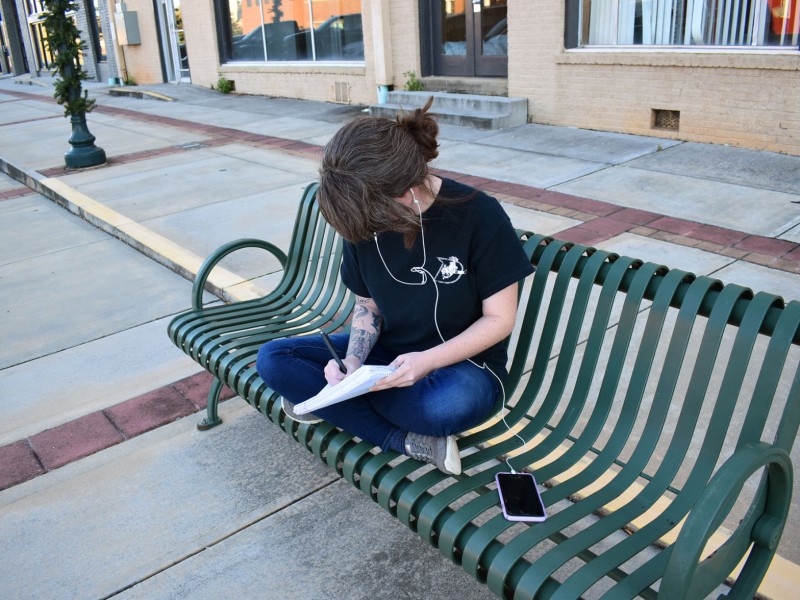
By Gypsy Crow
ALBANY — What if I told you that you could write an entire novel in a month? And what if I told you that millions of writers around the world are crazy enough to try it at the same time in one long, sloppy, exhausting sprint to the finish line?
At midnight on Nov. 1, NaNoWriMo, or National Novel Writing Month, begins. If you’ve never tried it — or even heard of it — it’s a challenge to write a book in 30 days or less.
Now, one thing that people who are not career writers/novelists sometimes miss out on is the very tiny fine print that anyone who tries this dangerous task knows: You can’t write a novel in 30 days. What I mean is, you’re not going to have a perfectly polished manuscript on Dec. 1, ready to be lost in query-land among a mass of fiction, prose and memoirs.
The ultimate goal of NaNoWriMo is to hold that sweet newborn first draft in your hands. You have to nurture it, raise it, feed it, clothe it and pay for its education and medical expenses until it’s a grown functioning adult novel buying its first home on a shelf at Barnes and Noble.
It’s also a great opportunity to connect with other writers across the world on Facebook, Instagram, Twitter and, of course, the NaNoWriMo website forums. The website is useful because it tracks your progress and helps you see your goal as well as allows you to track progress of other projects throughout the year. If you want to participate, but don’t want to wait until next November, there is Camp Nanowrimo in April and July, which is generally more flexible.
There are NaNoWriMo meets-ups and events all over the country during which friends and strangers team up to help each other finish on time. In San Francisco, NaNoWriMo rents a ballroom and holds a fundraising event called The Night of Writing Dangerously, which is a write-a-thon/formal dinner at which you can ring a giant bell if you meet your word count.
For NaNoWriMo, what counts as a “book” is a 50,000-word-long document. To “win” NaNoWriMo, as completing the challenge is called, you have to write approximately 1,766 words a day for a completely new novel. You’ll find your bubble burst if you think books are usually a rounded 50,000 words. They’re usually longer with some exceptions. “Pride and Prejudice” by Jane Austen, for example, is around 100,000 words, but if you really want to pull an all-nighter, “IT” by Stephen King stretches past 400,000 words.
When you think about it, NaNoWriMo is really about getting the “skeleton” on the page so you can flesh it out into something you’ll be proud of.
If you’re wondering if you should try this next year, or if you should write a book at all, the answer is — if you want to. If you’re wondering what the process is like for someone who is not, in fact, Stephen King, I participated this year for the fourth year in a row.
I “lost” all previous years. Not to spoil the ending, but I lost this year, too.
On Day 1 I was determined to stay up on Halloween, and at midnight, I would type away on my story valiantly. The words would come easily because we’re writing the Great American Novel here. So I said to myself in the words of the 1999 cult classic Baby Geniuses, “The night is young, and so am I.”
And then I went to sleep.
After having the best rest of my life, I wrote 1,200 words and went to work, where I worried about the state my characters were in for the rest of the day. How were they faring on the cliffhanger I dropped them on? Did they leave the oven on? Could they manage on their own for a few more hours?
The next day, I came up with an epiphany in the shower that would make my first draft, a.k.a. the skeleton, dance
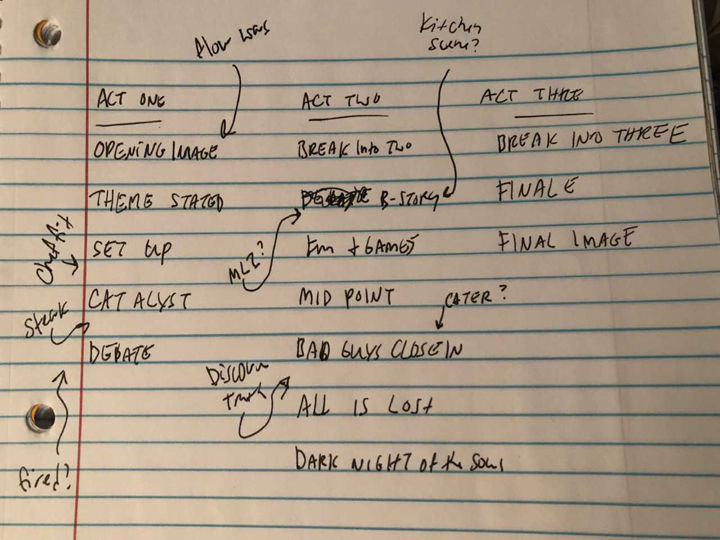
That weekend, things got complicated. I realized that I hated the story, the characters, the plot and even the name. All first drafts are bad, and that’s fine, but you have to listen to your gut when it comes to a project that time-consuming. I decided if I was going to start over, I needed to do it in the first couple of days so that I had the chance of catching up. I spent a few hours thinking of “Plan B”, but no ideas came. That night I sat down with a cup of tea and free-wrote the way I used to before I cared about plot points and outlines, and voila I found my book.
Just kidding.
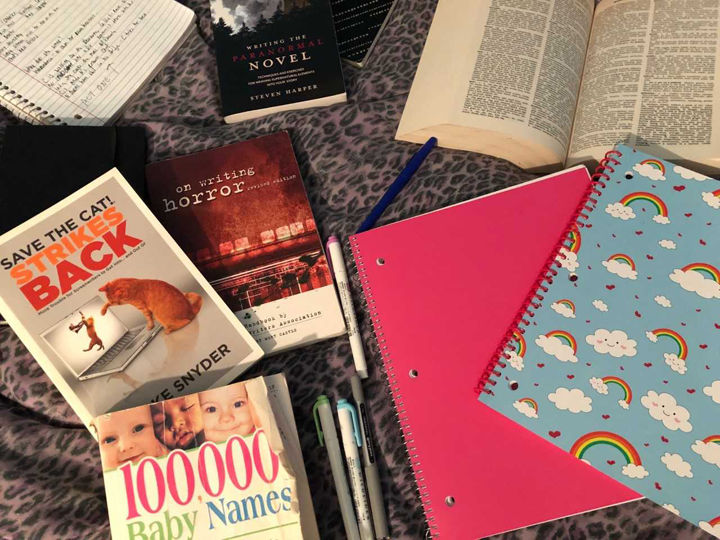
A few days later I scrapped that, too, but it’s OK. It’s fine. At least … at least that’s what I continued to tell myself. The first book was an adventure fantasy, which was fun and also my usual target genre, but I didn’t have the time to research it. The second was a dark horror story, but it took too much of a toll mentally. The third, as Goldilocks said, was just right. It’s a story about a woman who gets plunged into the world of the rich and glamorous as a personal chef for an eccentric, illustrious family. It’s the fluffiest love story I’ve ever concocted, and writing it has allowed me to be completely shameless for the first time in my life. My grandma will love it.
So I failed NaNoWriMo. I’m not too upset about it, to tell the truth. I did gain a new idea and a new direction, which may not feel as satisfying or rewarding as a completed manuscript. But it is promising.
The thing about failure, especially when it comes to writing, is that you’re allowed to keep trying. My novel isn’t going to vanish from thin air on Dec. 1. It’s still going to be scattered in scraps across several notebooks and a laptop.
If an agent rejects your manuscript, send it to 100 more. If 100 agents reject your manuscript, maybe go back over it and see what’s missing. Rejections are just as important as acceptance, and without failure, what is success?
Without getting too philosophical, I was asked by my editor to include an excerpt of whatever happened by the end of NaNoWriMo. I should issue a disclaimer, the following is taken directly from my computer with no editing or remorse. This includes notes and cop-outs that are essential for skeletons, a.k.a. first drafts.
Paige raised her balled fists and brought them down on the bamboo board. She hit it over and over again until the sides of her hands turned blue. (NOTES): this needs to feel like an old martial arts film – write it to seem like she’s training for something.
White powdered dust flew from beneath her palms to all sides. She let out a battle cry from within.
“Must you do that?”
Paige turned around to her roommate Emma standing in the kitchen doorway with her arms crossed. Emma frowned and knocked the flour off the front of her shirt. Paige looked around at the kitchen that was now covered in scraps of dough, a fine dusting of baking flour and back at Emma. Emma glared back.
“It makes me feel better,” Paige said, handing her a damp kitchen rag.
Emma wiped her arms clean and pointed the towel at the limp ball of dough on the counter.
“Look at this,” she scolded. “You’ve beaten all the gluten out of it.”
“Now it’s gluten free,” Paige said with a grin reaching each ear.
(Add meat to conversation with more action.)
Emma pretended to be frustrated, but she had been around Paige long enough to know that the only way she could get over a bad day was to take it out on her baking. The two had shared many a rage loaf and an anxiety pizza over cold beers and long talks. Lately more often than not.
Paige worked as a dish washer up to a line cook for years before her promotion to sous-chef at The Rose, a place where the rich and glamorous dined and the food sparkled like diamonds, but to the new Head Chef Louis, she had been a bitter inheritance. He veiled threats of replacement in his comments about her cooking and her upbringing. Good breeding was for dogs, not for people.
Chef Louis has proven himself to be incomparable on his most notable merits: laziness, unoriginality and short temperament, and the rest of the staff suffered.
Related Articles
From cotton to cloud: In the data center debate, is rural Georgia once again being asked to carry the cost?
Across much of rural Georgia, the abandoned cotton warehouses and shrinking tax bases remain — enduring reminders that industries built to serve distant markets do not necessarily stay rooted in the communities that first sustained them.
My Grandpa Was Killed in World War II. I Met Him Through His Letters Home
Gina Wolf’s grandfather died before she was born. His letters sent to her grandmother from Europe during World War II made it possible to know what kind of man he was.
‘Sounds Like a Mutiny.’ Secret Recording Exposes Claims of Toxic Leadership After a Marine’s Suicide
This week’s War Horse story follows the systemic failures before and after the death of Cpl. Drew Mobley who was the third in two years at Marine Corps Base Quantico to die by suicide.
