
Pastor H.C. Boyd leads Shiloh through 57 turbulent years
Minister opens Albany church doors to civil rights leaders despite threats
By Carlton Fletcher
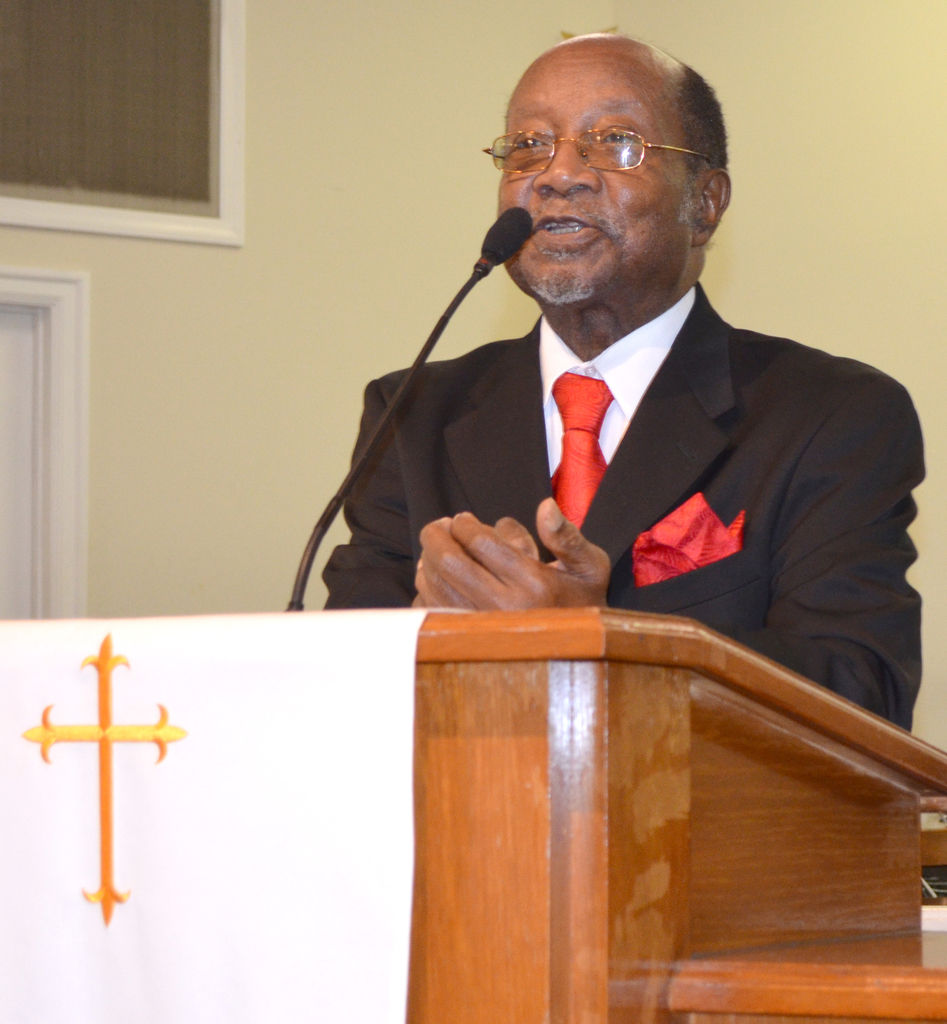
ALBANY — Moments before delivering his weekly sermon at Shiloh Baptist Church on a brisk October morning in 1963, the Rev. H.C. Boyd was discreetly passed a note by a church usher. The note said, simply, “There’s a bomb under Shiloh.”
Thoughts of the deadly bombing at 16th Street Baptist Church in Birmingham only three weeks before, a racially-motivated tragedy that left four little girls dead, quickly ran through the pastor’s mind as he looked out on his congregation. Offering up a quick prayer, Boyd made his decision.
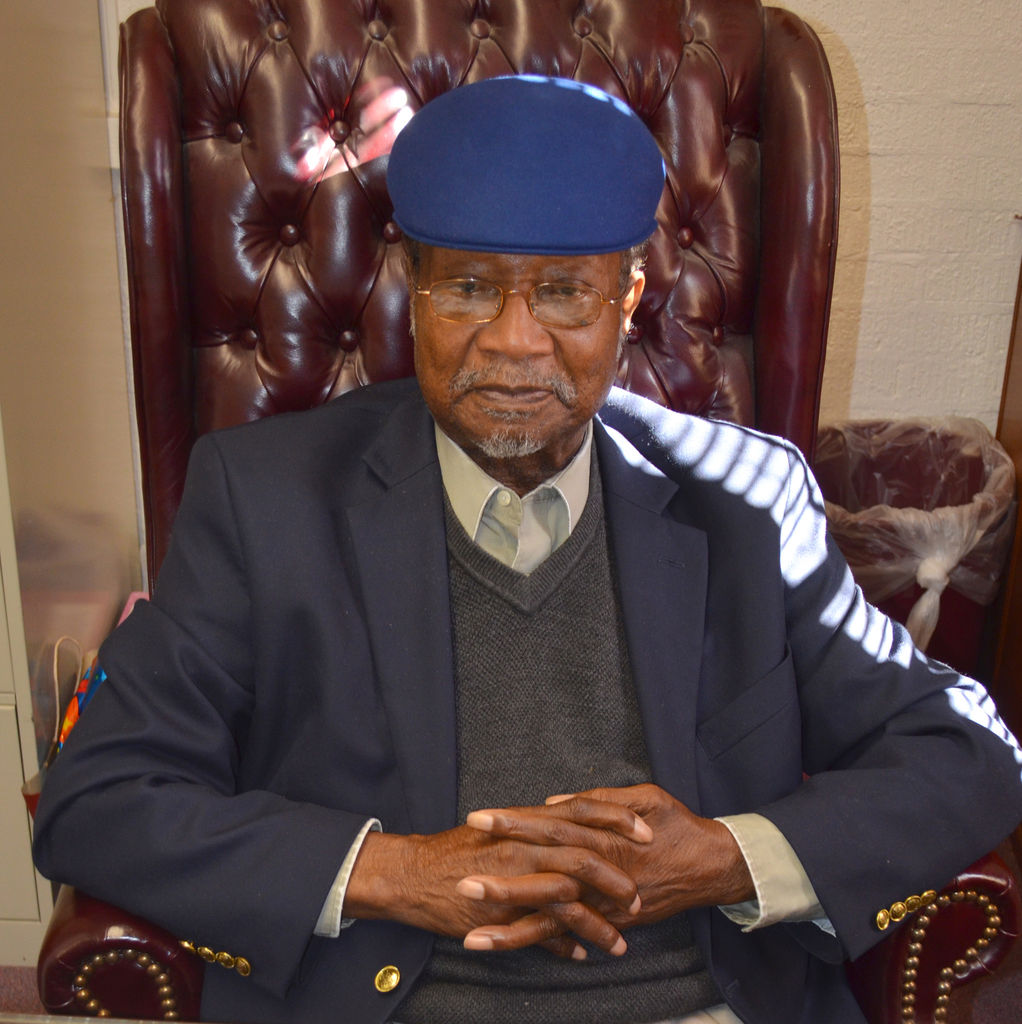
“At that time, in the heat of the civil rights movement, that threat was very real,” Boyd said as he sat with a visitor in his Shiloh office, decades removed from the turmoil of the movement but still bringing the word of God each Sunday. “Now if I’d told the congregation that there might be a bomb under the church, they would have scattered. And that’s exactly what the person who sent the note wanted to happen.
“Finally, I decided not to say anything about it, to go on with the service. If it was my time to go, or our church’s time to go, so be it. I decided there’s no better place to go to heaven from.”
In April, Boyd will celebrate his 57th year as Shiloh’s pastor. And while he no longer finds himself on the front lines of a social movement that literally changed the world, the passage of time has done nothing to dampen the celebrated pastor’s passion and enthusiasm.
“I’m OK with this life, but I don’t know that I’ll ever say that I’m satisfied,” Boyd said. “I’ve seen first-hand some of God’s miracles. I’ve seen three sets of new carpet installed in this building because of the people filling it up and then marching out of it. I’ve seen things change — sometimes slowly — so much so that this country that once denied blacks their basic rights actually elected a black man as president. I never thought I’d see that in my lifetime.
“What I hope to see, though, is someone to take this torch we’ve lit and carry it forward. I’m afraid our younger generations have lost sight of just how far we’ve had to come. It’s my prayer that they don’t throw away the hope that’s been given them, that they don’t destroy the dreams that others sacrificed for on their behalf.”
That Boyd has served at historic Shiloh for more than a half-century is an accomplishment worth celebrating. That he maintains the passionate eloquence that stirs others some six-plus decades into his calling makes him a treasure worth memorializing.
“That man is amazing,” former Albany City Commissioner and current Shiloh member Henry Mathis said. “When the very real dangers of the civil rights movement threatened citizens in Albany, Pastor Boyd stood his ground. When he was told the note on Shiloh would be called due if he got involved in the Albany Movement, Pastor Boyd opened the doors of Shiloh and told Martin King, Ralph David Abernathy and everyone else to come on in.”
Raised by sharecropper parents in tiny Ludowici in Georgia’s Long County, Boyd lived a hardscrabble early existence, never aware, though, that he was poor.
“We came up during a time when the likes of Eugene and Herman Talmadge would go on the radio and talk about the ‘n—–s in our state,’” Boyd said. “Nobody really thought anything about it; that was the way things were during that time. We never really had a whole lot, but we weren’t aware that we were bad off. We had food, and we got the opportunity to go to school.
“Most of the adults in our community didn’t have above a fifth-grade education, and we were taught by teachers who were selected by our parents. Schools, of course, were segregated at that time, but, again, that’s just the way things were. All classes in our school were taught in one room, and about the only segregation we cared about was that the boys were put on one side of the room, girls on the other.”
At 18, after high school graduation, Boyd was drafted into the then-segregated U.S. Army. He completed his basic training at Fort Benning in Columbus and was initially stationed at Camp Lee in Virginia. With World War II being fought in the Pacific and European theaters, Boyd’s unit was shipped to Hawaii but was never called into combat.
While in the Army, the young soldier, who had been baptized and ordained to preach the gospel at his home church before being drafted, took part in a pair of significant events, one that had global implications, another that was of a more personal nature.
“The Army was still segregated under (Franklin) Roosevelt … if he’d tried to integrate he probably would have been assassinated,” Boyd said. “But when he passed, (Harry) Truman came into office and ordered the troops to be desegregated. They were smart the way they did it. The top brass were told — ordered — to make it happen, and when it filtered down through the ranks, everything went pretty smoothly.
“One of the most significant things that happened to me personally while I was in the service is that I preached my first sermon. The Chaplain, a man named John Wesley Downs, supported me, and he gave me the opportunity to bring a message to the men in Hawaii. I’ll never forget that.”
When Boyd mustered out of the Army, he took to his calling. He brought the word at the Ellabell Baptist Church in Bryan County near Savannah. The position made for some long commutes as he was working during that time on getting a Sociology degree (with a minor in Religion) from Atlanta’s Morehouse College. He obtained that degree in 1951 and a short time later moved to Bakerton Baptist Church in Liberty County’s Allenhurst community.
Boyd’s next move was a significant one. He preached at three churches simultaneously: St. John Baptist in Waycross, St. John Baptist in Douglas and Pleasant Grove Baptist in Ocilla.
“Each church was different in its own way, but they had things in common,” Boyd said. “The people at all three were down-to-earth, and we came up with an arrangement that worked for all three. When you make moves like that, there is a calling, but there are also opportunities to improve your financial situation.
“I heard a great story at the Baptist Convention one year. A fellow pastor said he wanted a raise, so he went to the deacon board and said he would get a raise or else. When the board asked ‘or else what?’ he said, ‘Or else I’ll keep preaching for what you’re giving me now.’”
Boyd’s next call of duty brought him to Moultrie and Mother Easter Baptist Church, a position he said he expected to hold long-term. Fate — and God — had other ideas for him, though.
“My wife was attending Albany State College at that time, and my impression of the so-called Good Life City was that there is an image and then there is reality,” Boyd said. “I looked around and every official, every policeman, every bank teller, everyone who owned businesses in Albany was white. And while my wife and some other ladies were driving through town, they often came across white hecklers who’d pick at them, yell things at them.
“A friend of mine, E.J. Menefee, ask me to come over and meet the officers at Shiloh, but I told him I wasn’t interested. I wasn’t so sure about this ‘Good Life City.’”
But Boyd did meet with church officials at a downtown barber shop, a meeting that ended with Shiloh’s leaders telling Boyd, “We’ve got someone scheduled to bring the services right now, but we’ll call you if there’s an opening later.”
Even so, Boyd told Menefee, “I love Mother Easter. I’m not interested.”
But the next day Boyd got a frantic call from Menefee telling him the pastor scheduled to speak that Sunday had an emergency come up and couldn’t make it. Would he be willing to stand in? Boyd reluctantly agreed, and he was asked to return two weeks later to attend a church meeting with some of the leaders of Shiloh.
“This had to be God’s will because in my mind, I was going to stay at Mother Easter,” the pastor said. “The folks at Shiloh didn’t even ask me for my resume. The next night after we attended the meeting together, they called me and asked me to come to Shiloh.”
Boyd came, but deep down he wasn’t so sure he’d be in Albany long.
“I prayed on it after they asked, and I came to realize that it might indeed by God’s will,” he said. “But when I came I moved into the parsonage. I didn’t really expect to be here that long.”
That was 57 years ago. In those years he shepherded the church through the turmoil of the civil rights movement, stood strong in the face of threats and intimidation, never “taking my eyes off the prize.”
Now he’s fighting a different kind of battle, working to educate younger African-Americans in the community about the heritage many have all but forgotten.
“We answered the wake-up call with the civil rights movement, and our young people today are facing another wake-up call,” Boyd said. “Their indifference threatens to undo the legacy — the walk by faith — that their grandparents and their parents fought for. That would be a tragedy.”
Many of Boyd’s out-of-town friends and acquaintances, when they reach out to him, assume that he’s retired. But even with the passing of Barbara, his wife of 32 years, he soldiers on, insisting he still has work to do.
“Jesus said, ‘Be faithful in thy walk,’” Boyd said. “I’m still walking. We came together in this church through struggle, through threat, endangerment of my self, my family and my church, but we held onto our faith. That made the struggle worth going through.
“I continue to walk, to try and leave something for those coming behind us. I carry on, waiting for that day when God tells me, ‘Well done, son, well done.’”
Author
Related Articles
From cotton to cloud: In the data center debate, is rural Georgia once again being asked to carry the cost?
Across much of rural Georgia, the abandoned cotton warehouses and shrinking tax bases remain — enduring reminders that industries built to serve distant markets do not necessarily stay rooted in the communities that first sustained them.
My Grandpa Was Killed in World War II. I Met Him Through His Letters Home
Gina Wolf’s grandfather died before she was born. His letters sent to her grandmother from Europe during World War II made it possible to know what kind of man he was.
‘Sounds Like a Mutiny.’ Secret Recording Exposes Claims of Toxic Leadership After a Marine’s Suicide
This week’s War Horse story follows the systemic failures before and after the death of Cpl. Drew Mobley who was the third in two years at Marine Corps Base Quantico to die by suicide.
