
Signing bonuses latest answer to nursing shortage
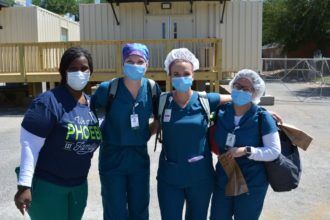
File Photo: Carlton Fletcher
By Andy Miller
amiller@
georgiahealthnews.com
ATLANTA — One sign of the severity of Georgia’s nurse shortage can be seen in the bonuses offered to experienced RNs to join a hospital work force.
Some health systems in the state are paying bonuses of more than $10,000 to attract nurses. And Piedmont Healthcare, which is rapidly becoming Georgia’s biggest health system, said it has offered bonuses of up to $30,000, a figure that has startled local health industry officials.
Nurses are not the only personnel in short supply. Respiratory therapists are also in high demand.
Meanwhile, some nursing homes have offered up to $10,000 sign-on bonuses for certified nursing assistants but have received “no results,’’ said Devon Barill of the Georgia Health Care Association, an industry group. “This is unprecedented,’’ he added.
Much of the RN shortage has been driven by the COVID-19 pandemic. Causes of the supply crunch include nurse burnout from pandemic duties, an aging work force, and RNs leaving for jobs that are less stressful – and often higher-paying.
The need for hospital bedside nurses with experience “is the worst we’ve ever seen it,’’ said Matt Caseman, CEO of the Georgia Nurses Association. It coincides with general work force shortages as businesses re-open operations as the number of COVID cases decreases.
Sign-on bonuses have been offered for years as health care organizations around the country struggle to recruit and retain nurses. Still, the amounts currently being offered appear stunningly high. Baptist Health System in San Antonio is offering sign-on bonuses of up to $20,000 to newly hired nurses, as well as to patient care and lab associates, Becker’s Hospital Review reported this month.
The nursing shortages, meanwhile, may prove worse in the future. RegisteredNursing.org recently reported that the number of RNs needed in the United States is estimated to skyrocket by 28.4 percent, from 2.8 million to 3.6 million.
“While most states are projected to keep up with demand, there are many places that are expected to have significant shortages in registered nurses,’’ the report said.
NurseJournal data show that Georgia has about 10 nurses per 10,000 population – the fifth-lowest ratio in the nation.
RN shortages existed before COVID-19, but the pandemic has exacerbated the problem, officials with Phoebe Putney Health System, based in Albany, said.
“We currently have a larger-than-normal number of openings for nurses, respiratory techs and other health professionals, including lab specialists and certified nursing assistants,’’ Ben Roberts, a spokesman for Phoebe, said. Phoebe is offering sign-on bonuses for certain positions of up to $12,000, paid out over two years, he said.
Another reason for the nursing shortage is that many nurses have been pursuing contracts as travel RNs, who can get paid high amounts for short-term work.
One nurse who requested anonymity told GHN on Wednesday that she left a metro Atlanta hospital for work as a travel nurse in California.
“It’s not as stressful, it’s more money and perks,’’ including housing and use of a car, she said.
The education pipeline isn’t supplying as many nurses as needed.
“Nursing schools simply aren’t graduating enough new nurses to keep up with demand, as many experienced nurses enter retirement,’’ Phoebe’s Roberts said. “Health care professions are challenging jobs that often require less-than-ideal working hours, so fewer students seem to be choosing careers in health care. There are many more opportunities for nurses outside the walls of hospitals today than in years past.
“Also, temporary staffing agencies have grown rapidly in recent years, offering salaries that often are difficult for hospitals to match. As contract labor pay soared during the pandemic, many nurses who had never before worked as travel nurses decided to explore those opportunities.’’
Phoebe has partnerships with multiple nursing schools in its area, providing scholarships and funding teaching positions that will allow those schools to increase enrollment and graduation numbers.
University Health Care System in Augusta said that currently there are smaller class sizes in nursing schools and a shortage of nursing instructors locally. The system also cited “the inability of students to complete their in-person clinical training because of COVID-19 that is slowing our ability to backfill those positions.’’
The hiring pressure is felt by smaller rural hospitals, which can’t match the pay of bigger urban medical centers.
Habersham Medical Center, with 53 beds, said it has traditionally served as a training ground for nurses right out of school. After a year or so of work at the Demorest hospital, many RNs often go to systems like Northeast Georgia or Piedmont for higher pay, said Habersham CEO Tyler Williams.
Piedmont, which is expanding to 15 hospitals in Georgia, said the need for acute-care nurses and respiratory therapists is high.
“This situation also has been exacerbated by having to compete with national agencies, which are paying extremely high hourly rates,’’ Piedmont spokesman John Manasso said.
But the Atlanta-based system is seeing recruitment pick up.
“Qualified nurses may earn up to $30,000 in sign-on bonuses and/or relocation with a commitment that extends through a two-year period,’’ Manasso said. “So far, our offering of enhanced sign-on bonuses has penetrated the market and encouraged travel nurses to come off the road and has encouraged nurses outside the state to come to Georgia for full-time employment with our organization.’’
Emory Healthcare did not disclose the bonuses, if any, that it offers to new hires. The jobs in demand, besides nurses, include pharmacists, medical assistants, and positions in the laboratory, environment services and food and nutrition, Emory spokeswoman Janet Christenbury said.
“During the pandemic, hospital nursing work was challenging, and some nurses left the profession for new opportunities, while others retired or chose travel nursing positions in other states with severe shortages,’’ she said. “With a nursing shortage in place prior to the pandemic, the additional loss of nurses to other career opportunities has intensified the shortage gap over the past year.’’
Marietta-based Wellstar Health System, which also didn’t specific incentive pay, said factors involved in staffing shortages include “increased competition, an enormous demand for health care workers due to the pandemic, and reductions in the nursing workforce from retirement.”
Barill of the Georgia Health Care Association said that long-term care providers now face “an even greater decline in the number of individuals seeking and maintaining careers in the profession.’’
Due to staffing shortages, she said, many facilities “have had to limit admissions, which negatively impacts access to care.’’
Low reimbursement from Medicaid hurts nursing homes’ ability to pay competitive wages and to recruit and keep a competent workforce, Barill said. But in an attempt to keep workers, facilities have offered staff wage increases, hazard pay, retention bonuses, shift differentials and overtime.
“We cannot discount or avoid confronting the very real impact that fear and emotional fatigue has had on existing and potential work force over the course of the pandemic,’’ she added. “Frontline staff feel as if they have been placing themselves and their families at risk each time they enter the center. This concern has diminished somewhat as COVID incidence rates have decreased, vaccine availability has increased and the supply chain is less strained.’’
Related Articles
From cotton to cloud: In the data center debate, is rural Georgia once again being asked to carry the cost?
Across much of rural Georgia, the abandoned cotton warehouses and shrinking tax bases remain — enduring reminders that industries built to serve distant markets do not necessarily stay rooted in the communities that first sustained them.
My Grandpa Was Killed in World War II. I Met Him Through His Letters Home
Gina Wolf’s grandfather died before she was born. His letters sent to her grandmother from Europe during World War II made it possible to know what kind of man he was.
‘Sounds Like a Mutiny.’ Secret Recording Exposes Claims of Toxic Leadership After a Marine’s Suicide
This week’s War Horse story follows the systemic failures before and after the death of Cpl. Drew Mobley who was the third in two years at Marine Corps Base Quantico to die by suicide.
