
State reptile gopher tortoise’s habitat is on the decline
Special Illustration
By Tom Seegmueller
[email protected]
ALBANY — Love is in the air for Georgia’s official state reptile, and female gopher tortoises are busy laying clutches of eggs outside their burrows.
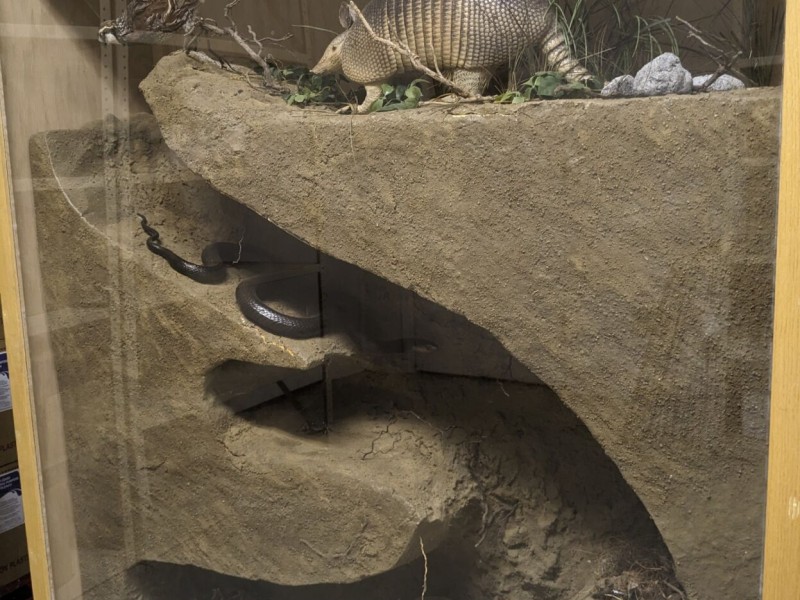
Although gopher tortoises currently seem to be well-distributed throughout their range, there is a serious decline in their overall numbers and favored habitat. The gopher tortoise is considered a keystone species of the Coastal Plain, as the survival of more than 360 other species are dependent upon the tortoise’s subterranean burrows for their survival.
Therefore, officials are working to assure every effort is made to ensure each nesting effort is successful. The female gopher tortoise lays her clutch of three to 15 ping-pong ball-size eggs on the dirt apron outside the mouth of her burrow, covering them with a protective layer of sand. This will hopefully protect them from nest-raiding predators including dogs, raccoons, skunks, bobcats and coyotes.
However, there is nothing she can do to protect this fragile clutch from careless humans walking past the entrance to her burrow. Therefore, whenever a gopher tortoise burrow is located, it is best to avoid impacting a 10-foot radius at its entrance. This is especially true during nesting season while the eggs remain buried there.
If the eggs are undisturbed, they should hatch into baby tortoises between 80 and 100 days after she lays them. They will then move into the main burrow or hide under the debris on the forest floor until their shells harden and they are capable of digging their own burrows.
“Once they reach the size of a grapefruit, their chance of survival increases greatly,” said James Hunt, who is the Georgia Department of Natural Resources gopher tortoise biologist.
A mature tortoise will establish a home range of approximately 10 acres and have several burrows in that range.
Although gopher tortoises are well-established in much of their range, they have been affected by direct impact with humans as well as habitat changes related to changing forestry and land management practices, including fire suppression. Ironically, one of the newest challenges facing the tortoise is the large-scale destruction of their habitat for the construction of massive solar farms.
Because gopher tortoises are long-lived — 60-plus years — and adults have few natural predators once they reach maturity, they can persist for a number of years in areas with declining habitat. However, if sustainable populations for reproduction and juvenile recruitment are to remain in Georgia, large expanses of land need to be managed with their survival in mind.
With more than 40% of the remaining gopher tortoise habitat being located on private property, landowners need to consider management practices that are beneficial to the tortoise whenever possible. Meanwhile, all Georgians should tread carefully around the state reptile’s burrows.
Author

Related Articles

From cotton to cloud: In the data center debate, is rural Georgia once again being asked to carry the cost?
Across much of rural Georgia, the abandoned cotton warehouses and shrinking tax bases remain — enduring reminders that industries built to serve distant markets do not necessarily stay rooted in the communities that first sustained them.

My Grandpa Was Killed in World War II. I Met Him Through His Letters Home
Gina Wolf’s grandfather died before she was born. His letters sent to her grandmother from Europe during World War II made it possible to know what kind of man he was.

‘Sounds Like a Mutiny.’ Secret Recording Exposes Claims of Toxic Leadership After a Marine’s Suicide
This week’s War Horse story follows the systemic failures before and after the death of Cpl. Drew Mobley who was the third in two years at Marine Corps Base Quantico to die by suicide.
