
Talking turkey about Georgia’s No. 2 game species
By Tom Seegmueller
[email protected]
According to data released by the Georgia Department of Natural Resources, since 2005 statewide the number of deer hunters has been estimated at 300,000 with turkey hunters averaging 54,000. However, since the state was first established as a colony, unregulated harvesting of deer and turkey and exploitation of Georgia’s woodlands almost led to their demise.
In colonial Georgia, hunting deer and turkey were critical to sustenance and financial gain leading the Trustees of the Colony of Georgia to enact one of the state’s first game laws, which prohibited the killing of deer and turkeys between March 1 and Aug. 1. Hunters also were required to buy a license from the Trustees with prohibitions against killing does and limiting the annual harvest of bucks to five.
These laws might have looked good on paper, but they were relatively unenforceable and generally ignored and violated, contributing to the continuing decline of both species. By 1859 the decline of the state’s turkey population motivated the state once again attempt to protect them by establishing a closed season from April 10 until Oct. 1. This regulation also was relatively unenforceable and did little to deter the impact of market hunting on the state’ deer and turkey population.
Combine this with the foraging efforts of two opposing armies numbering in the thousands roaming the woodlands of Georgia during the 1860s, and a further downward spiral was inevitable.
The stories of the restoration of both species are quite amazing. For now, I’m going to focus on the efforts to restore Georgia’s turkeys and tell the story of the state’s deer another day, although they are interwoven in many ways.
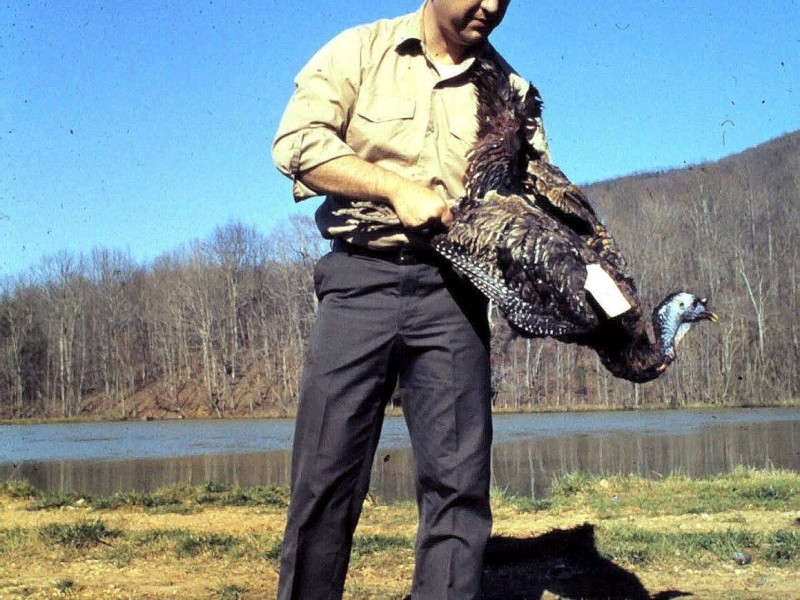
Restoration of wild Eastern Turkey in Georgia began in the early 1940s with the Georgia Game and Fish Commission establishing a refuge for the birds in McDuffie and adjoining counties. By 1948 the populations in the area were high enough that a trapping program was undertaken to try to relocate some of these birds to what is now Berry College. However, trapping and restocking proved to be a very labor-intensive and costly effort.
So in the 1950s, the commission began a program that would result in approximately 10,000 Eastern Turkeys being raised for release across the state. By 1966, it was apparent that these birds raised in captivity could not adapt and thrive in the wild. Fortunately, at the same time Georgia’s forests were regenerating to the point that in some counties with isolated areas, wild turkey populations had survived to the point these birds might be trapped to restock suitable habitat in other areas of the state.
The next chapter of the story has a very local spin when Ron Simpson stepped into the picture in SOWEGA a decade later. Simpson’s love of the outdoors led him to study forestry and wildlife management at the University of Georgia, where he graduated with a master’s in science in 1965.
“My major professor was Jim Jenkins, and he mentioned to Jack Crockford, who was serving as assistant director of the Georgia Game & Fish and knew I had an interest in working for the commission and had applied for a job,” Simpson recalled.
Crockford told Jenkins there was an open position and to send Simpson to see him. The results: He was hired in 1965 as a district Biologist, starting his career in Dawson. From there he went on to serve as an analyst in Madison before returning to SOWEGA in 1967 to lead the efforts to restore turkey in this part of the state.
Today, Crockford is known as the father of Georgia’s deer restoration in the same way that Simpson is recognized for his efforts to restore Georgia’s turkey population. Simpson’s contributions to the state’s turkey population are so profound that his data related to the restocking efforts is cited in the current strategic management plan for wild turkeys in Georgia.
“These restocking efforts, along with increased measures to control poaching, resulted in an increase from an estimated 17,300 birds in 1973 to an estimated population of 113,000 birds in 1984 with huntable populations in almost every county,” Simpson said. “The last restocking occurred in 1998 in Irwin County.”
Recognizing the time and expense involved in a statewide trapping and release program Simpson established strict criteria a property must meet for inclusion in the restoration project.
“Someone who just had 400 acres or land with poor habitat just wasn’t going to get any birds; they were too hard to come by,” he said. “However, many of the large properties managed primarily for quail did not necessarily have the best turkey habitat.”
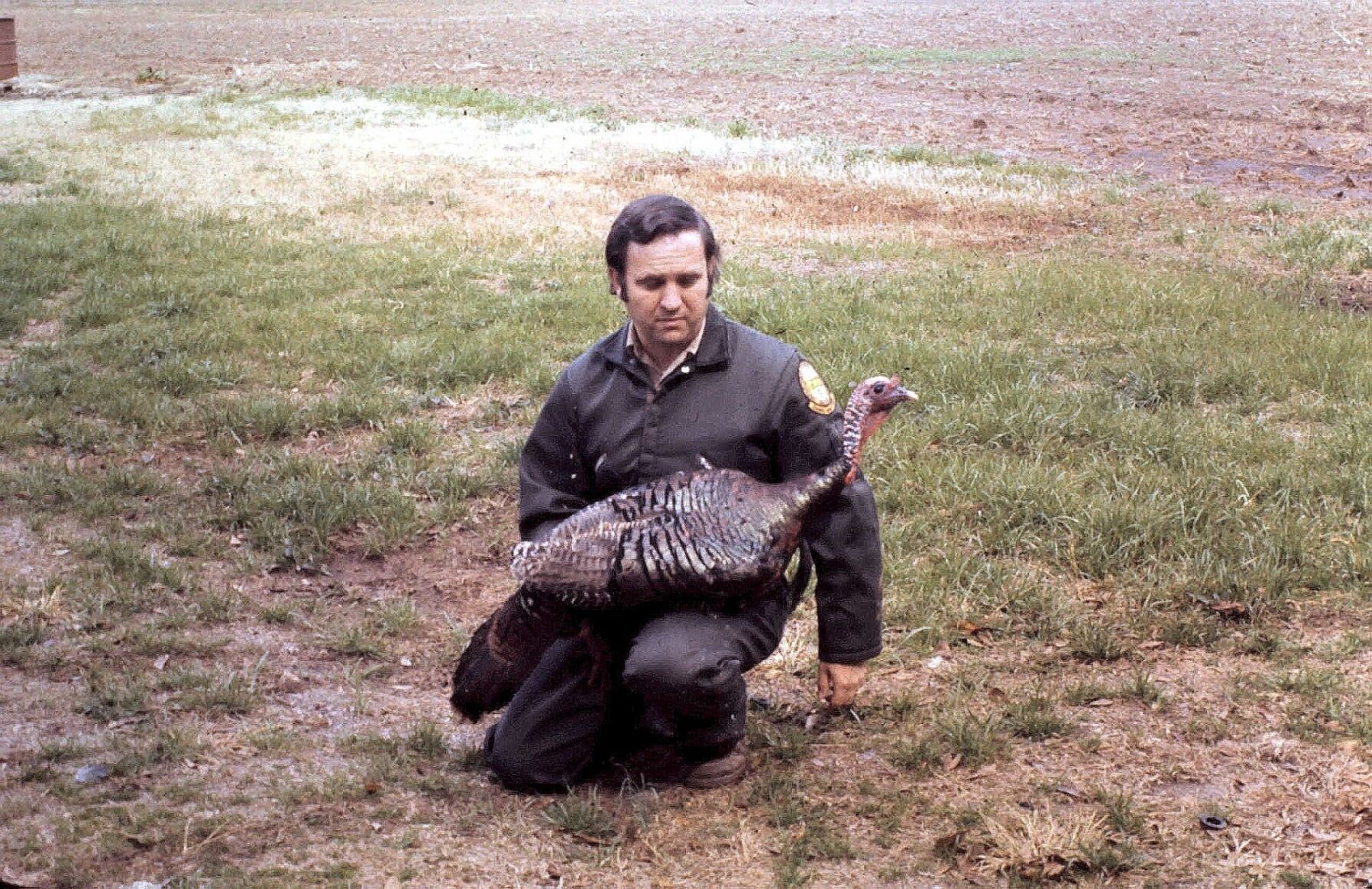
Trapping turkeys on this scale would prove to be labor-intensive. Initially rocket and cannon nets were deployed to trap turkeys feeding on bait. In the later years turkey were collected by using drugged bait.
“Once traps or drugged bait was set out, they had to be monitored continually to ensure birds were not harmed by the traps or overdose,” Simpson said. “Trapping was started immediately after deer season closed and the turkey nesting season started. For that two-month period, there weren’t any days off or vacations for us.”
Simpson said only 50 turkeys were trapped in the first year of the season, in large part due to bird scarcity. However, during the 25-year trapping program, Simpson’s team would trap approximately 4,000 birds. These birds were generally released in groups of 12, including three to four gobblers and seven to eight hens.
Simpson said the state could afford such a long-term project because it was set up to qualify for federal funding through the Pittman-Robertson Act. He went on to explain how the act, signed into law in 1937 by Franklin D. Roosevelt, allocated an 11% tax charged on firearms, ammunition, and archery equipment be given to the Secretary of the Interior instead of going into the Treasury.
The Interior Secretary was empowered to distribute these funds to the states for the management of game and habitat. Deer, turkey, and wood ducks were early targeted species. The act requires states to pay 25% of the project’s cost, which is usually covered from the revenue generated by the sale of hunting licenses. It is estimated the act has distributed more than $11 billion to the states since it was enacted.
Georgia DNR data estimates the turkey population exceeded 300,000 birds in 1991. However, subsequent data show a dramatic decline in these numbers. Harvest records indicate that approximately 75,000 birds were harvested in 2005. From that point, a steady decline has been recorded. Information provided by DNR Region 5 Supervisor Brian Vickery shows 37,568 turkey hunters in 2022, down 31% from those hunting turkey in 2021, harvesting 10,970 gobblers, a decrease of 40% compared to the 2021 harvest.
The current management plan highlights a number of factors and concerns contributing to the decline. A dramatic reduction of good habitat seems to be one of the primary factors. The increased popularity in supplemental feeding for wildlife and the legalization of baiting has increased the exposure of game animals to Aflatoxin, a poisonous fungus commonly found in feed pellets, livestock feed, and grain.
High humidity and major changes in temperature create condensation in feeders, promoting the fungi’s growth. Another factor related to supplemental feeding appears to be an increase in the population of nest predators, particularly where feeding is not done on a year-round basis.
With private landowners holding 93% of land in Georgia, it is crucial that they become partners in future management efforts.
“I know it’s gonna sound strange, but I got more cooperation from private landowners that had turkeys on their property than I did trapping on public lands,” Simpson said. “That came with a lot of negative feedback on trapping there. The people thought we were taking their birds and putting them on some politician’s friend’s property.”
In response to the steady decline in turkey numbers and hunter success, the Georgia DNR made some aggressive changes for the 2022 spring turkey season that are in still in effect for 2024, including: a one-week delay in the season opener on private land and an additional week delay on public lands; reduction of the season bag limit from three to two gobblers; a reduction of the daily bag limit to one bird per day, and reducing the WMA bag limit to one bird per hunter per WMA. A review of all regulations is recommended before heading out on a hunt.
Author

Related Articles
From cotton to cloud: In the data center debate, is rural Georgia once again being asked to carry the cost?
Across much of rural Georgia, the abandoned cotton warehouses and shrinking tax bases remain — enduring reminders that industries built to serve distant markets do not necessarily stay rooted in the communities that first sustained them.
My Grandpa Was Killed in World War II. I Met Him Through His Letters Home
Gina Wolf’s grandfather died before she was born. His letters sent to her grandmother from Europe during World War II made it possible to know what kind of man he was.

‘Sounds Like a Mutiny.’ Secret Recording Exposes Claims of Toxic Leadership After a Marine’s Suicide
This week’s War Horse story follows the systemic failures before and after the death of Cpl. Drew Mobley who was the third in two years at Marine Corps Base Quantico to die by suicide.
