
Thanksgiving was grudgingly accepted in the South
Special Photo
By Tom Seegmueller
[email protected]
ALBANY – Public reaction to proposed and enacted restrictions to this year’s Thanksgiving celebrations highlight the cultural significance of this national holiday. However, this was not always the case.
Although many consider the genesis of Thanksgiving to be the observation of a joyous celebration between Puritan Pilgrims and the Wampanoag Indians, this is not really accurate as the 1621 celebration at Plymouth Rock was in fact the observation of traditional European harvest festivals.
However, the first feast of thanksgiving in the New World did have a secondary purpose in not only celebrating a successful harvest but literally survival as well. Although deeply clouded by myth, we do know the Wampanoag did teach the European settlers to harvest native eels, fish and game as well as how to plant corn, aiding in the settlers’ initial survival. We also know that the feast was cooked by four women who survived the first winter. They were assisted in their work by surviving children and servants.
Records indicate that approximately 50 surviving Pilgrims and 90 Wampanoag warriors who, contrary to legend, were not invited to partake of this feat, attended that first thanksgiving meal. As the Pilgrims began firing their guns in celebration of the event, the Wampanoag, thinking that they were going to be attacked, showed up expecting war. Seeing the celebration, they sent out hunters who returned with five deer. Although things remained peaceful, this first celebration was far from the joyous ceremony we’re taught in elementary school. In reality, it was a situation fraught with potential consequence.
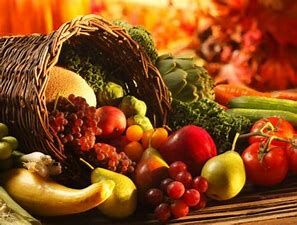
As Southerners, we now have regional pride in the entrees and side dishes that overflow most tables as we celebrate Thanksgiving. No greater debate can be found in regard to regional culinary variations than the merits of stuffing versus dressing, with a secondary regional debate held over the necessity of oysters in the dressing.
Interestingly, until the late 19th century, Thanksgiving was generally a Northern tradition. In fact, the holiday feast we celebrate today was almost unheard of in the Southern states. The New England celebration would gradually spread in the North, with western expansion into the Michigan and Ohio territories, but would not filter south.
Records of the celebration into the 1840s show an almost universal national menu where Thanksgiving was being celebrated. It included roasted turkey, mashed potatoes, creamed onions, mince and pumpkin pie, and cranberry sauce. Chicken pie appears to have been a mainstay that disappeared from the menu following the War Between the States.
The celebrations status as a national holiday can trace its roots to the efforts of a New Hampshire widow, Sarah Josepha Hale. As a mother of five children, she briefly worked in her sister’s millinery shop to support her family. However, she began submitting poetry for publication, and with the support of friends in 1827 published a novel, “Northwood,” which included an elaborate description of a traditional New England Thanksgiving celebration.
Hale was asked to be the editor of a new ladies magazine in Boston, and soon became influential as a writer as well. She broke with the custom of the day and mandated that the magazine include original American material as opposed to following the lead of British trends and fashion. In her editorials, she began to argue that Thanksgiving be celebrated on the last Thursday in November, not just in New England but nationally.
In 1846, Hale began an annual letter-writing campaign to the nation’s governors imploring them to make Thanksgiving an annual holiday. As a historian and “traditionalist,” she recognized that in 1789 George Washington had proclaimed the celebration of a day of public thanksgiving.
The roots of Southern resistance to the holiday can be found in the feasting associated with Christmas in the region. In the Northern states, with roots in Puritan Doctrine, Christmas was observed as a day associated with the pagan customs of Roman festivals. So devout were they in this belief that the Pilgrims at Plymouth spent the day in 1620 building their first permanent structure in the New world. A philosophy that would continue in New England for almost 200 years. Whereas in the South, Christmas had long been a celebration associated with feasting and merriment, so a formal celebration of Thanksgiving was considered to be a repetitious and wasteful celebration.
Further resistance is exemplified by the statement in 1853 by Virginia Gov. Joseph Johnson when he declined celebrating Thanksgiving, citing Thomas Jefferson’s doctrine regarding the separation of the church and state. His successor, Henry A. Wise, would go even farther in 1856 stating, “This theatrical national claptrap of Thanksgiving has abided other causes in setting thousands of pulpits to preaching ‘Christian Politics’ instead of humbly letting the carnal kingdom alone and preaching singly Christ crucified,” codifying the celebration of Thanksgiving as an abolitionist holiday.
In the late antebellum era, the South was split on the issue, with the governors of Alabama, Georgia, North Carolina, South Carolina, and Mississippi accepting Hale’s recommendation declaring Nov. 25 be a day of Thanksgiving. Other Southern states refrained form celebrating the date, and the outbreak of war stalled any further spread of the holiday.
In 1863 Hale wrote President Abraham Lincoln encouraging him to declare the last Thursday of November as a national day of Thanksgiving. Lincoln complied and read a declaration written by Secretary of State William H. Seward. The declaration recognized the sacrifices and efforts of the citizens of the nation during this painful period and the progress being made to bring the conflict to an end.
As the Confederate states returned to the Union during reconstruction, the holiday would now apply to them as well. However, the acceptance of the holiday would be slowed not only by political fervor but by the post-war economy. In 1868, the “Weekly Advice” in Baton Rouge, La., reported that although public offices were closed, “Very little preparation had been made for big dinners. Turkeys are scarce, pumpkins are not fashionable eating in these latitudes.”
The trappings and traditions of Thanksgiving would not return here until the end of Reconstruction when the celebration was not seen as a “federal mandate.” The traditions of the holiday were further spread across the South as popular periodicals of food, fashion and leisure once again flowed from the North to the South, reinforcing these customs. Some culinary historians note the universal inclusion of cranberries in menus across the South as the final mark of acceptance, as this berry does not grow south of New Jersey. In 1890, the “Charlotte News” reported, “With each succeeding year, the observance of this day has grown more general until now it is second, as a holiday, only to Christmas.”
By the dawn of the 20th century, Thanksgiving was truly a national celebration. An interesting side note: During the Spanish Flu epidemic, quarantines presented a similar challenge to the holiday as COVID presents today.
Following Lincoln’s proclamation, each succeeding president would make a similar annual declaration. In 1939, Franklin D. Roosevelt attempted to move Thanksgiving to an earlier date in the month. However, this move proved to be unacceptable to school and football schedules, creating so much chaos that Congress had to intercede and officially codify the holiday be observed on the fourth Thursday of November.
Latest figures indicate that the national acceptance of the tradition has reached the point that 45 million turkeys were consumed in 2017. However, the holiday’s impact on culinary tradition may well date to 1953, when Swanson foods did not sell as many turkeys as it had anticipated.
Swanson salesperson Gerry Thompson came to the rescue, creating the world’s first TV dinner. Selling for 98 cents, they were an immediate hit. The dinner consisted of turkey, cornbread dressing, peas, and sweet potatoes. Thompson received a $1,000 bonus for his idea.
Related Articles
From cotton to cloud: In the data center debate, is rural Georgia once again being asked to carry the cost?
Across much of rural Georgia, the abandoned cotton warehouses and shrinking tax bases remain — enduring reminders that industries built to serve distant markets do not necessarily stay rooted in the communities that first sustained them.
My Grandpa Was Killed in World War II. I Met Him Through His Letters Home
Gina Wolf’s grandfather died before she was born. His letters sent to her grandmother from Europe during World War II made it possible to know what kind of man he was.
‘Sounds Like a Mutiny.’ Secret Recording Exposes Claims of Toxic Leadership After a Marine’s Suicide
This week’s War Horse story follows the systemic failures before and after the death of Cpl. Drew Mobley who was the third in two years at Marine Corps Base Quantico to die by suicide.
