
YONATAN HAMBOURGER & TZALI REICHER: It takes a village to make a country
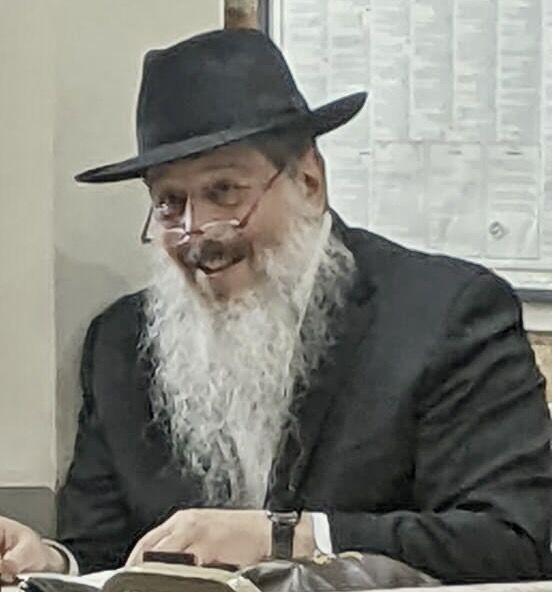
Rabbi Yonatan Hambourger
By Yonatan Hambourger & Tzali Reicher
[email protected]
Once a year, some time in the mid-winter months, Jewish people have a unique ritual we perform during Sabbath services: We take out a second Torah scroll, in addition to the one already used for the regular weekly reading, and read out loud a five-verse excerpt from the book of Exodus (30:11-16) which discusses the contribution each Jewish person had to make to the Tabernacle as it was being assembled as a temporary divine dwelling for the 40 years the Jews were to remain in the desert.
The Torah states that every person must give half a shekel to the collection, regardless of their station and net worth.
This ceremony was performed this past Shabbat, and immediately I was struck by a question: Why are we reading this additional portion with such aplomb? After all, a second Torah scroll is only used during services a select few times a year: Why is reading about an ancient fundraising effort worthy of this unique honor?
The significance of this event and why it is still commemorated today can be found in the very text: “… (A) half-shekel shall be the offering of God. The rich shall not give more, and the poor shall not give less than, half a shekel.”
In the eyes of God, we are all equal. There is no difference between the wealthy business tycoon whose influence spreads far and wide and the humble day-laborer who works hard to scrape by and provide for his family. The Rebbe, Rabbi Menachem M. Schneerson, of righteous memory, the most influential rabbi in modern history, taught that while people differ in their intellect, character, abilities and sensitivities, all are equal in the very basis of their bond with God and in the relationship they share with all of us.
So while every person has unique means and talents that they can (and should) harness to connect even more to God, when building the Tabernacle itself — a home for God and the place through which He would connect with the Jewish people — its foundation had to come from everyone equally, exactly how God created us.
This message is reinforced by the very specific amount of money everyone was asked to donate: half a shekel. This was to show that it takes a half to make a whole, and the half that the pauper donated made the same whole shekel when combined with the half of a rich person, as it would have been if the wealthier man had donated it himself.
This powerful lesson resonates today and applies to much more than just the building of an ancient structure.
Too often, we find ourselves untethered from our communities and peers by virtue of our unique circumstances and stand alone because we feel others can’t relate to our personal situations. The elite can’t relate to the working class; the partying bachelor can’t connect with the mother of four toddlers, and the atheist may not be able to stand the spiritually-in-touch person. Feeling alienated, people tend to withdraw more into their own bubble and lose touch with the people living around them.
This phenomenon of division and separation has only deepened as the political and cultural divide has grown into a partisan chasm, and many have more militant positions on different topics we didn’t think about or concern ourselves with just a decade ago. The religious conservative feels he has nothing in common with the secular liberal (and vice versa), and this cultural malaise and rot we’re seeing rise from our young people up to older generations only festers as both sides become more and more intransigent and stuck in their inflexible positions.
In this moment, it’s important to remind ourselves about what is important and what binds us together:
We are privileged to be living in the United States of America, a miraculous republic that has blossomed and thrived to become the most impressive country in human history in just 250 years, together. All of us, regardless of political persuasion or personal status, contribute and make up the foundation of this country. That’s what makes America the America that millions around the world look up to in awe and envy.
It behooves us to remember we’re equal in the eyes of God, and both sides of the red and blue debate represent only half of this great nation. Our founding fathers knew this and thus gave us the motto, “E Pluribus Unum” on July 4, 1776. For only together do we achieve, “out of many, one,” and get the United States of America.
Author
Related Articles
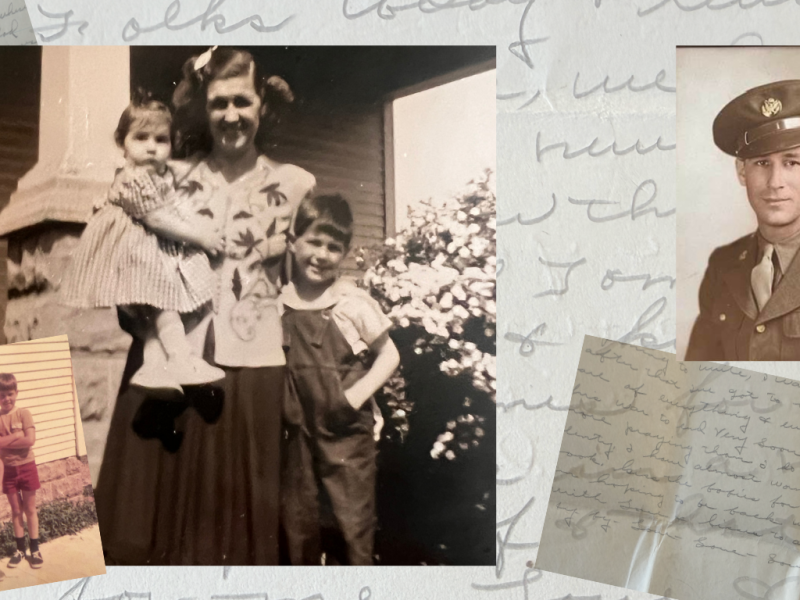
My Grandpa Was Killed in World War II. I Met Him Through His Letters Home
Gina Wolf’s grandfather died before she was born. His letters sent to her grandmother from Europe during World War II made it possible to know what kind of man he was.

‘Sounds Like a Mutiny.’ Secret Recording Exposes Claims of Toxic Leadership After a Marine’s Suicide
This week’s War Horse story follows the systemic failures before and after the death of Cpl. Drew Mobley who was the third in two years at Marine Corps Base Quantico to die by suicide.

Southwest Georgia artists recognized at packed opening of exhibition
The annual juried exhibition, one of the region’s largest showcases of visual art, features approximately 46 artists and nearly 90 works spanning painting, sculpture, ceramics, photography and mixed media.
