
YONATAN HAMBOURGER/TZALI REICHER: Letting go and embracing faith

Rabbi Yonatan Hambourger
By Yonatan Hambourger & Tzali Reicher
[email protected]
The book of Leviticus in the Pentateuch can be a dense read for the uninitiated.
Having told the story of the creation of the world, the birth of the Jewish people and their miraculous escape from slavery in Egypt, the Torah now spends chapter after chapter laying out God’s expectations and commandments. Through Moses, we learn about what the daily services should look like, the laws of marriage, kosher, and charity. We go into the minutiae of the sale and ownership of lands, how disputes are to be mediated and the prohibition against fraud and cheating.
But among all these laws, there’s one in last week’s Torah portion that catches the eye for its seemingly extreme nature.
Every seven years, from the time they arrived back in Israel, the Jewish people were told to mark the Shemittah (Sabbatical year), a designated Year of Rest. For 12 months, they were forbidden to work on or benefit from the land. They were told to lay down their tools, reconnect with spirituality and everything growing on their property was free to all who wanted to take from any of the produce.
But why did God command such a difficult and seemingly irresponsible mitzvah (commandment)? Surely, He understands that in this world He created, there is a need for people to earn a livelihood and earn money in order to survive.
The answer is that of course God understands the nature of the world He designed, and therefore made it clear the Jewish people must prepare before the seventh year begins. God promised that the sixth year of the cycle would be bountiful and plentiful, to allow people to stock up and preserve supplies for the year ahead, in fact promising that the crop of the year before Shemittah would be so strong, it would last and feed them for three years; year six, year seven, and year one of the new seven-year cycle.
For those who followed these directions and observed Shemittah, they were richly rewarded. Not only in the material sense, with comfort and food security during a year off from actively working, but more so spiritually. They had a year to truly reconnect with their families, friends, and communities, in a truly meaningful way. No longer was their work in the fields dominating their time, attention and conversations; instead, it was replaced by talk of families, studies and spiritual advancement, knowing that they had put their faith in God and He would provide, because they’d done their part first.
The lessons we can draw from Shemittah today are obvious.
Too often, we use our mundane jobs and careers as a way to connect with people. How often have you been asked “what do you do” when meeting someone new? How often do you find yourself describing your job as your primary pursuit?
Living in a way where elusive financial freedom is the No. 1 goal is meaningless and shallow, particularly when coupled with our off-time hours primarily occupied by scrolling a never-ending screen. Most Americans today feel lonely and isolated, and it’s not hard to see why.
To counter that, God commanded the Jewish people to observe Shemittah, a mitzvah practiced to this day in Israel. You have a job and have set yourself up nicely, now put your faith in God to provide for you.
Reconnect with what is truly important and recharge, because from there, all blessings and inner peace flows.
We love to hear from you. Feel free to send questions and feedback to [email protected].
Author

Related Articles

From cotton to cloud: In the data center debate, is rural Georgia once again being asked to carry the cost?
Across much of rural Georgia, the abandoned cotton warehouses and shrinking tax bases remain — enduring reminders that industries built to serve distant markets do not necessarily stay rooted in the communities that first sustained them.
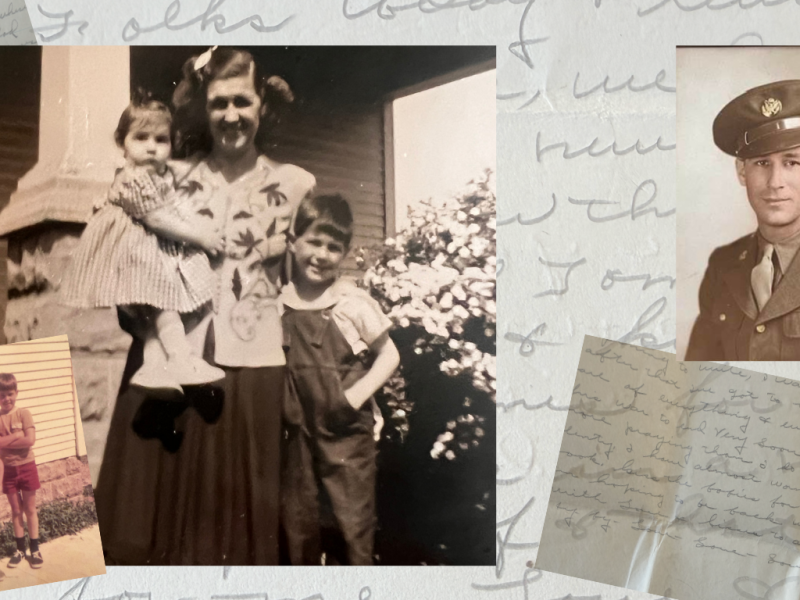
My Grandpa Was Killed in World War II. I Met Him Through His Letters Home
Gina Wolf’s grandfather died before she was born. His letters sent to her grandmother from Europe during World War II made it possible to know what kind of man he was.

‘Sounds Like a Mutiny.’ Secret Recording Exposes Claims of Toxic Leadership After a Marine’s Suicide
This week’s War Horse story follows the systemic failures before and after the death of Cpl. Drew Mobley who was the third in two years at Marine Corps Base Quantico to die by suicide.
