
YONATAN HAMBOURGER/TZALI REICHER: Sukkot … a hug from above

Rabbi Yonatan Hambourger
By Yonatan Hambourger & Tzali Reicher
[email protected]
What Christians call the Feast of the Booths, is known to Jews as the festival of Sukkot, which Jewish communities are now celebrating. It is part of the “Season of Joy,” which calls upon us to embrace a unique spiritual energy — one that invites Jewish people to step out of their usual boundaries and enter a place where profound joy and faith intermingle.
For one week, they move their meals and daily living into an outdoor, fragile, and temporary structure called the sukkah, leaving behind the solidity and permanence of their homes. For seven days, they eat, drink, study, and socialize in this hut, under a roof made of branches through which one must be able to see the sky. Why? Because Sukkot is about plugging in to a deeper truth that, if truly internalized, can transform how we see the world and ourselves.
The sukkah teaches that joy is not found in physical stability or material wealth. Instead, real joy comes from trust in the One above, who shelters us even when the structures of our life seem frail. Consider the ancient Israelites in the desert, wandering for 40 years without homes, without certainty. They had no visible means of support, yet they thrived for decades under the miraculous “clouds of glory” that surrounded them, a testament to divine protection that did not falter. Sukkahs today symbolize those clouds. When one sits inside, they’re meant to feel not only sheltered but embraced by the very same divine presence that guided their ancestors.
Sukkot teaches each of us to embrace simple faith. We step outside our homes, abandoning the comforts we are so accustomed to, and embrace a simpler existence stripped of the material things that define us for the other 52 weeks of the year. Despite the bare walls and minimal furnishings, there is a joy that fills the sukkah, a sense of satisfaction that defies logic. It’s a joy of realization, that we don’t need all that stuff to make us happy. It’s liberating to realize how little we truly need to feel content. The sukkah helps us refocus on what matters most: family, friends, faith. All those distractions we thought we couldn’t live without suddenly seem trivial.
When we look up through the roof of our sukkah and see the stars, we can feel small, exposed to the elements, and unsure of what the future holds. But as the sukkah envelops us, it reminds us that even in life’s uncertainty, there is security in our connection to something higher, a force that always provides and sustains His children.
And as we sit in the sukkah, we’re not alone. Sukkot comes with an age-old tradition of inviting spiritual guests and departed chassidic masters, known as the ushpizin, into our sukkah. Each night, we symbolically welcome one of seven exalted souls: Abraham, Isaac, Jacob, Joseph, Moses, Aaron and David. These guests are our forefathers, who paved the way for us with acts of extraordinary faith and kindness. Their presence is not just ceremonial. It’s a reminder that we carry their legacy with us. When we invite them in, we’re connecting ourselves to the greatness we come from, drawing strength and inspiration from their lives. Sukkot becomes a time to reflect on the lineage of spiritual giants whose courage and devotion have shaped our people’s story.
Yet, despite the grandeur of these guests, the sukkah remains modest in height. A sukkah that is too tall, higher than about 30 feet, is disqualified because it becomes a structure of its own, detached from the earthiness and humility that define it. The message is clear: Spiritual greatness is not achieved by elevating oneself above others but by staying grounded and humble. True strength comes from bending low to lift others up. The sukkah’s low walls call out, “Make space for others.” When we’re too full of ourselves, there’s no room left for the Divine.
This humility is exemplified in a simple image: a hug. Jewish law states that a sukkah must have at least two complete walls and a small, partial third wall — just enough to symbolize an arm’s embrace. The sages teach that this shape is reminiscent of a person wrapping their arms around another in a loving hug. Sukkot, therefore, is more than just a dwelling. It’s an embrace from above. The sukkah surrounds us, not with grandiosity or power, but with warmth and closeness. It’s God’s way of saying, “I am with you, no matter where you are or what you’ve been through.”
This embrace is unconditional. No matter how flawed we think we are or how distant we feel, Sukkot assures us that we are welcomed as we are. The sukkah doesn’t discriminate. It is open to anyone who seeks to step inside. Its message is one of acceptance and love. Step into the sukkah, and feel yourself enveloped in a divine hug that asks for nothing in return.
Sukkot is more than a ritual. It’s an experience meant to reset our priorities and remind us of the truth that, ultimately, our lives are but temporary dwellings. What remains eternal is the joy, faith, and connection we cultivate within our fragile walls.
So as we sit in our sukkahs this year, let us feel the joy that comes from letting go of our illusions of control, the liberation of needing less, and the comfort of knowing that no matter how stormy life becomes, we are forever sheltered by a love that transcends the physical. Sukkot invites us to leave behind the chaos and bask in the calm, where the walls may be flimsy, but the spirit is unshakeable.
Author

Related Articles

From cotton to cloud: In the data center debate, is rural Georgia once again being asked to carry the cost?
Across much of rural Georgia, the abandoned cotton warehouses and shrinking tax bases remain — enduring reminders that industries built to serve distant markets do not necessarily stay rooted in the communities that first sustained them.
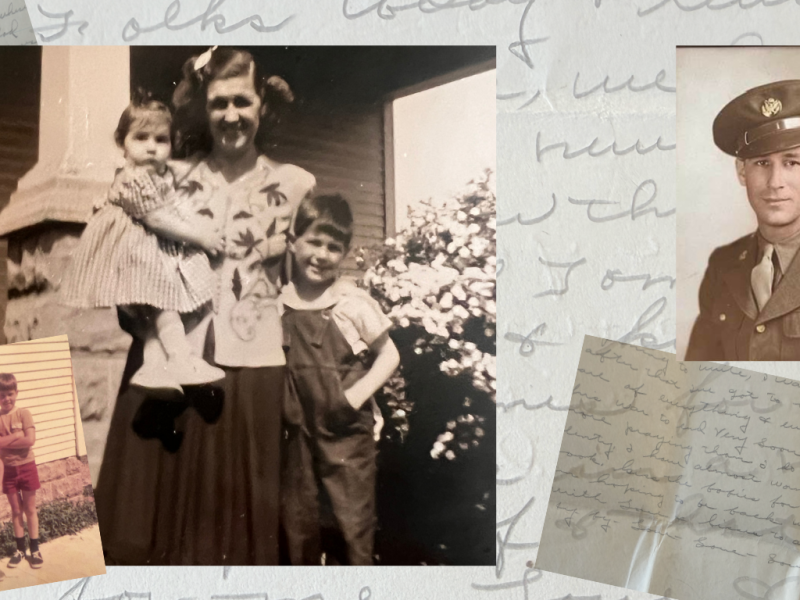
My Grandpa Was Killed in World War II. I Met Him Through His Letters Home
Gina Wolf’s grandfather died before she was born. His letters sent to her grandmother from Europe during World War II made it possible to know what kind of man he was.

‘Sounds Like a Mutiny.’ Secret Recording Exposes Claims of Toxic Leadership After a Marine’s Suicide
This week’s War Horse story follows the systemic failures before and after the death of Cpl. Drew Mobley who was the third in two years at Marine Corps Base Quantico to die by suicide.
