
YONATAN HAMBOURGER/TZALI REICHER: The command for consistency

Rabbi Yonatan Hambourger
By Yonatan Hambourger & Tzali Reicher
[email protected]
There is a common misconception about the Old Testament that is worth debunking.
Conventional wisdom and people with only a surface knowledge of scripture tend to fall on shallow adjectives when attempting to describe God as portrayed in the Hebrew scriptures, describing the Lord as dark, vengeful and vindictive, and constantly clashing with the Jewish people. But aside from being objectively incorrect, this synopsis doesn’t capture the undying love, connection and warmth God is explicitly said to have for His people.
That is why it is so jarring to read the opening verses of this week’s Torah portion (Leviticus 6.2), where God tells Moses to “command” the priests to offer the twice-daily sacrifices in the Tabernacle. When introducing a mitzvah (commandment), typically the verse uses the words “speak,” “say” or “tell’ the Jewish people about what God wishes for them to do, using considerably softer language than the infrequently invoked “command.” Rashi, the most prominent commentator of the Torah, goes on to explain that the word “command” is used here because this mitzvah must be performed daily, and therefore needed extra emphasis from God to encourage the people to perform it regularly and to signal its importance.
When there is a unique and exciting opportunity to do a good thing, it’s easy to summon the energy to perform it with little instruction. It’s easy to go to our places of worship once a year on special occasions, donate our time or money irregularly and visit our elderly relatives briefly when we just happen to be in town. Doing the right thing is harder when it’s expected to be done regularly. Indeed, it is difficult to commit to attending daily or weekly opportunities to connect to God together in community, setting auto-payments to charities and devoting weekly times to volunteer and spend time with people who could really use the company.
That is why God places the emphasis of a divine “command” on a regular practice, instead of on the unique services of different holidays or the like: We must be careful to not let our regular acts of service become rote and robotic. Instead, we should enliven these actions, imbuing them with the vibrancy and enthusiasm we typically sum up for special occasions, because God seeks to foster a relationship with us through consistent expressions of engagement. This is reinforced by the seemingly regular mitzvah God is commanding the Jewish people to perform here: placing a sacrifice on the fire that should burn constantly. Fire signals passion and excitement, which is how we need to approach even everyday, mundane events and good deeds.
In understanding the depth of the “command” for consistency in our daily observances and actions, it becomes evident that this principle extends far beyond religious rites to encompass the very essence of our daily lives. The practice of turning the mundane into moments of significance teaches us the power of transformation — the ability to elevate our routine tasks, interactions and commitments to a level where they become sources of joy, growth and profound connection. This lesson from the Torah portion is not just about religious observance, but about how we approach every aspect of our existence, turning the ordinary into extraordinary through consistent effort and dedication.
This is true of relationships between people and in the realm of working to build good habits.
If a couple only discusses their relationship or shows each other appreciation or affection on birthdays and anniversaries, they will drift apart. If someone working toward succeeding in their chosen profession only puts in the hours sparingly, failure is inevitable. Only by putting all of ourselves in everything we do, truly applying ourselves to make every day fresh and exciting, will we be able to thrive in whatever we drive ourselves to achieve.
God is teaching us an important lesson when He commanded the priests to perform a seemingly easy and frequent act of service with excitement. Consistently doing good deeds and everyday acts of kindness with passion becomes a powerful tool for personal and communal transformation, guiding us toward a deeper, more meaningful engagement with our faith, our relationships and the world at large. It is in the faithful execution of our positive daily duties and responsibilities that we find the true expression of our highest and best selves and the fullest realization of our potential to succeed and make a difference.
Author

Related Articles

From cotton to cloud: In the data center debate, is rural Georgia once again being asked to carry the cost?
Across much of rural Georgia, the abandoned cotton warehouses and shrinking tax bases remain — enduring reminders that industries built to serve distant markets do not necessarily stay rooted in the communities that first sustained them.
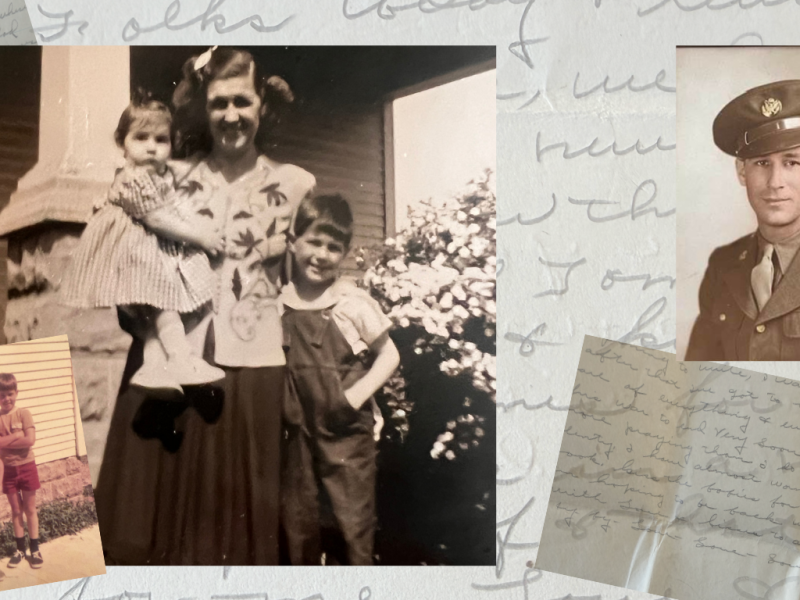
My Grandpa Was Killed in World War II. I Met Him Through His Letters Home
Gina Wolf’s grandfather died before she was born. His letters sent to her grandmother from Europe during World War II made it possible to know what kind of man he was.

‘Sounds Like a Mutiny.’ Secret Recording Exposes Claims of Toxic Leadership After a Marine’s Suicide
This week’s War Horse story follows the systemic failures before and after the death of Cpl. Drew Mobley who was the third in two years at Marine Corps Base Quantico to die by suicide.
