
Young southwest Georgia farmer leads family farm into the future amid industry challenges
Staff Photo: Lucille Lannigan
Staff Photo: Lucille Lannigan
Staff Photo: Lucille Lannigan
By Lucille Lannigan
[email protected]
CAMILLA – When Casey Cox Kerr was a child, she watched her dad farm while snacking on raw peanuts atop a peanut wagon.
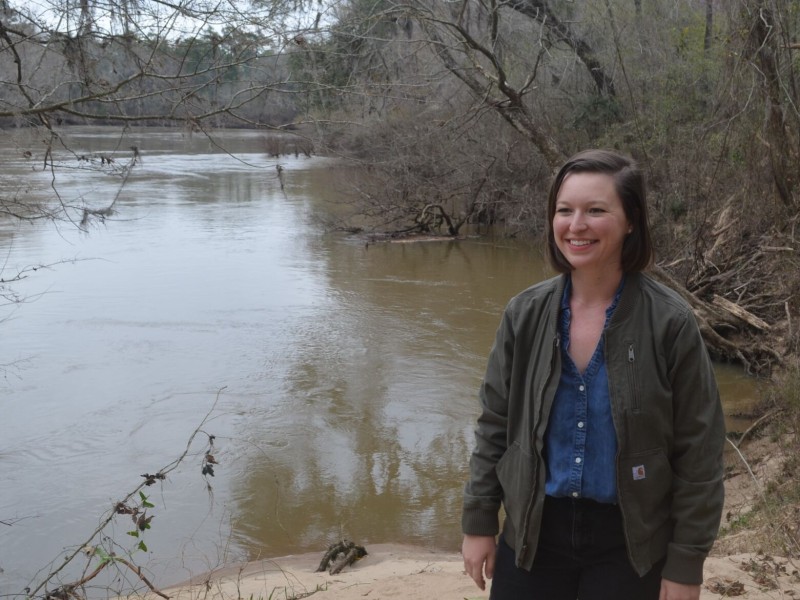
The 32-year-old comes from six generations of farmers. Their 2,400-acre farm is filled with longleaf pine, soybeans, peanuts, sweet corn and field corn. It sits right along the Flint River in Camilla, some 31 miles south of Albany.
Kerr never expected to take on the farm, named Longleaf Ridge, but now she’s leading its operations. She inherited the family farm – a practice that is at risk in today’s agricultural climate.
Census data from the USDA, released Feb. 13, showed an alarming loss in family farms. There were 141,733 fewer farms in 2022 than in 2017, according to the 2022 Census of Agriculture. While the number of beginning farmers increased, census numbers show there are more farmers over the age of 65 than younger farmers. Almost 1.3 million farmers are at or beyond retirement age, meaning many will start thinking about succession plans.
However, farming families are dealing with a younger generation of children going off to college and finding jobs in cities as they face a dying rural economy, rising operational costs and volatile weather and climate patterns. The work is not easy, and many young people question the vitality of taking over the family farm.
The gift of choice
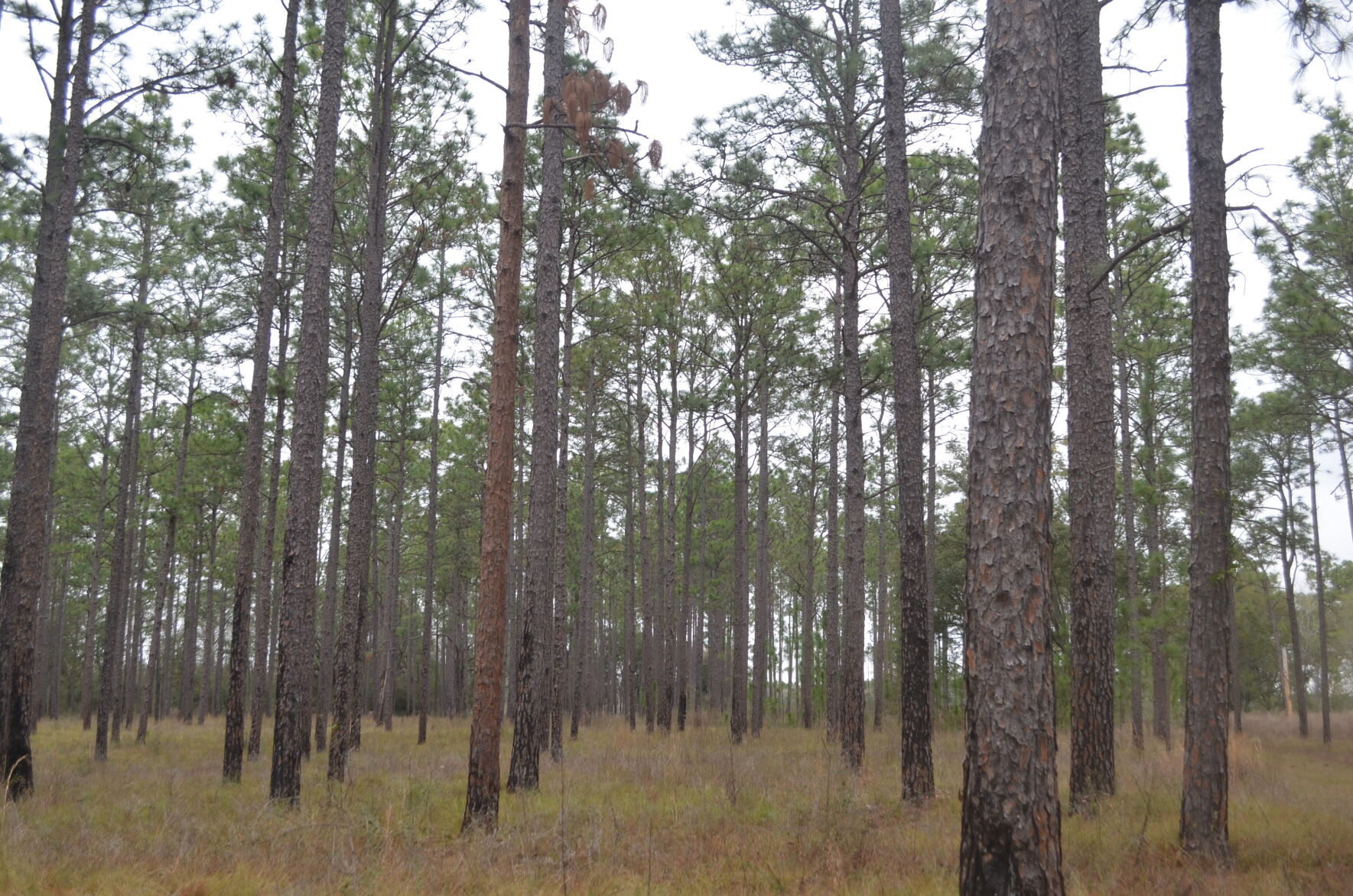
Kerr spent her childhood on the Flint River that runs alongside her family’s land and in the longleaf pine forests that make up more than half of Longleaf Ridge Farm. She said she developed a strong love for the land.
Kerr is her parents’ only child, but she said there was never an expectation for her to come back to the farm.
“The greatest gift my parents gave me was the gift of choice,” Kerr said. “They never pressured me – not once. They would always position it like ‘This is here if you ever want it, but we want you to be happy so go do what makes you happy.’”
In 2009, Kerr moved to Gainesville, Fla., to study Natural Resource Conservation at the University of Florida. She studied topics that would later intersect with her taking over her family’s business: entrepreneurship, agribusiness accounting, agri-economics, soil culture and natural resource policy.
After college, she moved home and took a job with the Flint River Soil and Conservation District. She worked there for six years and served as executive director for five. Kerr said she developed an understanding of the correlation between agriculture and natural resources.
Kerr and her family were heavily involved in the ongoing tri-state water wars between Georgia, Florida and Alabama over water usage from the Apalachicola-Chattahoochee-Flint River Basin. She was just graduating college when Florida’s former governor, Rick Scott, sued Georgia over its water usage in 2013.
When Hurricane Michael hit in 2018, bringing devastation to farms across southwest Georgia, Kerr said she made the decision to transition to working on her family’s farm full-time. She said she realized one storm could change everything. The farm needed to diversify if it was going to face extreme weather.
“We’re in a business where everything we do is dependent upon nature, and that is really scary.” Kerr said. “It’s really challenging, but it also really motivated me personally to look at ways to innovate what we’re doing and figure out a new path forward.”
Weather and climate volatility are just two of the challenges, Kerr said, that may drive young farmers away from taking over their family farm. She said rising market prices, dependence on supply and demand, and trade deals they have no control over also create a level of uncertainty that doesn’t exist in other jobs.
“There’s so much risk involved,” Kerr said. “I can understand why people are hesitant to come back. It can be so much easier to just go and get a steady job.”
Old farmers are also hesitant to step back from the operations, she said.
“For a lot of farmers it’s not just a job, it’s a way of life,” she said. “It’s a purpose. I think that’s where some families really struggle in succession and transition because it’s really hard to let go.”
Challenges for farmers, planning for succession
Curt Covington, the senior director of institution credit at AgAmerica, said the rural economy is driving young people, many with higher education, away from the farm and into cities. Many rural communities are losing their hospitals, schools and primary businesses.
Covington said this is an issue because it leads to consolidation in farmland space and valuable agricultural land being sold to investors with interests outside the community.
“The fabric of rural America is harmed when families don’t have continuity in their family farming operation,” he said. “All you have to do is take a look at the landscape of private equity that is really taking on the farm asset sector. Many of those private equities don’t live in those communities.”
Covington said much of rural America still doesn’t have broadband or access to the internet.
Kerr said her family just got broadband in January. The resources they were using before were finicky at best. She said you cannot conduct business in this day without access to resources like broadband.
Dustin Sherer, the Farm Bureau’s director of government affairs, said the federal estate tax is also a roadblock. This tax is applied to the transfer of property at the time of death.
Sherer said current tax levels, from the 2017 Tax Cuts and Jobs Act exemption, affect only about 4% of farms, but those farms represent over half of the productive acreage of the U.S.
The enhanced exemption is set to expire at the end of 2025. If levels went back to pre-exemption, he said, it would almost double the percentage of farms subject to the estate tax, and affected acreage would go up to almost three-quarters.
Still, Covington said, farmers are a resilient group of people. There is still vitality in the family farm; although he said he does see the family farm becoming a smaller portion of the agricultural space as time goes on.
Sherer said the younger generations’ understanding of technology presents many opportunities for diversifying farm operations and their revenue streams.
Covington said families looking to pass on their farms to younger relatives need to start preparing now, developing relationships with strategic partners like lawyers and accountants.
He said families must start setting up a succession plan – who will take over operations – and an estate plan – the division of assets. This starts with an important question for heirs: Do you want to be here, and if you do, how do you see your role?
“These conversions cannot be had around a breakfast room table, out in a pickup truck,” Covington said. “These discussions have to be had in a business environment. They often require a mediator.”
Building for the next generation
Kerr said her family’s transition has been a learning process.
“I wanted to absorb as much information as possible from my dad, from our farm manager,” Kerr said. “Between the two of them, they have so much knowledge. It will take me years to even come close to understanding everything that they just know so easily.”
Kerr’s 69-year-old dad is still a very core part of the operation, she said. She takes videos to watch as he explains responsibilities like how to develop planting schedules and crop rotations.
Still, he’s taking a three week vacation in the middle of Longleaf Ridge’s next harvest season. Kerr said it’s something he never would have dreamed of doing before.
“I think he realizes that we can handle this without him and he’s free to go enjoy himself and do things he wants to do,” she said. “I’m really glad he’s starting to feel that freedom.”
Kerr said she was nervous about how her community would react to her taking over the farm. Historically, it is rare for farm operations to be handed down to a daughter.
Women accounted for 36% of the country’s 3.4 million producers, according to the 2017 Census of Agriculture. She said she feared people wouldn’t take her seriously.
However, her experience has been the opposite of what she expected, and she said she’s received abundant support from the agricultural community.
“When it comes down to it, it doesn’t matter that I’m a woman,” Kerr said. “I am just someone’s child returning home to the farm that loves this land and loves this community, and they are so excited and so proud to see that.”
She said it’s great to see more young women empowered to take over their family farms as women, and young people in general, bring a fresh perspective.
“There’s such a value in the combination of wisdom and knowledge that the past generations have acquired over a lifetime, combined with the energy and vision of the next generation,” Kerr said.
She said her family plays on each other’s strengths to build a stable foundation for the future of the farm.
Kerr and the Longleaf Ridge team are working to replant and reestablish some of the longleaf forest that was destroyed in Hurricane Michael. Longleaf wiregrass ecosystems are among the most biodiverse ecosystems in North America outside of the tropics.
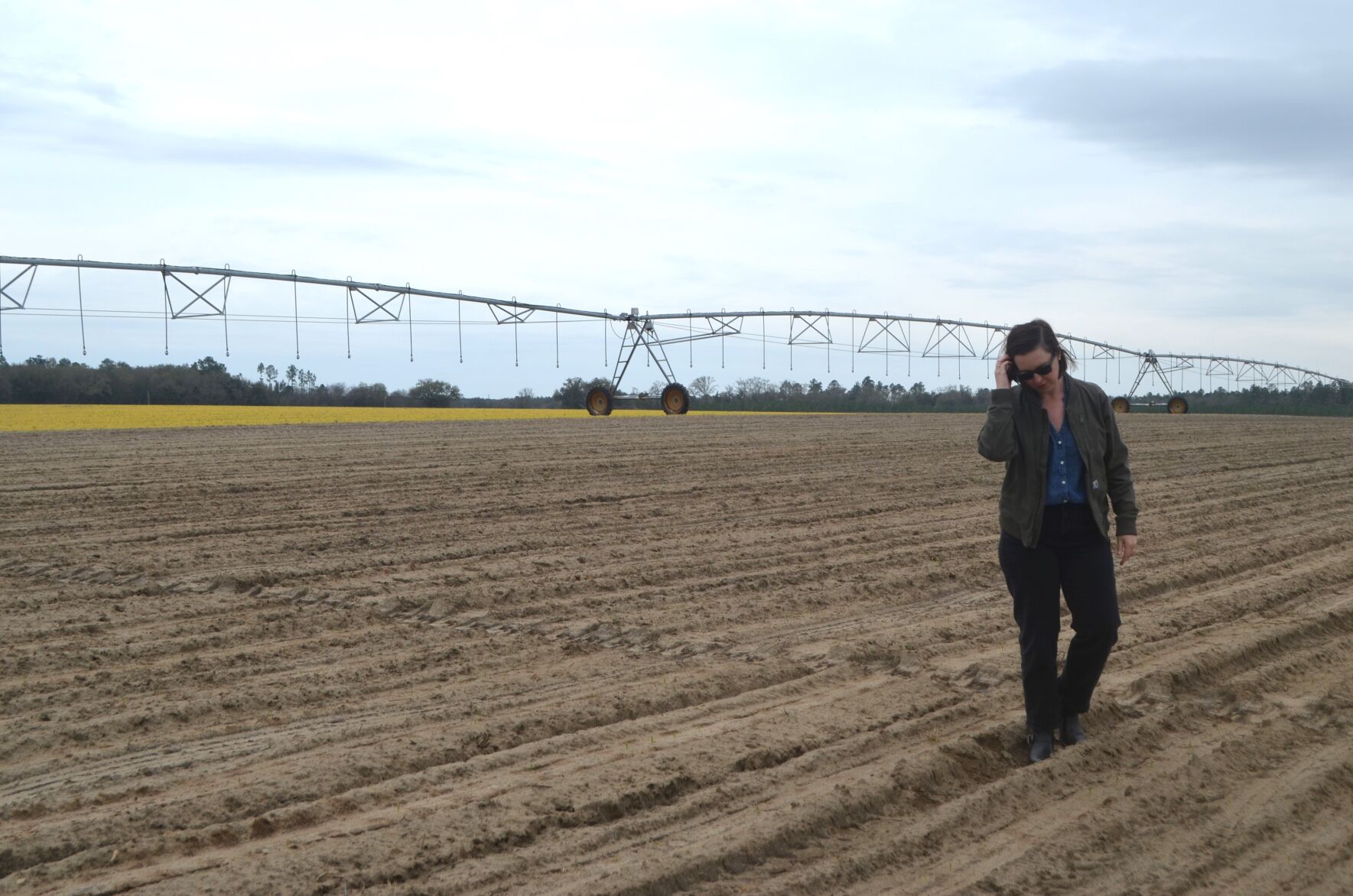
They’re also implementing new technologies onto the farm, like remote, automated irrigation. Kerr said she is able to control irrigation systems as well as check soil moisture using real-time data in an app on her phone.
She said she and her husband also are in the early stages of developing a consumer-facing side of the business that is connected to the farm but also an independent, stable source of revenue. People may be buying her corn from the grocery store shelf, but they have no idea who is behind its production.
“I think there’s such a strong desire for consumers to connect with farmers and know where their food comes from,” she said. “So we want to really create something that can be that conduit where there’s a face to the farm.”
Kerr gave birth to her first daughter last year – in the middle of harvest season. She said having a child has changed her whole perspective.
“I have a renewed sense of purpose to build this into something for her,” Kerr said.
When the time comes, she said she’ll give her daughter the gift of choice, but she plans to build on what her parents gave her and make it better for the next generation.
Author

Related Articles
My Grandpa Was Killed in World War II. I Met Him Through His Letters Home
Gina Wolf’s grandfather died before she was born. His letters sent to her grandmother from Europe during World War II made it possible to know what kind of man he was.

‘Sounds Like a Mutiny.’ Secret Recording Exposes Claims of Toxic Leadership After a Marine’s Suicide
This week’s War Horse story follows the systemic failures before and after the death of Cpl. Drew Mobley who was the third in two years at Marine Corps Base Quantico to die by suicide.
Southwest Georgia artists recognized at packed opening of exhibition
The annual juried exhibition, one of the region’s largest showcases of visual art, features approximately 46 artists and nearly 90 works spanning painting, sculpture, ceramics, photography and mixed media.
