
As women land ownership increases, so does the need for shared knowledge
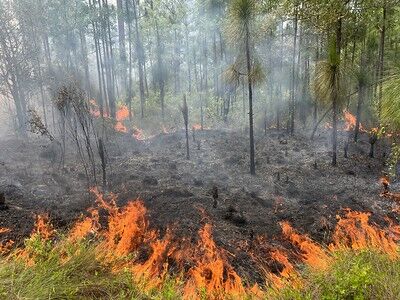
Special Photo: Georgia DNR
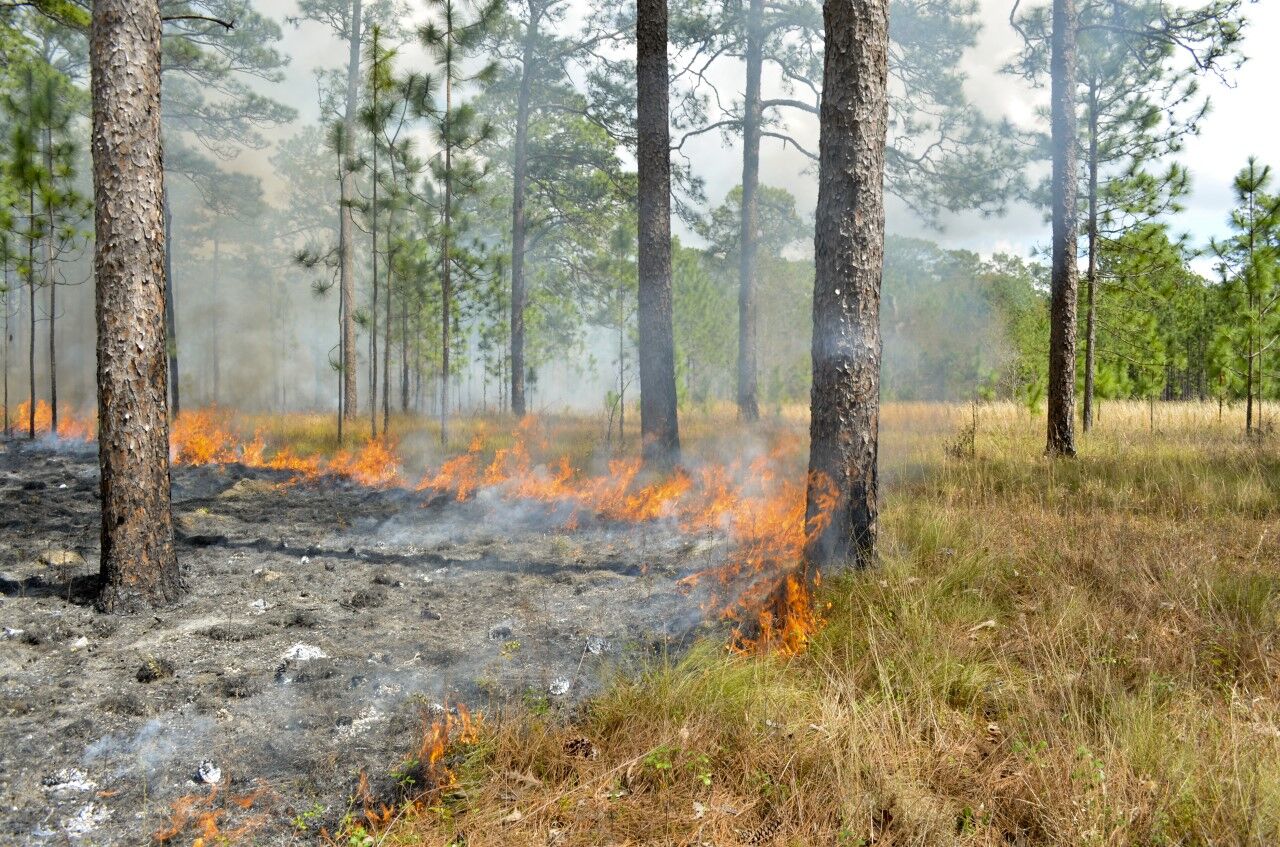
Special Photo: Jones Center at Ichauway.
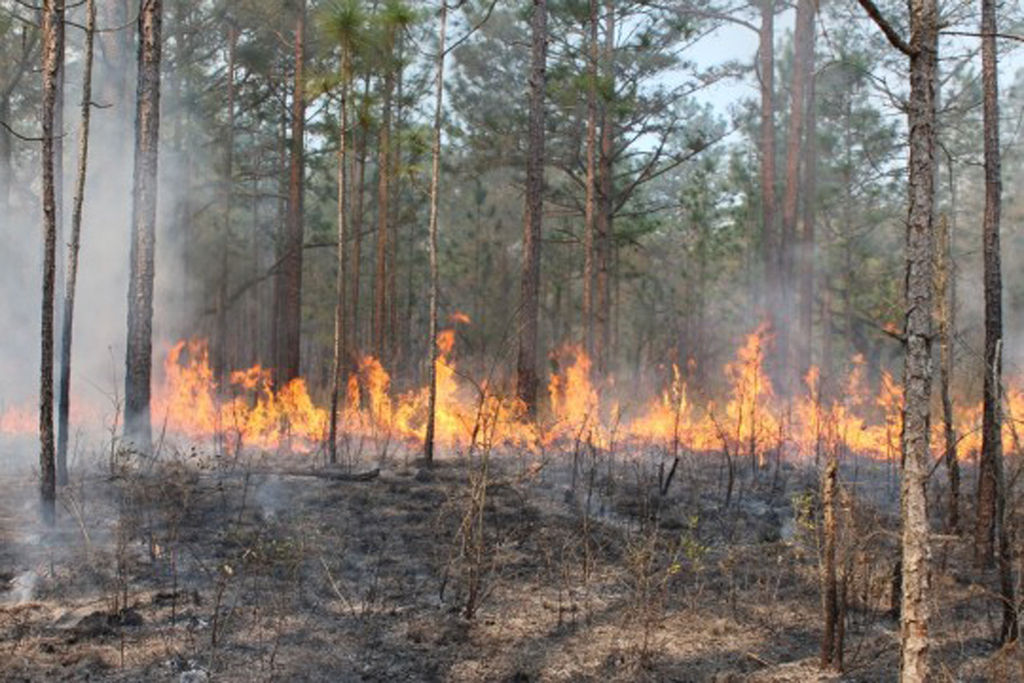
Special Photo
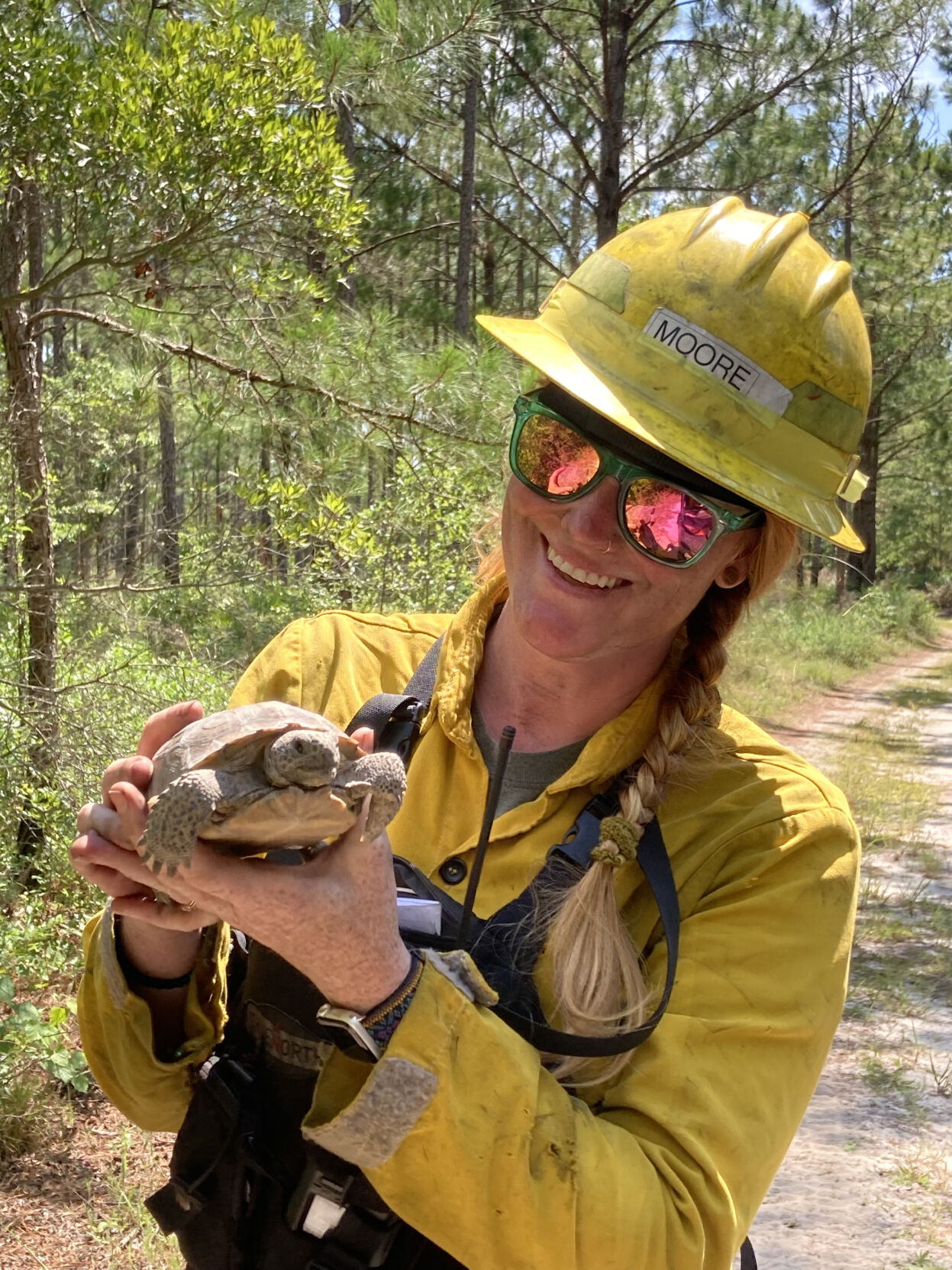
Special Photo: Georgia DNR
By Tom Seegmueller
[email protected]
NEWTON — The Southwest Georgia Prescribed Burn Association and the Jones Center at Ichauway co-hosted a Women’s Certified Burn Manager Course last week on the center’s campus. A number of facts highlight that the offering of these classes is more than a concession to political correctness.
“Across the United States, we’re quickly approaching a point where women landowners are equal to male landowners,” said George Jensen, the SWGPBA coordinator for Tall Timber who conducted the class in conjunction with Ken Parker, a wildlife mitigation specialist with the Georgia Forestry Commission. As these demographics of ownership change, many of the females assuming property management roles have not been part of the historical and traditional fire culture, which is the cornerstone of the management of timberland in the Southeastern United States.
Before anyone dismisses the importance of the relatively new concept, it is critical to understand the significance of private forestry management practices in the state. Georgia leads all other states in forestry production with 24 million acres of the state’s 57 million-acre land mass being classified as forestland. Add to that the fact that Georgia has more privately owned acres of timberland than any other state in the nation. Further breakdown of ownership statistics indicate 9% is publicly owned, 29% is owned corporately, 6% is owned by forestry-related industry, with the remaining 55% being owned privately.
Some of the earliest historical accounts of southwest Georgia indicate that the indigenous inhabitants of the region used fire to shape and manage the environment in which they lived. This fire culture has been refined from prehistory until the present with dramatic results. One needs to look no farther than the national media’s attention to the Corral Fire, which started June 1. The fire was reported to have burned 14,000 acres before being 75% contained four days later. In comparison, information provided by GFC indicates that in the past 11 months 2,411 wildfires only burned 12,329 acres across Georgia.
One reason for this dramatic difference is the prevalent use of prescribed burning as a management tool in Georgia. The commission reports that from July 1, 2023, to date, 78,697 permits have been issued for 1,528,211 acres. Region 3, which covers SOWEGA, accounts for 24,943 of these permits for prescribed burns on 644,745 acres. To further put things into perspective, Baker County burns more acreage annually than 27 states combined, and Thomas County burns more acreage annually than any other county in the nation.
With more than 31 million acres of forestland managed privately in Georgia, it is obvious that landowners either need to know how to burn their property in a safe and effective manner or have a solid understanding of what they are hiring professional contractors to do. While protecting their timberland from the devastation of wildfire and wildlife management are the primary goals of most landowners, there are other reasons for planning a prescribed fire management plan:
• The perpetuation of fire-dependent species and habitat restoration promote wiregrass flowering and seed harvest or development of other native understory plants
• Wetland management for fire-dependent species
• Seedbed or planting preparation to promote longleaf pine seedling establishment from mast or preparing for hand- or machine-planting
• Wiregrass seed production to promote flowering and harvesting or promote other fire-dependent understory plants
• Boundary security to defend against boundary ignitions from adjacent landowners or public roads
• Forage or hay production by removing waste and optimizing forage production
• Debris removal and reduction resulting from timber harvests or land restoration efforts
Over the past few decades, prescribed burning has become as much a science as it is an art. In early days, a good firebreak, a favorable breeze and an understanding of backburning were all that a burner needed to ensure a fire did not get out of control. However, today, the plan of a prescribed burn considers far more than just keeping the fire contained to a specific area.
Today’s burn plans not only consider the goals of containment, but a wide range of variables including:
• Humidity levels
• Wind speed and direction
• Fuels or duff accumulation in the burn zone
• Composition of standing timber in the burn zone
• Smoke dispersion indexes
• Ambient temperatures
• Dormant or growing season
• Potential carbon dioxide levels and other air quality issues
Today, a landowner can be held accountable for more than fire damage to neighboring properties. Issues related to smoke ranging from highway safety, air quality and public health are now priority concerns. These issues are just a few of the reasons that those who choose to burn their own property or those responsible for these prescribed burns are knowledgeable of the science and legalities related to the burn plans they submit and initiate.
As Abbie Halbig, one of the participants in the Women’s Burn Manager Course said, “One of the reasons I attend the workshop is that I’m already certified in the state of Florida. I wanted to gain more knowledge and see what the differences were between Florida and Georgia.
“Part of the reason we are burning is for quail habitat and to increase those numbers. Seeing how different properties manage their habitat for quail is one of the reasons I wanted to come to Ichauway and see how they burn.”
When it comes to earning a place on the burn crew, Halbig said, “Women don’t have as much fire experience; it’s outside of our norm. I’m the only woman that’s on the burn crew at the plantation where I’m at. They respect me for what I do. I pay attention to details.”
Added course participant Grace McLeod: “I think one of the great things about having a womencentic event like this, or at least one that flips the ratio, is that it can help decrease that barrier to entry for a lot of people who are not as used to working as a minority in a group or don’t feel as comfortable in that setting. It’s a nice space that can be more welcoming to someone who is new to it.”
The SWGPBA promotes the use of prescribed fire by encouraging landowner collaboration, supplying training, education and the resources needed to use burning as a safe and effective land management tool. There are two forms of membership: regular and honorary, with landowners in their service area being eligible for regular membership. Honorary members may participate without the requirement of landownership.
These membership parameters are obviously a benefit to landowners wanting to do their own burns but who do not have a history or familiarity with fire as a management tool. It is also a benefit to the landowner whose property is not large enough to warrant a contract burn.
For more information, email [email protected] or follow the Southwest Georgia PBA on Facebook.
Author

Related Articles

Lee County homeowners have until Aug. 15 to claim property tax exemptions
Lee County homeowners have until Aug. 1 to apply for homestead and other property tax exemptions for the 2026 tax year, a deadline members of the Lee County Board of Tax Assessors highlighted Monday as they encouraged eligible residents to take advantage of available tax relief.

Dawson police arrest wanted suspect after Flock Safety camera alert
According to police, May drove into the yard of a nearby residence instead of complying with officers’ commands. He then exited the vehicle and ran into the home on foot.
Lee County stands alone without E-SPLOST. Here’s what that means for schools, taxpayers and the county’s future
Following the defeat of its referendum, Lee County became just the second of Georgia’s 159 counties without voter approval for an active ESPLOST, leaving the school system without the state’s primary local funding source for major construction, renovations, school buses and other capital improvements.
