
CARLTON FLETCHER:

By Carlton Fletcher
[email protected]
“And girl it’s hard to find nice things, On the poor side of town.”
— Johnny Rivers
Eavesdropping is, I’m aware, one of those social faux pas that I can’t help but engage in. Still, if someone’s going to talk loud enough for you to hear and you don’t have anything else going on … well …
My radar perked up when I recently heard two people talking about “those people” with a tone that suggested contempt and perhaps even disgust. And as I listened, it turned out my instincts were spot on: This couple was speaking derisively of people who “weren’t fit to be out in decent society.”
And, just like that, I was transported, back to Irwin County High School, circa 1973.
I loved being in high school. From someone whose ultimate goal long had been to turn 16 so I could drop out, I was transformed into one of those people who loved everything about school … from the sports to the classes to the people to the lunches to the teachers and administrators who really cared about the students. For most of my four years at Irwin County High — and a lot of this had to do with my 10th-grade English/12th-grade Spanish teacher Dolores Foley, who helped bring me out of my long-held shell of inferiority — I was a very happy person, definitely in my element.
But one moment from those years haunts me to this very day, some almost 50 years later. I was laughing with one of my friends, just enjoying life, when one of the school’s teachers called me over. And — swear this is true — she proceeded to make fun of my (admittedly shabby and unfashionable) clothes. Now this was the early ’70s, when fashion was starting to build toward the anything-goes style that persists to this day.
Yet this teacher did not speak derisively of my clothing as being too far out to fit within the mainstream. She simply spoke of the quality of my attire. And even as I tried vainly to hide the hurt, it struck me deeply.
See, I had long held feelings of inferiority in my small community because I was always made to feel that neither I, nor my family, was good enough to fit in with what passed for “society” in this backward burg that was my home. My parents didn’t have the right kind of jobs … our house was not up to certain standards (hell, we had an outdoor toilet until my dad could afford to add a bathroom to our residence) … and, of course, my siblings and I did not wear the kinds of clothes that the “cool kids” did.
I’m ashamed to admit all these years later that I was deeply bothered by the circumstances that allowed others to look down on me and on my family. What shames me is that I allowed myself to feel inferior and to blame my family for not having the right kind of jobs and the right home and the right car and the right material things that at the time seemed so important.
It wasn’t until much later in life that I realized that such superficiality is what some people — kids and grown-ups alike — fed on to convince themselves and others of their superiority by comparison. I wish I could talk to my high school self and tell him to quit focusing on these things that did not matter, to be proud of my heritage and my family, which I now am. Growing up with parents who worked the “wrong kind of jobs” but who taught me that the work ethic is what counted; making the best of the things that we did have in life — and realizing that there were always others who were much worse off — and learning to appreciate the hardscrabble heritage that forged both of my parents and what they handed down to me allowed me to finally find joy in life.
Yes, I wish I’d been smart enough around 1973 to realize that what’s important in life has nothing to do with those material things that some people put such stock in. Then, maybe rather than feeling decades of shame over those derisive words that that teacher used to shame me, I’d have been able to look her in the eye and tell her to kiss my a–.
Related Articles

Wild Game Dinner marks 34 years as South Georgia Scouting reaches for next generation
More than a century after organized Scouting first took root in Southwest Georgia, local leaders say the program is working to preserve its traditional mission while adapting to a new generation of young people.
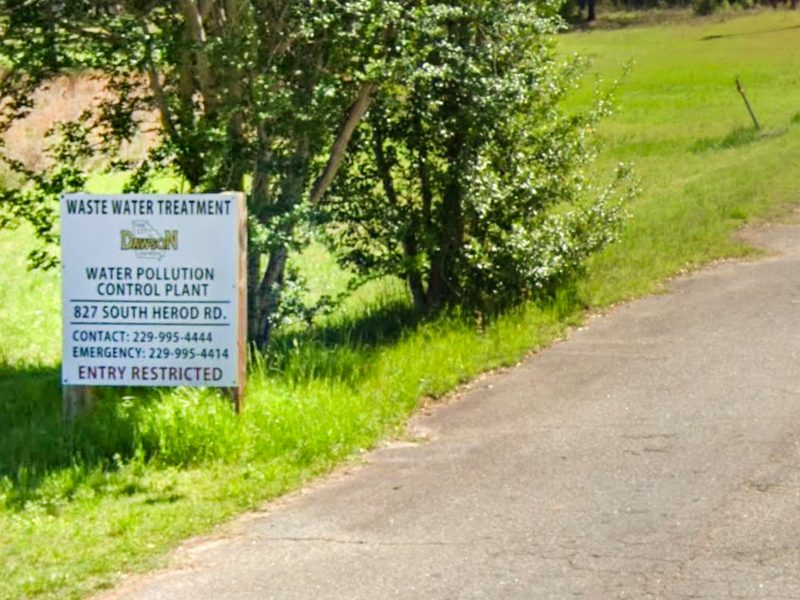
Dawson’s $10.2 million sewer project leaves major financial questions unresolved
As Dawson’s finance director resigns and operating pressures mount, records show $10.2 million in sewer funding, frozen loans, missing audits and gaps in the public accounting of project money.

Foreclosures jump 52.9% across the region as buyers regain negotiating power
In Dougherty County, the number of residential properties advertised for foreclosure has nearly doubled this year. In neighboring Lee County, developers are preparing to add hundreds of new houses and apartments, including homes aimed at buyers who have struggled to find newer housing at an attainable price.
