
Finding just the right place to pack, store hunting gear
Staff Photo: Tom Seegmueller
By Tom Seegmueller
[email protected]
ALBANY ‒ “A place for everything, everything in its place.” For many, this simplistic admonition from Founding Father Benjamin Franklin extends far beyond the orderly organization and storage of personal possessions. For them, it becomes a guide to avoid chaos in their lives by establishing a means of organizing their thoughts, emotions and spiritual well-being.
Then again, for someone like me, the best I can do is try to use it as a method to have what I need, when and where I need it. For me this is one of life’s greatest challenges.
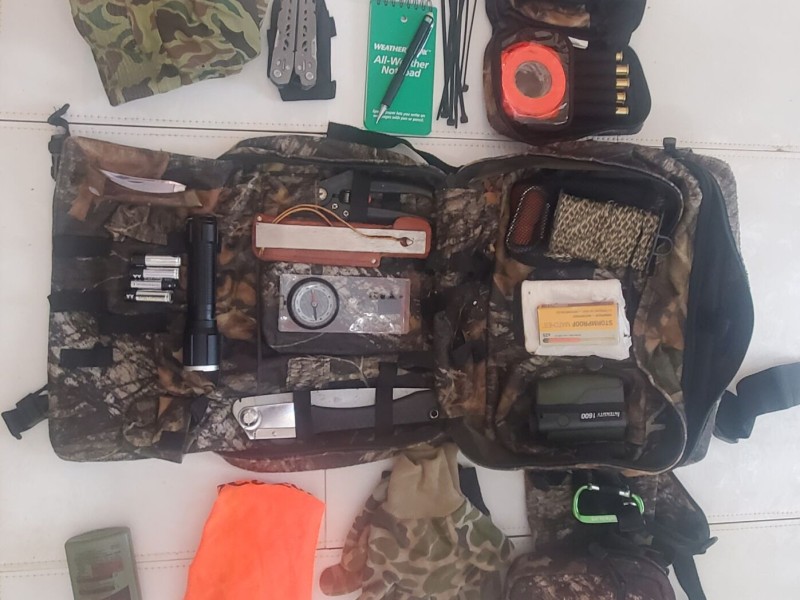
This challenge can be particularly difficult when it comes to the collection and organization of hunting gear. However, a few decades ago when I was gifted a small camouflage daypack, I started to see a solution to my organizational problems in the field. I soon realized that if I put those things that were critical to a successful deer hunt in that bag and took it with me, a number of things happened. I was more mobile, I could stay in the woods longer, I got more enjoyment from the hunt, and I was more successful.
When still hunting, my mobility and strategic options increased because I had what I needed on hand and could adapt to changing conditions. If I suddenly realized I was in a great location for the prevailing conditions, I could immediately take advantage of the opportunity. With a small folding saw and pruning shears, I could quickly build a blind, clear obstructions to my view or create an improved shooting lane. A basic map and compass still proved to be handy when GPS coverage was spotty. If batteries suddenly went dead, I had spares.
When conditions change, you can stay out longer while safely enduring the changes. A water bottle, bladder, or thermos are definitely beneficial to comfort and your safety if you need to stay in the woods longer than planned. Hand warmers, dry socks, a lightweight poncho, and a few snacks could literally be life-savers if weather conditions rapidly change for the worse. Fireproof matches and a fire starter might be needed if things really go bad. However, more than likely their greatest benefit is you can stay in the woods while less prepared hunters are forced to leave. Deer can be very active when a front moves in or out of an area.
I keep two sets of camo head nets and gloves in the pack at all times. One set is lightweight mesh, the other is a heavier wool or fleece set for colder conditions. Both sets help hide inevitable hand and head movements. The lightweight set also protects you from biting insects, while the heavier set can keep you warm in damp and colder conditions. For the same reasons, I also pack a camo Boonie hat, which is crushable and takes up little space in the pack. It not only offers protection form rain but shields your eyes from the glare of the sun as it rises and sets.
If you stay warm, you are far more comfortable than trying to warm back up after you have gotten cold. A tightly folded garbage sack takes up almost no space in your pack but can be used to provide a dry place to sit when things unexpectedly get wet.
A sudden coughing attack makes sitting quietly an impossibility. Therefore, I keep an 8-ounce water bottle packed and designated for a packet of Alka-Seltzer tablets, along with a handful of cough drops ready for this problem. Carry a flattened roll of toilet paper (when about ½ inch diameter of paper remains on the roll). It is not only an advantage to have this item on hand for the obvious reason, but it can also be used as a bio-degradable system of marking a blood trail to determine a wounded deer’s direction of travel, or fire starter if necessary.
Insect repellents in squirt bottles take up little space and provide protection from a variety of biting insects. It’s hard to sit motionless when you find yourself the main course in a skeeter buffet.
A variety of other items is useful, including lens wipes or cleaners for glasses and scopes. A length of about 15 feet of para-cord and a few zip ties can prove useful, as well as medium-size carabiners for a variety of reasons, including field repairs and blind construction. A rattling bag, deer bleat canister, wind indictor powder, and scent containers are great additions and make no noise when packed correctly.
When the rut hits, you need to be prepared to act accordingly. When bow hunting or during black powder season, a range-finder may be a beneficial piece of gear as well as when scouting to set up in new areas.
If field dressing game away from camp or a vehicle, a suitable knife, sharpening steel and headlight should be included. A roll of fluorescent flagging tape and compact flashlight are often useful as well, especially when scouting or hunting new areas. A small notebook and mechanical pencil may also be useful for notes or rudimentary mapping as well.
A wide variety of bags and packs are available for this purpose. Although I started out using a shoulder pack, I now use a suspender supported fanny pack system as I have found it to be a more comfortable and versatile option. If you only hunt from fixed stands, you may find a range bag to be more suitable to your needs.
Regardless of your choice I believe having multiple pockets is an advantage over having everything “dumped” into one cavity where what you need now has inevitably worked its way to the bottom of your bag, forcing you to dig as you search for what you need.
Having everything you need in a single, organized, easily accessible and easily inventoried manner is definitely a benefit over having to gather it up for each hunt. Having it in one package not only makes it more manageable, it provides safe hands-free portability to and from your stand or along the trail while still hunting. Take it from me: If you don’t have it with you, you will end up needing it when you least expect it.
Author

Related Articles
Foreclosures jump 52.9% across the region as buyers regain negotiating power
In Dougherty County, the number of residential properties advertised for foreclosure has nearly doubled this year. In neighboring Lee County, developers are preparing to add hundreds of new houses and apartments, including homes aimed at buyers who have struggled to find newer housing at an attainable price.

Terrell County school board calls special meeting to consider CFO consulting services
The Terrell County Board of Education will hold a special called meeting Tuesday to consider hiring outside financial consulting services as the school district continues work on its finance operations.
The meeting is scheduled for 5 p.m. Tuesday, Aug. 25, in Room 107 of the Terrell County Board of Education office, 761 First Ave. SE in Dawson.
Developers bet on demand for smaller homes, apartments in Lee County
Two residential developments moving forward in Leesburg will add hundreds of new housing options in Lee County over the next few years, with developers saying they are targeting a market they believe has been underserved: young professionals and small families looking for newer housing they can afford.
