
Handwashing, communication with schools key in preventing spread of childhood diseases
Aside from flu, some common illnesses in children include shigella, scabies and hand, foot and mouth
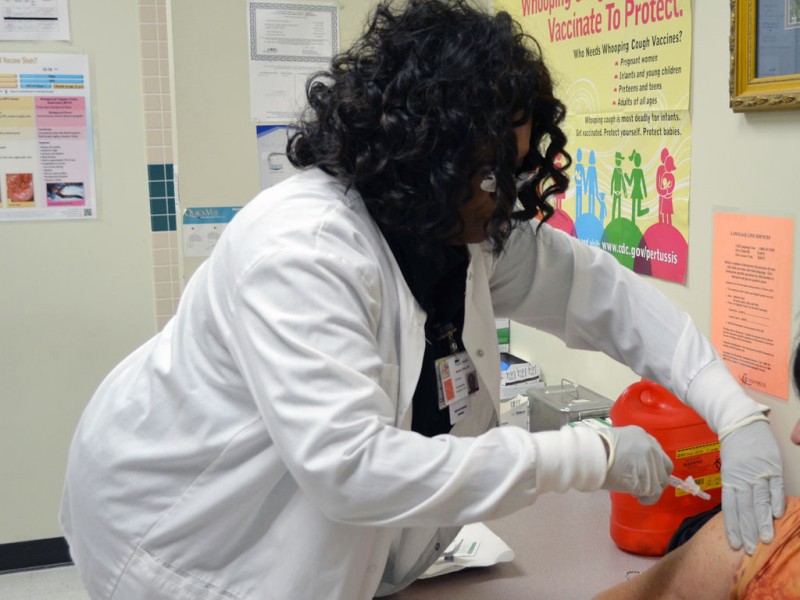
Jennifer Parks
ALBANY — The beginning of the school year brings along with it clusters of illnesses common in children. Coupled with flu season, that is a motivator for parents, school administrators and day care workers to make sure they and the children they are responsible for are doing their part to help stop the spread of such diseases.
“It is all connected to good hand hygiene,” said Jacqueline Jenkins, epidemiologist with the Southwest Public Health District.
The peak of the flu season, which Jenkins said is sometimes bad enough to nearly close a single day care center, is on its way. Onset of illness for this season has already prompted the distribution of educational materials stressing the importance of taking the measures to prevent the spread of flu, which includes staying home when flu-like symptoms — such as a high fever, body aches and irritability — appear, and seeing a doctor.
“In a school system, a few kids get the flu, it circulates really fast,” Jenkins said.
There are other conditions parents might not be familiar with that their schools, day care centers and physicians will need to know about it if their children are exposed — including shigella, hand, foot and mouth disease and scabies.
Among children, these illnesses are often spread when youngsters are mingling close together — playing and hugging together while also in contact with hands or surfaces contaminated by runny noses. Colder weather brings children inside where it is warm, consequently bringing them closer together and expanding opportunities for exposure, the epidemiologist said.
“It is easy to spread because they are right there close together,” Jenkins said, adding that when illnesses are present “good staff recognizes it, reports it and lets parents know while it is going on.”
Most people infected with shigella develop bloody diarrhea, fever and stomach cramps starting a day or two after exposure, and it often resolves in a week’s time. People who get shigella in the U.S. rarely require hospitalization. Children under 2 with severe infections and high fever sometimes have seizures.
Sometimes infected people have no symptoms at all, but may still pass the bacteria to others.
SHIGELLA INFECTIONS
People with mild shigella infections usually recover quickly without antibiotic treatment, but appropriate antibiotic treatment kills shigella bacteria and may shorten the illness by a few days. Antidiarrheal agents such as loperamide or diphenoxylate with atropine can make the illness worse and should be avoided, public health officials said.
Shigella are present in the diarrheal stools of infected persons while they are sick and for up to a week or two afterwards. Most shigella infections happen when the bacterium pass from stools or soiled fingers of one person to the mouth of another person. Public health officials said it is particularly likely to occur among toddlers who are not fully toilet-trained — which means family members and playmates of such children are at high risk.
The fall is typically the peak season for shigella, Jenkins said.
There is no vaccine to prevent shigella. The spread can be stopped by frequent and careful hand-washing with soap. Hand-washing among children should be frequent and supervised by an adult in day care centers and homes with children who have not been fully toilet trained, public health officials said.
If a child in diapers has shigella, everyone who changes the child’s diapers should be sure the diapers are disposed of properly in a closed-lid garbage can, and should wash his or her hands and the child’s hands carefully with soap and warm water immediately after changing the diapers. After use, the diaper changing area should be wiped down with a disinfectant such as diluted household bleach or anti-bacterial wipes.
Young children with a shigella infection who are still in diapers should not be in contact with uninfected children, public health officials said.
HAND, FOOT, MOUTH
Hand, foot and mouth disease is a viral illness usually affecting infants and children younger than 5 years old. Symptoms of hand, foot and mouth disease include fever, mouth sores and a skin rash.
It usually starts with a fever, reduced appetite and sore throat. One or two days afterward the fever starts and painful sores can develop in the mouth, which often begin at the back of the mouth as small red spots that blister and can become ulcers. A skin rash with red spots, and sometimes with blisters, may also develop over one or two days on the palms of the hands and soles of the feet — and can also appear on the knees, elbows, buttocks or genital area.
Some people, especially young children, may get dehydrated if they are not able to swallow enough liquids because of mouth sores. Others, especially adults, may show no symptoms but can still pass the virus to others.
“In most cases, it’s benign,” Dr. Cheryl Tolliver, a pediatric hospitalist at Phoebe Putney Memorial Hospital. “It runs its course and they are fine.”
Complications from hand, foot and mouth are rare, but may include temporary nail loss, viral meningitis or encephalitis.
“Sometimes the mouth sores are so bad that they don’t want to drink and get dehydrated,” Tolliver said. “That is when they end up in the hospital.”
To that end, Tolliver recommends hydration and to avoid foods that are too hot or spicy to reduce irritation in the mouth. In some cases, a topical “magic mouthwash” can be given to soothe the mouth. Medication can be given for the fever, she said.
Transmission occurs through close personal contact, from coughing or sneezing, contact with feces or contaminated objects and surfaces. There is no vaccine against the viruses that cause hand, foot and mouth. A person can reduce their risk of being infected by washing hands often with soap and water — especially after changing diapers and using the toilet — cleaning and disinfecting frequently touched surfaces and soiled items as well as avoiding close contact.
The disease is most common in summer and fall, with young toddlers the most vulnerable, Jenkins said. It not uncommon for it to appear in the spring, Tolliver said.
Aside from providing symptom relief, there is no specific treatment for hand, foot and mouth. It is important for people with hand, foot and mouth to drink enough liquids to prevent dehydration. If a person cannot swallow enough liquids, they may need to receive fluids intravenously.
ITCHING RASHES
Scabies is found worldwide, and can spread rapidly under crowded conditions where close body and skin contact is frequent. Child care facilities and schools are among the common sites of scabies infestations.
“It requires close skin-to-skin contact,” Jenkins said. “It can (be found) in any socioeconomic status. For young children it is more of an irritant than a disease.”
The most common signs and symptoms of scabies are intense itching — especially at night — and a pimple-like itchy rash caused by a mite that burrows under the skin. The itching and rash each may affect much of the body or be limited to common sites such as the wrist, elbow, armpit, webbing between the fingers, waist, belt-line and private areas. The rash also can include tiny blisters and scales.
“It is commonly seen in settings that are more crowded … It’s treated with a cream or lotion (that covers a person) from head to toe for four to eight hours,” said Tolliver. “You get up the next morning and wash it off.”
Scratching the rash can cause skin sores, and sometimes sores become infected by bacteria. Public health officials say the head, face, neck, palms and soles often are involved in infants and very young children, but usually not adults and older children.
Scabies is sometimes spread indirectly by sharing articles such as clothing, towels, or bedding used by an infested person. On a person, scabies mites can live for as long as one to two months. Off a person, scabies mites usually do not survive more than 48-72 hours.
Everything has to be washed to get rid of the mites, which will die if exposed to a temperature of 122 degrees for 10 minutes, public health officials said.
There are generally clusters of scabies early that later dwindle away. “It is not unusual for this to be (prevalent) at one time in several schools in one county,” Jenkins said.
WATCH FEVERS
Cold and flu cases typically get better in about five days. For flu, oseltamivir needs to be prescribed within 48 hours of start of fever. If a cold is getting worse after five days, a doctor’s visit is needed to determine alternative causes of illness, Tolliver said.
The bottom line is that if a child has a fever, or is experiencing vomiting, diarrhea or cold and flu-like symptoms, they need to stay home unless they are in a doctor’s office. Parents and guardians should also make sure their children’s vaccinations are up-to-date, and encourage good respiratory and hand hygiene — which means the use if a tissue or elbow when coughing or sneezing, and to throw the tissue away and either wash hands or have hand sanitizer handy.
A lack of fever is defined of a normal body temperature maintained at least 24 hours without the help of a fever-reducing medication.
“If a child has a fever, don’t send them to day care … they should really stay home until they are truly without fever,” Tolliver said.
Strep throat, Tolliver said, is another illness commonly seen in children. It is often referred to as the “back-to-school” bug because it often seen in older children when school comes back in session.
“As soon as they get back to school, we see strep,” she said.
Even seasonal bugs have a lingering presence in south Georgia, because seasons tend to last longer. Schools and day cares should communicate with parents when there is an outbreak, but the presence of such diseases may be an incentive to have conversations with day care workers and school administrators about what is spreading and what is being done to help prevent spread in the facilities in which children are spending the majority of their time.
“Look to see what is going around in day cares,” Tolliver said. “If you see one or two children with something, there is a good chance you child will come up with it. Watch their hygiene habits with changing stations, and if they are wiping down toys before they put them away at the end of the day.”

Related Articles

Wild Game Dinner marks 34 years as South Georgia Scouting reaches for next generation
More than a century after organized Scouting first took root in Southwest Georgia, local leaders say the program is working to preserve its traditional mission while adapting to a new generation of young people.

Dawson’s $10.2 million sewer project leaves major financial questions unresolved
As Dawson’s finance director resigns and operating pressures mount, records show $10.2 million in sewer funding, frozen loans, missing audits and gaps in the public accounting of project money.

Foreclosures jump 52.9% across the region as buyers regain negotiating power
In Dougherty County, the number of residential properties advertised for foreclosure has nearly doubled this year. In neighboring Lee County, developers are preparing to add hundreds of new houses and apartments, including homes aimed at buyers who have struggled to find newer housing at an attainable price.
