
Helpful hints and rules for kayakers
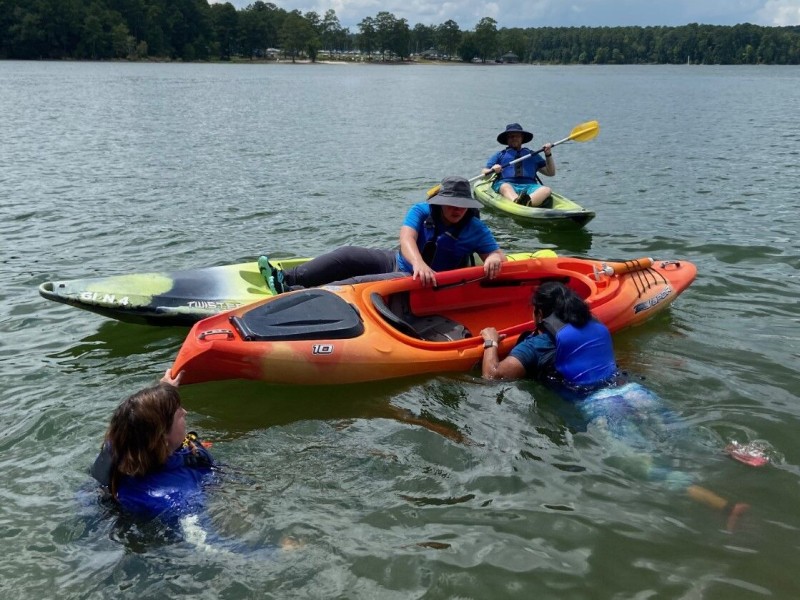
Special Photo: Georgia River Network
By Tom Seegmueller
[email protected]
ALBANY — In the past few years, through the efforts of Lee County Rivers and local outfitters, it has become much easier to take advantage of the paddling opportunities on the creeks and rivers in southwest Georgia. However, recent tragedies on Georgia waters highlight the need for appropriate planning and safety precautions while paddling and playing on these waterways.
Josh Lorber, a local outfitter operating Kayak Attack Adventures, offers the following safety tips to all paddlers regardless of experience:
· Wear a Personal Flotation Device/Life Vest: Wear a properly fitted life vest while kayaking to keep you buoyant in case of flipping or falling overboard.
· Check Weather Conditions/Check Weather Forecast: Avoid kayaking in strong winds or thunderstorms.
· Tell Someone Your Plans: Inform someone about your intended route and estimated return time. This ensures that someone knows where you are in case of emergency.
· Don’t Forget Snacks: Bring an adequate supply of water and snacks to stay hydrated and energized throughout your kayaking trip.
· Avoid Overloading Your Kayak: Follow the weight limits and capacity recommendations of your kayak. Overloading makes the kayak unstable and greatly increases the risk of capsizing.
· Be Aware of Your Surroundings: Watch for other watercraft or potential hazards like rocks or submerged objects.
· Know How to Properly Paddle and Maneuver Your Kayak. Starting off on a slow creek or lake is ideal.
Additionally, Georgia Department of Natural resources has the following regulations relating to kayaking on Georgia waterways:
· Kayaking BUI Law: Georgia has Boating Under the Influence (BUI) laws — 0.08% blood-alcohol level is considered under the influence; .02% BAL if you’re under 21.
· Kayaking Life Jacket Law: One life jacket on board per person. And children under 13 must wear a USCG-approved Type I, II or III personal flotation device.
· Kayak Lights Law: If a vessel is less than 23 feet long and underway at night or during periods of reduced visibility, kayaks must carry a 360-degree white light visible for 2 miles.
· Kayaking Sounding Devices: Required only for vessels 26 feet and longer; however, carrying a whistle is recommended.
David Dixon, an active volunteer with Lee County Rivers Alive, said that group has produced and distributed a “Paddle and Play” pamphlet.
“It has basic safety and maps of the creeks with general information on put-in and take-out points as well as mile markers on the Muckalee and Kinchafoonee Creeks to aid paddlers in knowing where they are at on the water,” Dixon said. “Lee County has loaner life jacket stations starting around Easter, so if somebody pulls up and doesn’t have all their gear, they can borrow one and return it to another station downstream.”
The publication is available at the Lee County Chamber of Commerce or the Flint Riverkeeper office.
For those who have never been kayaking or have only been on a pond, I strongly recommend you take your first swift water trip with an outfitter or other experienced paddler. For more information on kayaking, you can contact these outfitters who focus on the Flint and Kinchafoonee:
Kayak Attack Adventures (229) 669-1259 or kayakalbanygeorgia.com
Flint River Outpost (229) 376-5643 or [email protected]
Author

Related Articles

Lee County homeowners have until Aug. 15 to claim property tax exemptions
Lee County homeowners have until Aug. 1 to apply for homestead and other property tax exemptions for the 2026 tax year, a deadline members of the Lee County Board of Tax Assessors highlighted Monday as they encouraged eligible residents to take advantage of available tax relief.

Dawson police arrest wanted suspect after Flock Safety camera alert
According to police, May drove into the yard of a nearby residence instead of complying with officers’ commands. He then exited the vehicle and ran into the home on foot.

Lee County stands alone without E-SPLOST. Here’s what that means for schools, taxpayers and the county’s future
Following the defeat of its referendum, Lee County became just the second of Georgia’s 159 counties without voter approval for an active ESPLOST, leaving the school system without the state’s primary local funding source for major construction, renovations, school buses and other capital improvements.
