
Some hunters factor moon phases into hunting plans
Special Photo
By Tom Seegmueller
[email protected]
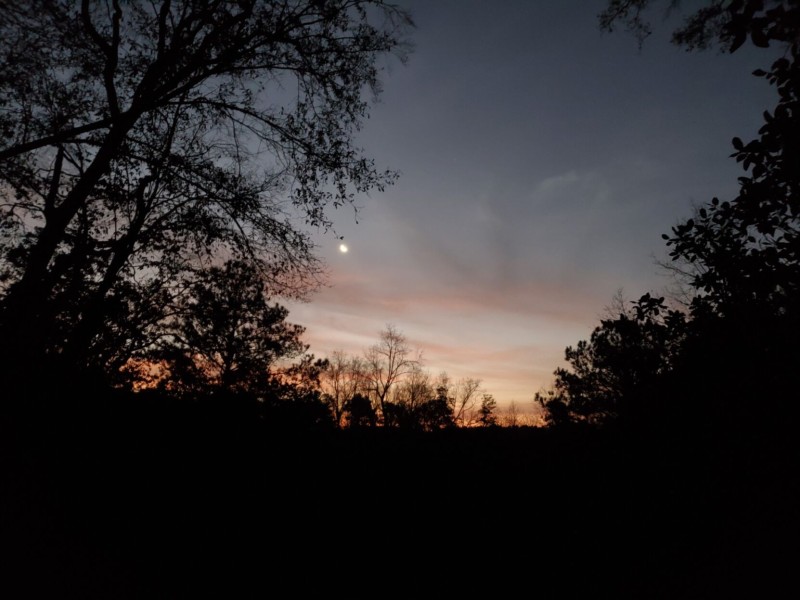
ALBANY ‒ Archeological evidence around the world indicates that the earliest inhabitants of the planet were aware that the various phases of the moon and its position had an impact on their existence beyond merely measuring seasonal changes. The moon’s power over the oceans’ daily tidal patterns is an irrefutable testament of lunar impact on the Big Blue Marble we call home.
Living in rural southwest Georgia, we knew of other indicators that were equally significant, and since 1807 Georgians consulted Grier’s Almanac to ensure the best time to dig holes, plant crops, cut firewood and hunt.
For 215 years, Grier’s Almanac, which was distributed free of charge in country stores across the state until 2021, kept us informed on the timing of moon phases as well as the occurrence of the major full moons, including the harvest and hunter’s moons. Fortunately, where Grier’s left off, the internet filled in with innumerable programs offering not only moon phases but predictions of their impact on a variety of human endeavors including hunting and fishing.
The moon changes in a regular pattern of eight phases over a 29.5-day period beginning with:
· The new moon, which is invisible in the daytime sky;
· The waxing crescent, a sliver visible against the evening sky;
· The first-quarter, where half the moon is illuminated;
· The waxing gibbous, during which more than half the moon is illuminated and increases daily;
· The full moon, where the entire moon is illuminated;
· The waning gibbous, whenless than half the moon is illuminated and decreases daily;
· Third-quarter moon, where half the moon is illuminated;
· Waning cresent, during which a mere sliver of the moon is visible.
As the earth spins to the east, the moon, planets, and stars “rise” in the east and “set” in the west. It takes the moon 12 hours and 26 minutes to go from “overhead” to “underfoot.” Therefore the moon rises, or is overhead, approximately 52 minutes later each night. With these nine parameters of lunar activity established, it’s just a matter of plotting them throughout the season in an effort to be in the field when they line up.
Most hunters who have personally observed the impact of lunar influences on white-tail deer, echo the opinion of long-time hunter Ben Kirkland, who noted, “With a Full moon, deer are active at midday; when there is no moon, they are most active the first three hours of the day and the last hour before daylight. This is a general observation; rain and high winds change everything. These are just my observations of deer movements over 34 years of a population that was not hunted.”
Kirkland and others were quick to point out that factors other than moon phase and position also play major roles in deer movement, including wind, rain, and last, but certainly not least, the rut. In fact, research by various biologists shows the phases of the moon really don’t matter. They contend the moon has no effect on the rut or deer movements. As for different moon phases, data suggests they are basically the same in relation to deer activity, with no significant difference.
“The moon is great until pressure is applied (to the deer on a property); but it’s not as influential as the weather, and nothing trumps the rut,” hunter Dustin Warnock noted.
Still many hunters attempt to utilize solar and lunar activity to determine when they should be on the stand. Obviously, any increased movement associated with lunar activity, which takes place during non-legal shooting hours, is not a big help. But many look for what they consider the trifecta of hunting influences when a good moon phase, favorable weather and the rut all come together in the hunter’s favor.
“It really boils down to one thing: After locating fresh sign, you got to be in the woods to kill a deer,” Charlie Williams offered. “I’m no monster buck slayer, but I’ve shot a few nice ones. Just be in the woods and stay there. I’ll sit all day. When I started doing that, I started seeing more deer.
“I like sitting out there. It’s just not a chore to me. It seems like some people are trying to minimize their time in a stand. Maybe they just can’t sit there and be happy.”
Author

Related Articles

Foreclosures jump 52.9% across the region as buyers regain negotiating power
In Dougherty County, the number of residential properties advertised for foreclosure has nearly doubled this year. In neighboring Lee County, developers are preparing to add hundreds of new houses and apartments, including homes aimed at buyers who have struggled to find newer housing at an attainable price.

Terrell County school board calls special meeting to consider CFO consulting services
The Terrell County Board of Education will hold a special called meeting Tuesday to consider hiring outside financial consulting services as the school district continues work on its finance operations.
The meeting is scheduled for 5 p.m. Tuesday, Aug. 25, in Room 107 of the Terrell County Board of Education office, 761 First Ave. SE in Dawson.
Developers bet on demand for smaller homes, apartments in Lee County
Two residential developments moving forward in Leesburg will add hundreds of new housing options in Lee County over the next few years, with developers saying they are targeting a market they believe has been underserved: young professionals and small families looking for newer housing they can afford.
