
State mulls partial lifting of irrigation well moratorium
File Photo: Alan Mauldin
By Dave Williams, Capitol Beat News Service
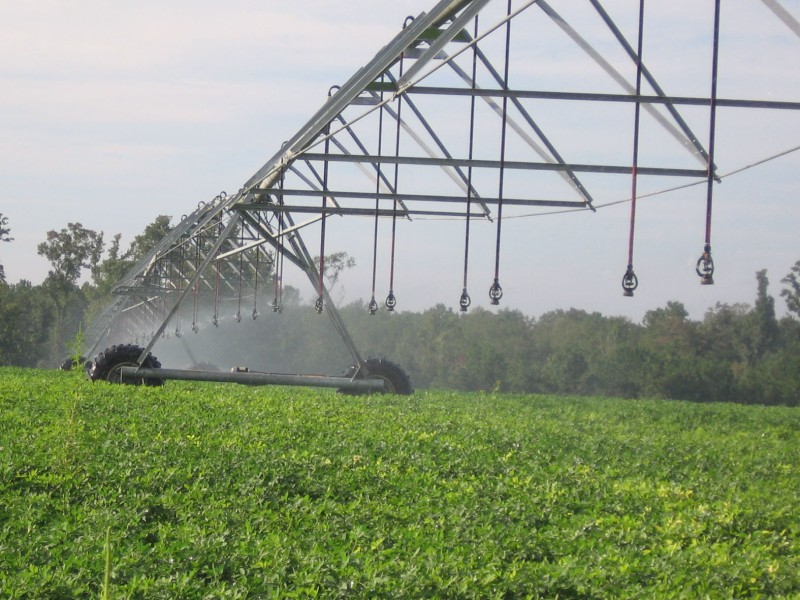
ATLANTA — The state slapped a moratorium on drilling new irrigation wells in large portions of southwest Georgia in 2012, responding to a two-year drought that dried up one stream and significantly decreased flows in others.
Now, the Georgia Environmental Protection Division is moving to partially ease the ban, due in part to court victories Georgia has won in the long-running tri-state water wars with Florida and Alabama. The agency is proposing to lift the moratorium to protect vulnerable citrus and blueberry crops from spring freezes.
Farmers in the Flint River Basin and the region’s political and business leaders are cheering the plan as the a first step toward revitalizing the state’s No. 1 industry in the heart of Georgia farm country.
“We understood the need for [a moratorium] years ago,” Will Bentley, president of the Georgia Agribusiness Council, said. “But now, technology and producer education are catching up to where they need to be.”
Bentley cited technological improvements during the last decade that are allowing farmers to better track the amount of water they’re using to irrigate their crops as a key to improved conservation of groundwater supplies. Farmers also are making progress with variable rate technology, he said.
Gordon Rogers, executive director of Albany-based Flint Riverkeeper, said the need to defend Georgia’s agricultural water use against water wars lawsuits was a driving force in that technological progress. The state won its most important legal battle two years ago when the U.S. Supreme Court ruled unanimously in favor of Georgia in a lawsuit Florida filed in 2013 over the allocation of water that flows between the two states.
“All during the litigation, the work that’s bearing fruit now was going on in the background,” Rogers said. “Some of it was explicitly to create defenses in court, and some was common sense.”
Rogers also pointed to a grant program the state launched last year to reduce water withdrawals from surface streams and the Floridan aquifer by drilling deeper irrigation wells. The $49.8 million award to Albany State University’s Georgia Water Planning and Policy Center is being funded mostly with federal pandemic relief.
Bentley cautioned that the EPD’s proposal is limited to freeze protection for citrus and blueberries.
“We have a pretty new citrus industry in south Georgia, which is really growing,” he said. “They’re particularly vulnerable to a late freeze.”
Not all farmers are happy with the state’s plan. A public hearing on the proposal in Albany last month drew complaints that lifting the ban only for the limited time of the year when freezes are a concern doesn’t go far enough.
“There’s a desire for EPD to do a better job and allow more withdrawals,” then-EPD Director Rick Dunn told members of the Georgia Board of Natural Resources late last month. Dunn has since moved on to become director of the Governor’s Office of Planning and Budget.
Rogers said he expects the EPD will expand the easing of the ban sooner rather than later.
“This is just the first of several episodes,” he said. “I’m convinced in the next three to five years we’ll see further loosening of the moratorium.”
The EPD will continue reviewing public comments on the plan through the summer. The agency plans to begin accepting applications from interested farmers on Sept. 1.
Author

Related Articles

Lee County homeowners have until Aug. 15 to claim property tax exemptions
Lee County homeowners have until Aug. 1 to apply for homestead and other property tax exemptions for the 2026 tax year, a deadline members of the Lee County Board of Tax Assessors highlighted Monday as they encouraged eligible residents to take advantage of available tax relief.

Dawson police arrest wanted suspect after Flock Safety camera alert
According to police, May drove into the yard of a nearby residence instead of complying with officers’ commands. He then exited the vehicle and ran into the home on foot.
Lee County stands alone without E-SPLOST. Here’s what that means for schools, taxpayers and the county’s future
Following the defeat of its referendum, Lee County became just the second of Georgia’s 159 counties without voter approval for an active ESPLOST, leaving the school system without the state’s primary local funding source for major construction, renovations, school buses and other capital improvements.
