
Alabama inmate first person executed by nitrogen gas
By Ralph Chapoco
Georgia Recorder
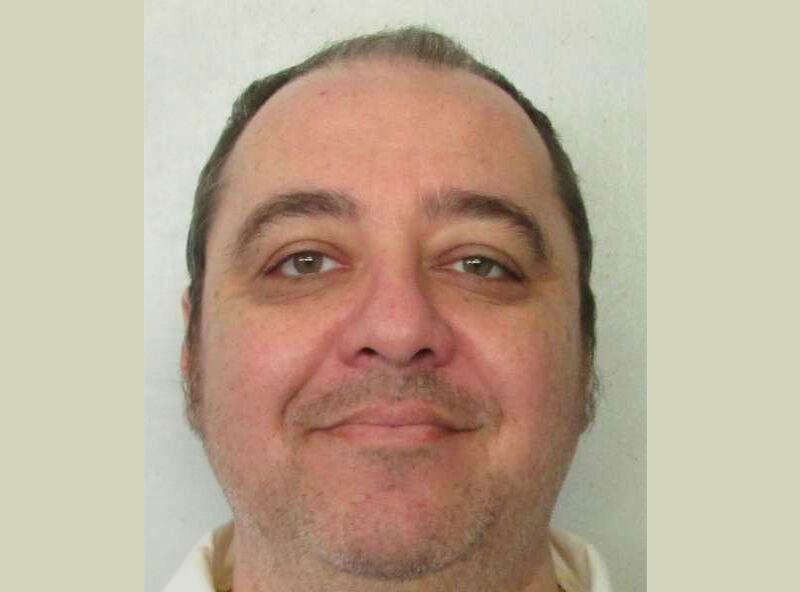
MONTGOMERY, Ala. — The state of Alabama executed Kenneth Eugene Smith for the 1988 murder-for-hire of Elizabeth Sennett.
The execution, the first ever carried out with nitrogen gas, began at 7:56 p.m., according to the Alabama Attorney General’s office. Smith was pronounced dead at 8:25 p.m.
Smith, 58, made a final statement through a mask which muffled his words.
“Tonight, Alabama caused humanity to take a step backwards,” Smith said. “I leave with love, peace and light. I love all of you. Thank you for supporting me.”
Media witnesses saw Smith dressed in his prison uniform but covered in white sheet up to his chest. Smith laid in the gurney at a slight incline with his arms extended to his side. He was strapped down in two places, one around his stomach and another around his upper chest.
After the death warrant was read and the Rev. Jeff Hood, Smith’s spiritual advisor, performed last rites, a staff member closed a vent on the mask, which began the flow of nitrogen. Smith convulsed for two minutes, with seven minutes of heavy breathing.
John Hamm, commissioner of the Alabama Department of Corrections, said that it “appeared that Smith was holding his breath as long as he could.”
“That was all expected and in the side effects that we have seen, or researched, on nitrogen hypoxia,” he said.” Nothing was out of the ordinary from what we were expecting.”
Sennett’s husband, the Rev. Charles Sennett, hired Smith, John Forrest Parker and Billy Gray Williams to kill his wife in order to collect insurance money. Parker and Smith entered the home where Elizabeth Sennett was killed. All three were convicted of her death. Parker was executed in 2010; Williams, sentenced to life in prison, died in 2020.
Charles Sennett died by suicide a week after his wife’s death.
Michael Sennett, Elizabeth Sennett’s son, said after the press conference that Parker and Smith had “been incarcerated almost twice as long as I knew my mom.”
“All three of the people involved in this case years ago, we have forgiven them, not today but we have in the past,” he said.
Smith, who survived a botched execution in November 2022, spent his last 24 hours receiving visits from friends and family, including his wife. He ate a final meal of steak, hash browns and eggs.
The U.S. Supreme Court rejected appeals from Smith on Wednesday and Thursday that argued the execution method violated his Eighth Amendment protections against cruel and unusual punishment. The court’s three liberal justices dissented.
“Having failed to kill Smith on its first attempt, Alabama has selected him as its ‘guinea pig’ to test a method of execution never attempted before,” Justice Sonia Sotomayor wrote. “The world is watching.”
Smith was convicted and sentenced to death for his role in Sennett’s death in 1989, but the conviction was later overturned. At a subsequent trial in 1996, Smith was again convicted. A jury recommended Smith be sentenced to life in prison. However, the trial judge overruled the jury and imposed the death sentence.
The Alabama Legislature in 2017 abolished the practice, known as judicial override, but did not make it retroactive.
Smith was brought to the death chamber at Holman Correctional Facility in November 2022 for execution by lethal injection. The execution was called off after Department of Corrections Department staff failed to establish a second intravenous line necessary for administering the lethal drugs. Smith’s attorneys have said the process, which resulted in multiple puncture wounds, left him with post-traumatic stress disorder.
The Alabama Legislature approved nitrogen executions in 2018. At the time, Alabama and other states that kill with lethal injection faced shortages of drugs and growing criticism of the use of midazolam, a sedative present in several botched executions, including the 2016 execution of Ronald Bert Smith in Alabama.
Pittman and other supporters argued the nitrogen method would allow the state to continue executions and suggested it would be more humane.
“You basically black out,” Pittman told the Reflector in September. “There is no time for pain or anything else. In fact, nitrous oxide is a way of reducing pain for reducing surgeries.”
But attorneys and those incarcerated told the Montgomery Advertiser in 2019 that they were only told of the option days before a deadline, which created confusion.
Many death row inmates are represented by lawyers who live outside Alabama and some had limited time to understand what a nitrogen execution might entail. A federal judge in 2021 called the state’s notification “a mess.”
Smith did not originally choose to be executed by nitrogen gas, though he expressed his preference for it in a 2022 court filing.
“The execution was lawfully carried out by nitrogen hypoxia, the method previously requested by Mr. Smith as an alternative to lethal injection,” Gov. Kay Ivey said. “At long last, Mr. Smith got what he asked for, and this case can finally be put to rest.”
Federal courts sided with the state in the lead-up to the execution. U.S. District Judge R. Austin Huffaker Jr. ruled on Jan. 10 that Smith had not provided a sufficient reason to stop the execution, calling the allegations and evidence “speculation.”
A divided three-judge panel of the U.S. 11th Circuit Court of Appeals upheld Huffaker’s ruling on Wednesday.
“There is no doubt that death by nitrogen hypoxia is both new and novel,” the unsigned opinion said. “Because we are bound by Supreme Court precedent, Smith cannot say that the use of nitrogen hypoxia, as a new and novel method, will amount to cruel and unusual punishment in violation of the Eighth Amendment by itself.”
U.S. Circuit Judge Charles Wilson concurred but wrote that he feared Smith might face “a cruel and unusual execution” if the gas led him to choke on his own vomit. U.S. Circuit Judge Jill Pryor dissented, writing that Smith’s PTSD made it very likely for him to face that scenario.
“The cost, I fear, will be Mr. Smith’s human dignity, and ours,” she wrote.
Author
Related Articles
Albany Herald – June 20, 2026
City Albany faces shortfall for police… Women’s Anchorage tentatively set to… Commissioner, school leaders clash over…

Classifieds – June 20, 2026
ALBANY HERALD CLASSIFIEDS JUNE 20, 2026

Public safety drives Leesburg’s $4.2 million Fiscal Year ’27 budget
The adopted spending plan reflects modest growth in city revenues and continued emphasis on maintaining core municipal services, particularly public safety and sanitation, which together account for a significant share of general fund expenditures.
