
Albany area senior citizens updated on legislative results
Jennifer Parks
ALBANY — Advocates for senior citizens were able to garner a little less than $3 million in the 2014 General Assembly, officials said, but there is work to be done when the 2015 session of the Legislature opens.
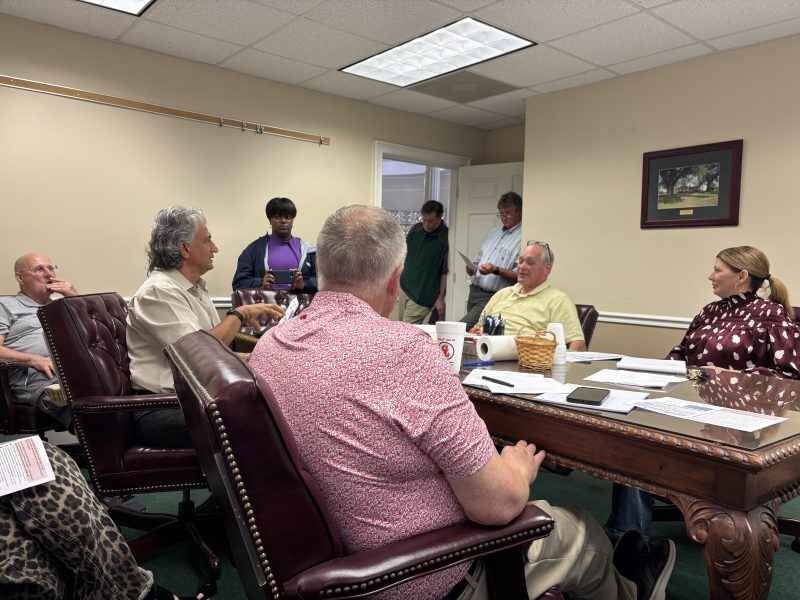
The Coalition of Advocates for Georgia’s Elderly, or CO-AGE, met at the SOWEGA Council on Aging Senior Life Enrichment Center recently to give a report on the last legislative session as it relates to bills that impact senior citizens, and to make a call for issues for the next session.
Kathy Floyd, executive director for the Georgia Council on Aging, gave a report on the budgetary wins, including $693,333 for adult protective services, $226,800 for emergency relocation services, $1.5 million for meals, $321,000 for adult day care centers and $110,000 for an Alzheimer’s registry.
This came out to a total of just over $2.85 million.
“This is what we can do together if we work together,” Floyd said.
The adult protection services funding, Floyd said, will go toward funding 11 new workers. She noted the adult day care center and meal funding as particularly big wins.
In terms of legislative issues, Georgia Council on Aging Legislative Chair Vicki Johnson started off by discussing Senate Bill 291 to aid the creation of the Georgia Adult and Aging Services Agency, stating the case that aging services needed more independence on the state level. Gaining overwhelming support in the Senate and with the House Human Relations and Aging Committee confirming approval, it met with resistance in the House Rules committee.
“In the final hours, it stalled and did not pass,” she said. ” … This is an issue to pursue again, and we have eight months in which to develop a strategy — so let’s do it.”
Charmaine Davis, Georgia state director with 9to5, gave an overview of what happened with the House Bill 290, also known as the Family Care Act, which was to allow for flexible use of sick days to care for a family member without risk of penalty.
Supporters were able to get 41 legislators from the majority party to commit to voting yes — some of whom did not follow through. It passed out of the House Human Relations and Aging Committee, but did not get out of House Rules by Crossover Day and did not come to a vote on the House floor.
“We are looking to go back and get more than 40 votes to ensure we have enough,” Davis said. “We look forward to getting it passed in future legislative sessions.”
Kathy Simpson, director of advocacy for the Georgia chapter of the Alzheimer’s Association, discussed House Bill 966. Originally presented as Senate Bill 292, it establishes an Alzheimer’s registry within the state Department of Public Health — allowing collection of statewide data on the incidence of dementia in Georgia.
This also includes death certificate revisions for deaths in Alzheimer’s patients.
“It notes those who died with Alzheimer’s, not just of Alzheimer’s,” Simpson said.
The bill managed to pass at the last minute.
Melanie McNeill, a state long-term care ombudsman, talked about House Bill 899 — which increases the penalty to felony for operation of an unlicensed personal care home if abuse, neglect and exploitation exist. It came about as a result of reports of medications and food being denied to senior citizens, and those responsible getting one day in jail.
“On March 18 it got to the full Senate, and then tabled,” she said. “It passed 52-0 with two not voting and two being excused.”
Senate Bill 207 was also brought up, which adds private home care providers to the list of employers who could disqualify people from employment based on probation for selected first offender crimes — and adds these providers to the purview of the state long-term care ombudsman program. It passed with broad support from both chambers.
Toward the end of the program, there were presentations given for the Martha Eaves Advocating for Positive Change Award. The honoree from the Southwest Georgia area was Ann Williams, who since 1992 has served on the state’s aging council in roles including chair of the Legislative Committee.
Related Articles

Public safety drives Leesburg’s $4.2 million Fiscal Year ’27 budget
The adopted spending plan reflects modest growth in city revenues and continued emphasis on maintaining core municipal services, particularly public safety and sanitation, which together account for a significant share of general fund expenditures.
Lee County property assessment notices set to arrive as farm values jump 83%
The Lee County Board of Tax Assessors approved the 2026 assessment notices Wednesday and voted to include an informational insert designed to help taxpayers understand how property values, exemptions and appeals work.

‘Sounds Like a Mutiny.’ Secret Recording Exposes Claims of Toxic Leadership After a Marine’s Suicide
This week’s War Horse story follows the systemic failures before and after the death of Cpl. Drew Mobley who was the third in two years at Marine Corps Base Quantico to die by suicide.
