
Albany cash reserves at target amount of $149 million
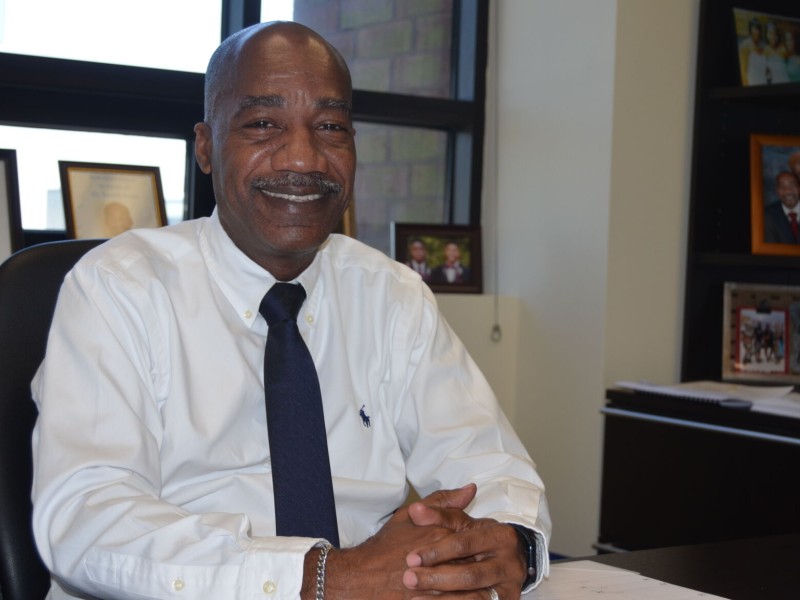
File Photo
By Alan Mauldin
[email protected]
ALBANY — The $465 million in reserves provided to The Albany Herald by city of Albany officials last month gave the impression that the city is flush, and it is in terms of buildings that include a new transportation center, hangars completed and commercial aviation headquarters underway at the airport. But the cash on hand is a different story.
The figure provided by Albany Finance Director Derrick Brown includes every city asset, from buildings to lawn mowers to police cars. But the number in terms of available cash is a still-hefty $149 million, Brown said on Monday.
And all of that cash on hand is not unrestricted for immediate use. Of the $149 figure, $20 million is from federal American Rescue Plan Act funds related to the COVID-19 pandemic, out of which $15 million is dedicated to the city’s $135 million sewage project, for example.
“That’s not $149 million we can just do anything with,” Brown said. “A lot of it is allocated for other things.”
The $149 million includes cash reserves and short-term investments such as bonds that could be cashed out quickly if needed.
The city’s policies require keeping on hand enough reserves to fund operations for three months, and the available amount would cover that. The policy is up for review next year and could be left as-is or extended to 180 days, which the current cash fund balance also would cover.
“When we put that policy in place, we couldn’t have put it at 180 days because we didn’t have enough for 180 days,” Brown said. “The policy is 90 days, but that (180 days) is our target. We try to have 180 days, or six months, of funding so if there is some catastrophe we would have that on hand.”
Currently, the city’s general fund balance is at about the 180-day mark, and the utilities fund has about $40 million above that target amount, Brown said.
Still, because all of the cash is not available due to being allocated for specific projects, not all of those funds could be used to pay operating expenses in the event of a catastrophic emergency.
“One hundred forty-nine million sounds like a big amount,” Brown said. “We go through $1.2 million every two days. We have to take that into consideration.”
And, he added, Albany is no stranger to emergencies.
In the past, floods, tornadoes and, in 2018, Hurricane Michael brought about emergencies that required large expenditures of city funds.
Author

Related Articles

PHOTOS: Albany State Wear Pink – Breast Cancer Awareness
Two galleries. Click the arrow to scroll through the photos.

Dougherty school board vacancy, election lawsuit leave voters facing uncertainty
Dougherty County School Board members acknowledged Thursday that they must address a District 4 vacancy after Melissa Strother resigned. Meanwhile, a court challenge to the May primary alleges scanner malfunctions, mishandled ballots and incomplete election records.

Albany Symphony set to kick off 63rd season featuring ‘Magic of Music’
This season, ASO is highlighting some of the orchestra’s principal musicians during each performance.