
Albany City Commission approves $2 million loan for downtown development project
“Any public funds have to be used for a public cause,” Garner told commissioners. “You as a body cannot authorize spending funds that could benefit a private individual or a private enterprise. I am advising you there are concerns this could violate the Georgia Constitution.”

ALBANY – A downtown Albany development project facing foreclosure received a lifeline on Tuesday with the approval of a $2 million loan to allow the developer to purchase the North Washington Street property.
The Albany City Commission approved the $2 million loan for Look Again LLC in a 5-2 vote following a meeting that lasted two hours and included input from developer Orlando Rambo, his attorney and other speakers who weighed in virtually, an attorney representing the city and other officials.
The funds are to come from the city’s job investment fund
The city’s offer will include a term sheet that sets a timeline setting dates by which certain milestones must be performed, according to Albany City Manager Terrell Jacobs.
The properties at issue are 106, 110 and 114 N. Washington St., attorney Jamie Garner, who was representing the city in the matter, said. The plan includes 15 apartments, a food court, space for Albany Technical College culinary arts students to work and an Amici restaurant.
“It’s about 45,000 square feet (of) building space that is intended to be built with a variety of uses,” Garner said. “It (food court) is intended to be an incubator … that would hopefully support restaurants opening or some other expansion.”
Some potential concerns about the project include a difference in the amount for which the city has the property appraised, at $665,000 compared to the developer’s $890,000 appraisal, potentially running afoul of the state’s gratuities clause and the risk of a default.
The property went into default in December, but time was granted to try to arrange for financing to complete the purchase.
“Any public funds have to be used for a public cause,” Garner told commissioners. “You as a body cannot authorize spending funds that could benefit a private individual or a private enterprise. I am advising you there are concerns this could violate the Georgia Constitution.”
An example of that would be lending more than the face value of the poetry, he said. Paying the interest and late fees, as well as the loan, would not violate the gratuities clause, Garner said.
“That is different from paying an inflated purchase price to put in the pocket of someone who has taken out a loan,” he said.
The money required for Look Again to acquire clear title to the property is $550,000 according to Garner. An additional amount of roughly $435,000 is needed for early-stage development, including architects fees to develop plans needed to apply for tax credits.
The project has a roughly $17 million estimated total cost, and the developer anticipates that Dougherty County will contribute $3 million. The $3 million would go toward paying Albany Tech’s lease payments for 15 years, but the county has not voted to approve the expenditure.
“I was under the impression the developer was going to get a (county) contribution of $3 million, and they would secure other financing and the city would come in on the back end,” Mayor Bo Dorough said.
For his part, Rambo disputed some of the information presented by Garner and other city officials.
He said that interest payments have been made throughout the course of the loan.
“I think it’s a default when you don’t make the balloon payment,” said Dorough, who, along with Commissioners Vilnis Gaines, Jon Howard, Colette Jenkins and Willie Weaver voted to approve the loan. “We all want to see this thing happen, but I have reservations.”
A consultant told commissioners that the project appears to be favorable for federal historic tax credits and new market tax credits.
In considering whether the funding would violate the gratuities clause, Rambo’s attorney, Sherman Golden, said that other factors can be taken into consideration, including jobs and economic development that would benefit the government making the loan.
“When we do projects like this, it takes a lot more risks,” he said. “I don’t think this is a violation of the gratuities clause. Look at all these things that benefit the local economy. Public money is meant to reduce that risk so that private sector (lenders) can come in.”
Commissioner Diana Brown said that she has concerns, including the lack of commitment from the county on the $3 million investment, no commitment for state historic tax credits and the lack of a record of tax payment history and other costs associated with the loan. She dismissed Rambo’s statement that he had a verbal confirmation from County Commission Chairman Lorenzo Heard that the county would provide funding.
“If it ain’t in writing, I don’t believe it,” said Brown, who was joined in voting no by Commissioner Chad Warbington. “We’ve got to be more strategic about what we’re doing moving forward. I’m not here to waste tax dollars. I’m not here to spend tax dollars on projects that don’t make sense.
“They come before us saying ‘the county is giving us $3 million.’ We have not seen that. No proper paperwork has been shown to me or any of my colleagues as far as I know. I’m here to do what’s right and be a good steward of taxpayer dollars.”
For his part, Wabington said that he needed to see the final draft of the term sheet before he could support to grant the loan.
“I can’t vote for it without the term sheet,” he said.
A final draft of the document, along with a memorandum of understanding, should be presented to the commission during its March 17 meeting, Jacobs said.
Author

Related Articles
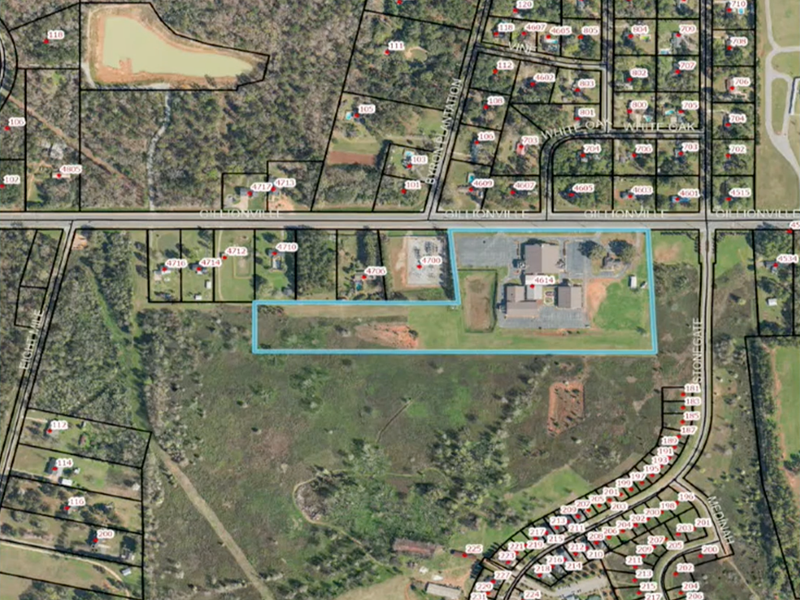
County approves 198-foot Gillionville Road cell tower; no speakers at public hearing
Dougherty County commissioners unanimously approved a 198-foot cell tower behind a church on Gillionville Road, with no one speaking for or against it at the public hearing.

An insider’s (semi-fictionalized) look at Cruising Albany’s Slappey Boulevard
Graylon Brunson has written and published a pair of books about Cruising Slappey Boulevard as a teenager.
Who’s not paying?
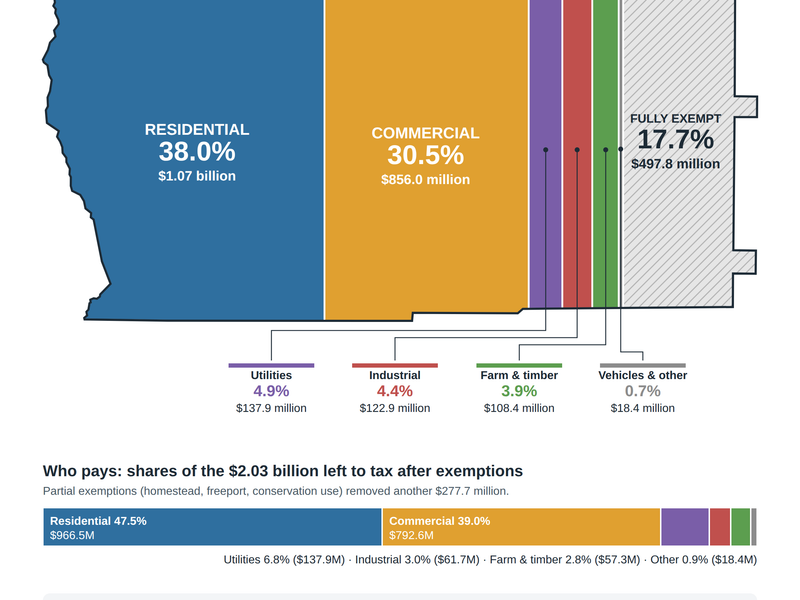
Nearly 1 of every 5 dollars of property value in Dougherty County pays no property tax at all.
With new assessment notices hitting hard after Dougherty’s first full revaluation since 2007, and many residents are facing sharply higher values, the question of who carries the tax base is no longer abstract.
