
Albany City Commission considers $5 million payment to shore up retiree pension plan
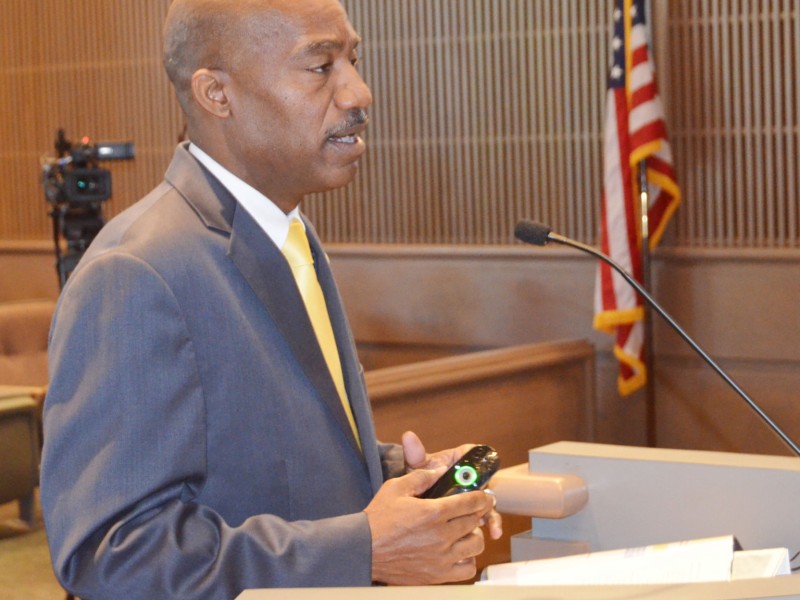
File Photo
By Alan Mauldin
[email protected]
ALBANY — A conflict 5,000 miles away can have repercussions that reach close to home, Albany officials are discovering, and those repercussions are raising a $5 million question for the city’s pension plan.
That is the amount the Albany City Commission is considering pumping into the defined-benefit plan for retirees to ensure it remains in compliance with state regulations.
The last time the city was required to submit a biennial report, in 2021, it was in compliance, but a dip in the stocks contained in the plan last year have put it on the threshold of falling short, Albany CFO Derrick Brown said.
“The war (in Ukraine), that impacted it,” he said. “There was a huge impact as a result of that.”
Losses in the plan totaled 14% in 2022, the CFO said.
“The expectation is a plan will net a return of 7% (annually),” Brown said. “Seven percent is the amount you expect, so when it drops 14% like it did last year, that’s a lot. When you have a 21% swing in a single year, that’s a lot.
“Right now the plan is 64.2% funded. The state requires our plan to be funded over a period of 30 years.”
If current projections hold, the pension plan would not stray into territory where it would take more than 30 years to fund projected outlays. But the deposit of some of the city’s reserve funds would be a protective measure.
As the city found out last year, and to a greater extent when stocks plummeted during the Great Recession that started in 2008, things can turn sour in a hurry.
Brown floated the idea of moving money to the pension fund earlier this month, and the City Commission is considering that suggestion.
“What I introduced was a one-time, $5 million infusion,” he said. “That would ensure we stay within the 30 years.”
Since he arrived in 2021, the city has made some minor tweaks by increasing the amount employees and the city contribute to the plan, in 2017 and 2020, but Brown said it has never had to consider a payment into the fund.
Currently, 4.5% of employee salaries are deducted and the city contributes 12% into the pension program, and for public safety employees those amounts are 7.5% and 15%, respectively.
The bottom line for retirees is that they are in no danger of the city reneging on its obligation to provide for them, Brown said.
“I certainly don’t want any of our retirees to be concerned,” he said. “The city has done a good job over the years to take care of the people who have put in their time.”
The commission plans to discuss the pension plan and Brown’s proposal at a board retreat in early March. Some commissioners have suggested keeping current retirees covered by the pension plan but closing it to new hires who would instead transition to a 401(k) system of defined contributions in which employees would designate a set amount of their paychecks to go into their retirement fund with a match from the city.
Another recent development is that the number of retirees for the first time has surpassed the number of current employees who are paying into the system.
Currently there are 1,003 retired employees and 875 active employees, Brown said.
“That probably happened during COVID,” he said of the shift.
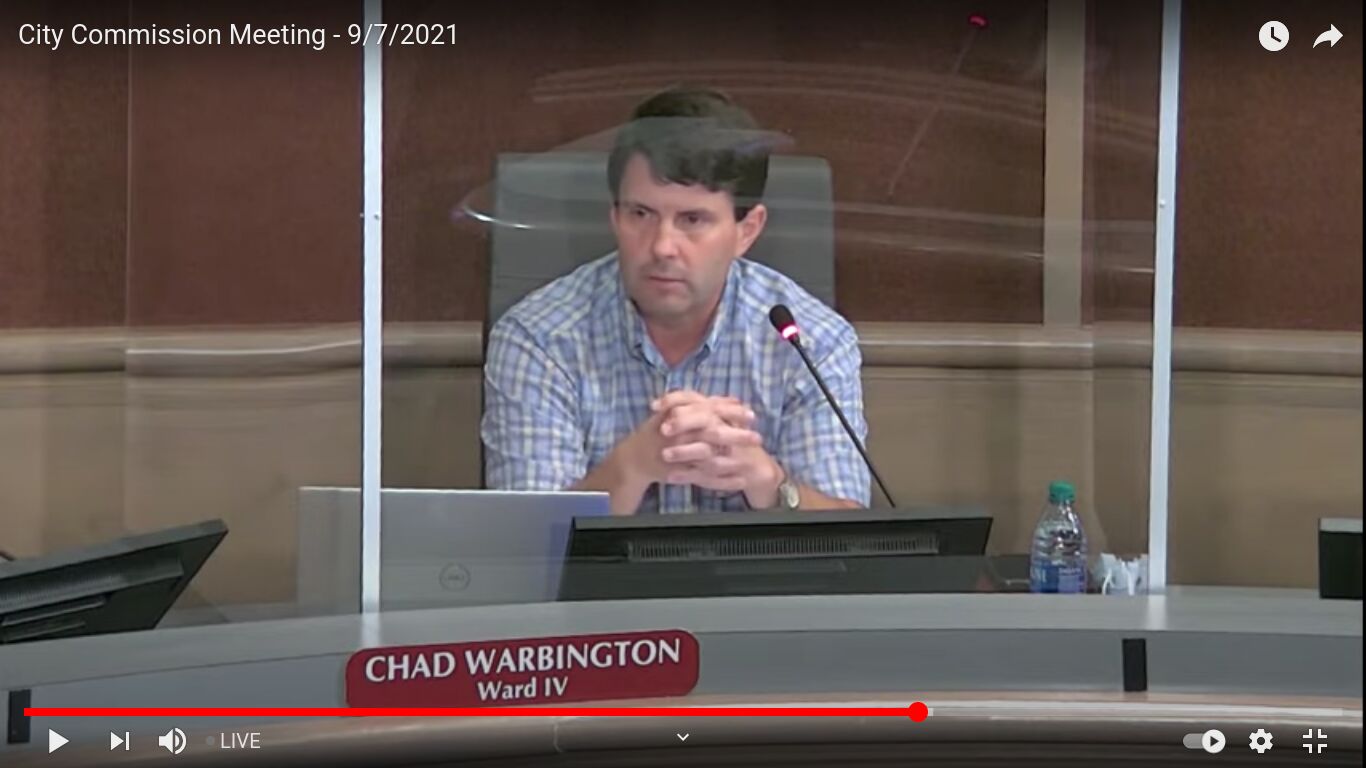
One of those looking to pull the Band-aid off, so to speak, is Ward IV Commissioner Chad Warbington. One idea he has mentioned is moving to a 401(k) system first for new police hires.
Younger workers are not like older generations who settled in at one job and worked for 20 or 30 years to retirement, so the concept of a pension is not as attractive to them, he said.
“That’s not what they’re looking for,” said Warbington, who along with Commissioner Jon Howard and Mayor Bo Dorough sit on the Pension Committee and hear monthly reports on how the fund is performing.
Slicing the amount new employees are required to contribute, along with the city’s portion, could allow those new hires to have more take-home pay and thus be a recruiting tool for the department, he said.
Brown’s report earlier this month was a wake-up call, he said.
“I think any time we have low pension funding, it brings up when is the right time and when are we going to do it,” Brown said of making the switch to a 401(k) program. “There is one idea on the table — for your hard-to-hire positions, maybe we go ahead and transition those sooner rather than later. They say that is a better recruiting tool than the pension plan.
“There’s a group of us who are wanting to move fast on it. Others are waiting to look at it.”
Another consideration is that retirees have not had a cost-of-living adjustment in more than a decade, Howard said.
Prior to 2011, annual increases were built into the plan, but the commission eliminated that provision that year, Brown said.
Whatever decision the commission makes in terms of a COLA or transitioning to a 401(k) plan, his office will make it work, Brown said. The shock from the 2008 crash that affected local governments across the country has receded, and he said he expects the plan will recover from the current setback.
“We are healthy, we are fine,” Warbington said. “We just have to make some tough decisions on the future going forward.”
Author

Related Articles

Albany Commission hits pause on data centers for study, drafting regulations
The Albany City Commission compromised between six months and 18 months to set a moratorium of 12 months on permitting data centers in the city. The resolution approved in a unanimous vote allows for a six-month extension.

She moved to Lee County for her children. Now she’s building a business for their future
After moving to Lee County for better schools, Jocilyn Hardguittini turned a lifelong passion for Latin cooking into Flavor & Fuego, a growing catering business with plans for a food truck and, eventually, an upscale Hispanic restaurant.

Albany skaters get a win with funding, location of replacement skate park
“I think it was a great win for the community as a whole. It’s been a long time to get an actual location and funding.”
