
Albany-Dougherty leaders share thoughts on state of Albany/Dougherty County community | VIDEO | PHOTO GALLERY
Brad McEwen
ALBANY — Continued collaboration for the benefit of economic development was the theme as three of the community’s leaders formed a panel to discuss the state of Albany and Dougherty County at the Albany Area Chamber of Commerce’s annual State of the Community luncheon Wednesday.
Albany Mayor Dorothy Hubbard, Dougherty County Commission Chairman Chris Cohilas, and Dougherty County School System (DCSS) Supt. David “Butch” Mosely were on the stage at Albany State University’s (ASU) L. Orene Hall to share updates about the priorities and status of each agency and how those priorities are impacting the community.
Mobile users click here for photo gallery from the luncheon
“I really think that the key (to our success) is collaboration,” said Cohilas. “So much of what we do in our respective positions affects what other people do.”
Through a series of questions posed by moderator Matt Reed of Albany CEO, it was evident that each panelist is encouraged by the progress of each agency.
When discussing Albany’s status, Hubbard focused on the city’s recent efforts to become more efficient in a number of areas, primarily through the reduction of staff over the last 18 months from 1,200 to 1,007.
“We have focused on operational efficiency over the past year and we have actually looked department by department,” said Hubbard. “By doing that we have been able to combine departments. When you look at positions within a department you see that some of them are doing the same thing and that you might be able to get one person that could do the work of two people and save that money. The things that we have done have been things that have positioned us for the future.”
Hubbard said the reduction in the workforce created savings related to employee costs of roughly $4 million, which factors into the city’s plan to maximize revenue through operational efficiency and additional revenue streams, such as providing telecommunications service across Southwest Georgia.
“One of the things that I am really really proud of is our telecom division,” said Hubbard. “If we are able to send high speed internet into the areas that are under-served then we will reap the benefits of those increased revenues. Our goal is to always stay on budget, to balance our budget and to never ever increase taxes again.”
The expansion of telecommunications also coincides with another initiative, Rails to Trails to create 13.2 miles of hiking and biking trails from Albany into Terrell County.
“I am truly proud of the Rails to Trails project,” Hubbard said. “We’re going to have an opportunity to join with the county and make that trail go from Radium all the way to Sasser. It will be huge in terms of tourism. Not to even mention all the revenue we will receive by having the telecom and gas lines along that.”
“As you can see there’s a synergy between the county and the city,” said Cohilas. “Rails to Trails isn’t just a city or a county project. We’ve got to find more and more opportunities to take ownership of the same goals that make sense and that are worth investing in. I think that’s a wonderful example and I think you’re going to see a lot of this moving forward.”
Another project Cohilas mentioned that took collaboration between not only the city and county, but also with the Albany Dougherty Economic Development Authority and its partners is the $250 million biomass plant that will be built at Albany’s Procter and Gamble plant.
That project, Cohilas said, was a collaborative effort that is going to have significant impact on the community because it positively impacts two of the community’s largest employers, P&G and Marine Corps Logistics Base-Albany.
“We’ve seen a lot of positive growth,” said Cohilas. “I think the flag ship has been the $250 million investment that’s been made at Procter and Gamble in respect to the biomass facility. This is a project that ultimately benefits businesses but also is going to benefit the Marine Corps Logistics Base which is our No. 1 one employer in Dougherty County. Without cooperation that wouldn’t have happened.”
Cohilas also mentioned collaboration between the city, county and school system, in the form of the recently announced college and career academy that will help create a better educated workforce.
“The school system’s decision to move forward with career academy is going to greatly impact our ability to market this community to employers and to the folks that are looking to invest in this community,” said Cohilas. “It’s that type of collaboration with the joint establishment of certain goals that are truly better for our economic future.”
Mosely said he hopes to see the Dougherty school system again become the model of how a public school system should operate.
“We feel like we have a system in place that will bring us back to the era when Dougherty County was the system,” said Mosely. “In the 50s when I was growing up, everybody looked at Dougherty County as the epitome of public education. It’s our goal to reach that goal again.”
Mosely also pointed to several areas in which he feels the system is making strides, including its focus on hiring quality people and holding them accountable.
“The first time ever we studied over a year our strengths and our weaknesses and we developed a five year strategic plan,” said Mosely. “Every area, every discipline has benchmarks we expect our schools to reach. We have benchmarks for our employees. We’ve managed, with the help of the board to recruit and hopefully keep really high quality people. The people are really our lifeblood.”
Mosely also spoke to the system’s goal of utilizing technology, specifically the system’s plan to provide laptops and tablets for all of the system’s 15,000 students.
“Education has rapidly changed over the last 10-15 years,” said Mosely. “Technology in Dougherty County is probably ahead of everything in South Georgia and possibly Georgia. We’ll be the only system by December of this year that every child in our system, all 15,000, will have their own personal laptops.”
Lastly Mosely also touched on the ongoing collaboration between DCSS, ASU, Darton State College and Albany Technical College, as being critical to the community.
“If you don’t think education is not economic development you shouldn’t be sitting in this room,” said Mosely. “For us to have four institutions here we have no excuse for not getting it done.”
Related Articles
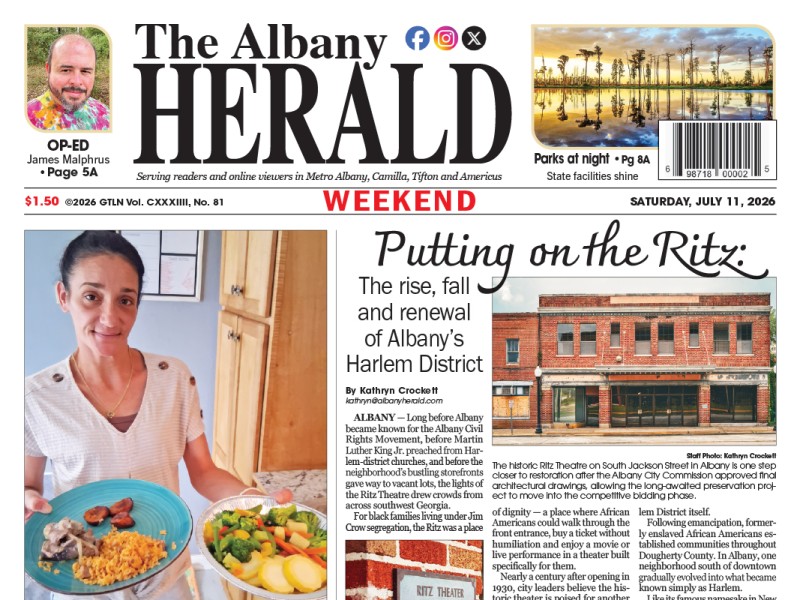
Albany Herald – July 11, 2026
Putting on the Ritz… Food, mini menagerie provide… Albany City Commission set to vote on… Following Lee’s lead, Terrell County hits…

Classifieds – July 11, 2026
Albany Classifieds and Legals: Real Estate; Merchandise, Misc…
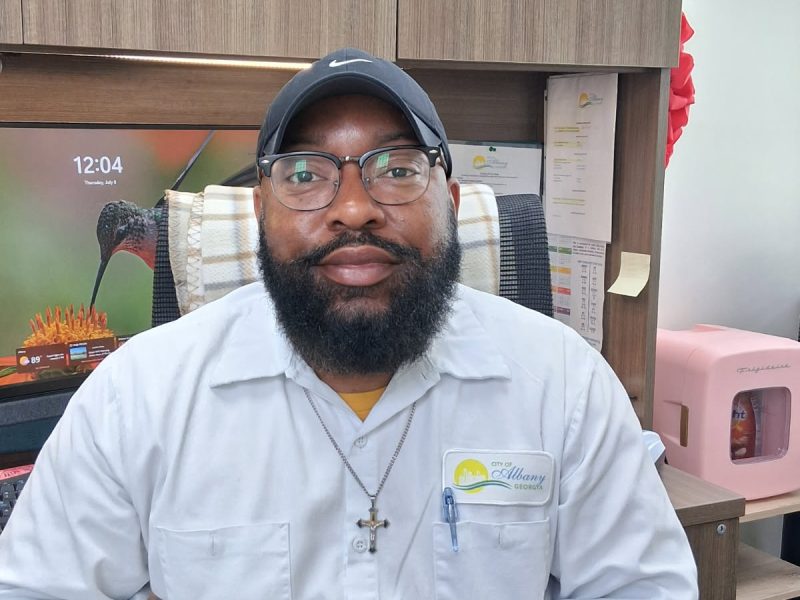
Small actions can help save big on utility bills
The high temperatures of July and August can bring scorching utility bills as air conditioners hum to keep houses cool. Albany Utilities Residential Conservation Auditor Willie Jackson offered some tips on making summer cooling bills more manageable.
