
Albany-Dougherty Planning Commission says yes to microbrewery
Carlton Fletcher
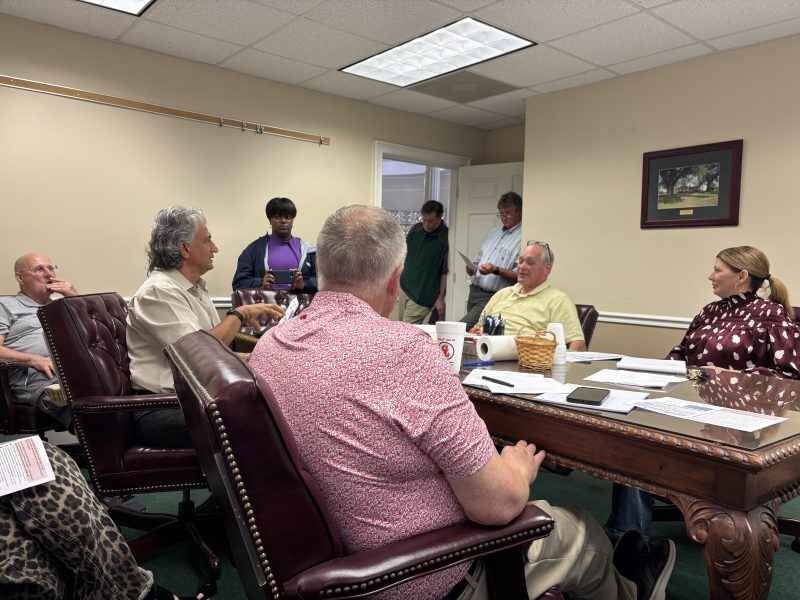
ALBANY — Plantation and property owners in southwest Dougherty County were already planning a rebuttal presentation for the Dougherty County Commission Thursday afternoon after the Albany-Dougherty Planning Commission voted 6-1 to allow a rezoning request that would permit construction of a working-farm/microbrewery on 29.1 acres of land at 5626 Walker-Ducker Road.
Morgan III Properties of Albany asked the Planning Commission to allow the rezoning from AG (agriculture) to C3 (commercial) so that crops grown on the property could be used to make beer. The concept also calls for an ecotourism/special events component, which would need special approval from the County Commission.
“Normally, zoning change comes in response to growth in a region, a redirection of purpose,” Dawson attorney T. Gamble, who represented the interests of Pine Knoll Plantation at the commission meeting, said. “What these folks are doing is flipping that on its head. They’re trying to dictate the change by dropping a commercial property in the middle of an agriculture district that’s been zoned agriculture since 1969, when Dougherty County set up its zones.”
Libby Hamilton Hall, one of the Pine Knoll owners, said creation of a working farm and microbrewery on land surrounded by plantation property opens the possibility for complaints about typical activities associated with plantation maintenance.
“We (control) burn our land, spray our (pecan) crops and offer recreational hunting on our property now as a matter of general practice,” Hall said. “We try to be good neighbors, and we try not to be a nuisance. With commercial property adjacent to our land, though, I can see where those practices will come into conflict with what they say they plan to do.
“We’ve always complied with county ordinances 100 percent, and we pay massive taxes in Dougherty County. We came here to stay, but if they’re going to be allowed to come in and run us out …”
Albert Etheridge, who spoke on behalf of Morgan III Properties, said the land owner (Dr. Tripp Morgan) had been approached by representatives of a fertilizer manufacturing company and a lumber company about use of the land. But Morgan chose to seek development of the microbrewery, which Etheridge said is shooting for initial production of 5,000 barrels a year.
“This is about a $3 million project that will in year one employ around 20 people,” Etheridge said. “It’s a very ecofriendly endeavor; there will be little waste and little impact on the area. It should fit in nicely with land use on the surrounding area. We’ll grow crops like wheat, barley, strawberries and blueberries, all of which will be used in the production of beer.”
Gamble told the commission Morgan III Properties’ microbrewery plan had been “thrown together in a month,” after Etheridge appeared before the board in April.
“It’s hard to believe their plan doesn’t conflict with daily practices of the established plantations in the area, and we’re talking about more than 12,000 acres of land,” the attorney said. “There’s plenty of other commercial property available in Dougherty County, so why develop a brewery here?
“By rezoning that land to a commercial district, they’d change the nature of the area. And if you look at their rendering, they’re showing use of about 14 acres to grow crops. That’s not enough crops to make a dent in 5,000 barrels of beer. There’s also no place that I know of in Georgia that grows barley. What would happen if they came in here and operated for a month or so and failed is that there would be C3 zoning in the middle of all this agriculture land.”
Ted Johns, who lives on nearby Flowing Well Road, said he’s concerned about the “footprint” the C3 designation will establish.
“If you allow commercial zoning there, what’s going to stop other property owners in the area from seeking C3 designation?” Johns asked. “I’m not saying that anyone would, but you will have set a precedent.”
The 6-1 vote to recommend the rezoning came despite a warning from (non-voting) Board Chairman William Geer.
“If you wonder what your chair thinks, I’ve heard these people speak out against this request who own large acres of land,” Geer said. “They’re afraid you’ll be setting off a chain reaction of C3 in that area. The closest C3-zoned property is 10 to 12 miles from this land. Keep that in mind.”
During discussion of the request, board member Art Brown said, “I think it’s a great idea to look at something new and unique in Dougherty County. If we don’t get it, someone else will and we’ll lose that tax money.”
After the meeting, Etheridge said he was “dumbfounded” by the “mob rule” and “accusations they were throwing out” during the hearing.
“Look, we’re 100 percent restricted to what it says on our letter of intent,” he said. “There is no devious plan to try and put something over on the county. I didn’t appreciate being accused of trying to pull the wool over everyone’s eyes or doing something that would harm that area. We only asked for a commercial zoning because we couldn’t do what we wanted under an AG zoning.
“All over the country, farmhouse brewers don’t have to go through this. They get a business license and an alcohol license, build their brewery and open for business. We’re just doing what Dougherty County expects us to do to open our business.”
The County Commission will hold a public hearing on the application at its May 18 meeting.
Also at Thursday’s Planning Commission meeting, the board voted to allow variances for an accessory building at 1600 Lily Pond Road to exceed the 13-foot-6-inch height of the principal structure on the property, and to allow a religious institution at 1711 Radium Springs Road to be located on .52 acres of land rather than the ordinance-required full acre.
Related Articles

Public safety drives Leesburg’s $4.2 million Fiscal Year ’27 budget
The adopted spending plan reflects modest growth in city revenues and continued emphasis on maintaining core municipal services, particularly public safety and sanitation, which together account for a significant share of general fund expenditures.
Lee County property assessment notices set to arrive as farm values jump 83%
The Lee County Board of Tax Assessors approved the 2026 assessment notices Wednesday and voted to include an informational insert designed to help taxpayers understand how property values, exemptions and appeals work.

‘Sounds Like a Mutiny.’ Secret Recording Exposes Claims of Toxic Leadership After a Marine’s Suicide
This week’s War Horse story follows the systemic failures before and after the death of Cpl. Drew Mobley who was the third in two years at Marine Corps Base Quantico to die by suicide.
