
Albany job investment fund has provided money for jobs, downtown development
“I don’t know that any city has a deal-closing fund like Albany. It’s very much Langstaff. It was really his brainchild.”
ALBANY – Over a 10-year period, Albany Utilities received a windfall of more than $75 million. Much of that was spent on minimizing rate increases or went in the city of Albany’s budget. But a third of it was eventually steered into an investment fund with the goals of creating jobs and boosting industrial development.
The story begins in the late 1990s with action taken by the Municipal Electrical Authority of Georgia (MEAG), which provides electricity generation to member cities like Albany, city Finance Director Michael Eaton said.
“One of the things that happened in 1999 was the potential deregulation of Georgia’s electricity rates,” Eaton said. “MEAG (considered) what utilities will do in response to deregulation of electricity throughout the state and set up a municipal cooperative trust fund.”
Through that fund, MEAG was able to disburse revenues to member municipalities, and between 2009 and 2018 Albany’s portion was about $76.24 million that was transferred to the city’s utility company.
Eventually, the money was split into thirds, with an equal portion earmarked for the city’s general fund, the utility itself and a third that was steered into the city’s job investment fund.
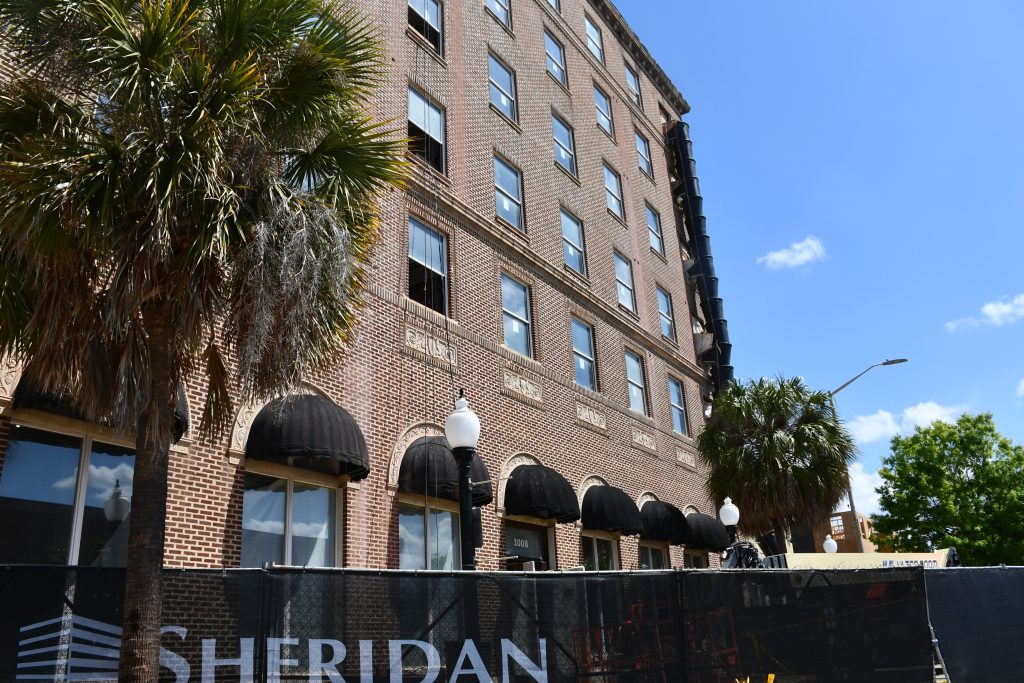
About $1.2 million of the money was spent on improvements at the 207 Pine Ave. building that was the location of Albany Water, Gas & Light, the predecessor of Albany Utilities, Eaton said. Another $100,000 was spent on public safety.
The city’s Utilities Department has since moved, but 207 Pine Ave. is the site of a potential hotel project in the downtown area.
Some of the money “was used to balance budgets, but I have to give (former Commissioner Bob) Langstaff credit,” City Commissioner Chad Warbington said. “He was one of the folks that set up the job investment fund, so fortunately we were able to keep one-third of the money held back. Since that time, it is a tremendous tool. We have had some good grants that have come out of it.”
Warbington, who currently serves as chairman of the Long Term Financial Planning Committee, said the job creation fund has been a tool through which grants have been made to companies that have expanded or located to Albany.
The committee has three members who are on the City Commission and two from Albany Utilities. It acts on projects recommended by the Albany-Dougherty Economic Development Commission, Warbington said. If the committee approves a project, it goes to the full City Commission for final approval.
The commissioner described the job investment fund as a “deal-closer” that can help make the difference in whether a company ultimately expands or locates in Dougherty County.
“I don’t know that any city has a deal-closing fund like Albany,” he said. “It’s very much Langstaff. It was really his brainchild.”
Some of the early spending may now be looked on as questionable, Warbington said, but the job fund has paid dividends.
“I know early on, when the money first started coming in, some expenditures were made that may not have been great,” he said.
Grants made through the fund include $200,000 for Thrush Aircraft in 2015 and $600,000 in incentives in 2017 for the WebstaurantStore distribution center project that brought 200 jobs and $19 million in investment from the company, Eaton said.
Others include $200,000 each for Mars Chocolate, Coats & Clark in 2018 and Food For Less, as well as the same amount for AMADAS Industries and Academy Sports + Outdoors.
The Outdoor Network qualified for a $400,000 incentive grant in 2020 with a proposal to bring more than 150 jobs and $10 million in investment, Eaton said.
Industrial applicants can qualify for a $200,000 grant for each $10 million it plans to invest in a project or for the first 100 jobs, with the stipulation that those jobs pay at least 10% more than the prevailing wages in the area. For the second 100 jobs, workers’ pay must be at a rate that is 20% above those of prevailing wages or greater as the grants work on a sliding scale as the number of jobs increase.
In 2015, City Manager Sharon Subadan got approval from the City Commission to expand the fund’s use to allow for up to $5 million in loans for downtown investment projects, the finance director said.
Since that time, the funding available to downtown projects has been increased to $18 million. While the industrial expenditures are made in the form of grants, those for downtown development are issued as loans that are meant to be paid back into the fund.
Downtown projects that have been partially funded through that program include The Flint restaurant, The Flats at 249, the currently closed Pretoria Fields Brewing facility and the project underway at the corner of North Washington Street and West Broad Avenue to transform the historic Davis Exchange Building into a 56-apartment development. In addition, the city extended a loan of $3.2 million, including funds from the job investment funds and reserve funds, for the Harlem revitalization project.
With interest earned and repayments, the job investment fund balance stood at $21.5 million as of January, Eaton said.
The City Commission has approved lending up to $9 million of that fund balance toward the proposed hotel project that would include the renovation of the former WG&L building and former Rosenberg Department Store/Albany Herald building.
While there have been some investments that turned sour, specifically the brewery to which the loan fund extended a $1.2 million loan that has not been fully repaid, it has paid dividends, Warbington said.
In March the City Commission accepted a proposal from a Social Circle-based company to take over operation of the brewery.
“You can look at that as a step backward,” he said of the brewery. “I think it’s going to be three steps moving forward very quickly.”
Author

Related Articles
Albany Herald – July 7, 2026
Lee County stands alones without… DOT say delay in Oglethorpe Bridge… ASU’s Leah Cowen Selected for…

Classifieds – July 7, 2026
Albany Herald Classifieds: July 7, 2026

Lee County JROTC cadets honored by DAR for citizenship and leadership
Several Terrell County High School JROTC cadets were recognized for outstanding citizenship, leadership and service during the school’s recent JROTC Honors Night, receiving awards from the Old Herod Chapter of the National Society Daughters of the American Revolution.
