
Albany law enforcement would use officer cameras
Jim West
ALBANY — An announced executive order by President Barack Obama on Monday, in part to provide $75 million toward the the cost of 50,000 “officer-mounted” cameras, is welcomed by at least one law enforcement agency in Dougherty County.
Included as part of a larger 3-year, $263 million investment package intended to improve training for local law enforcement, the order follows months of turmoil in the death of Michael Brown who was killed by Ferguson, Mo., police officer Darren Wilson in August.
With almost 630,000 police officers working nationwide, it’s unclear the effect just 50,000 cameras would have .
Still, many police departments and sheriff’s offices see the new technology as an opportunity to protect their officers from false allegations or lawsuits, and possibly elevate their standing in the eyes of the public.
Assuming the president’s order receives the necessary congressional approval, the Albany Police Department would be in line for federal grants to purchase about 100 of the cameras, according to Maj. Russell Barnes, support services officer with the APD.
“I’ve been with internal affairs departments in three different states,” Barnes said, “And it’s been my experience that having a video and audio record of any type of altercation is of large benefit to the officers, even when the officers happen to make some minor mistakes.”
Barnes added that if an officer is shown to be acting in an inappropriate manner, the department wants to know that as well.
According to Barnes, the APD is no stranger to law enforcement cameras, having worked with earlier models, most of which are now worn or outdated. Barnes sees the body cameras as logical extensions of dash-mounted patrol cameras incorporated on “most” of the APD vehicles, he said.
“The problem with dash cameras is that when the officer parks and exits the car, the camera doesn’t necessarily follow,” Barnes said. (The officer) could walk to the left and the camera might be filming a pecan grove or something.”
Barnes said that even officer-mounted cameras wouldn’t always fill the bill if they were mounted to the officer’s lapel or elsewhere on his uniform, as the camera’s view would differ when the officer turned his head.
“Unless the camera is mounted to (the officer’s) glasses,” Barnes said, “And that can be done with some of the new ones.”
Barnes said that another benefit to the constant documentation afforded by the new technology is the ability to examine video evidence closely and repeatedly, which can often yield information otherwise overlooked.
Related Articles

PHOTOS: Albany State Summer Success Academy
Photos by Reginald Christian, Albany State University
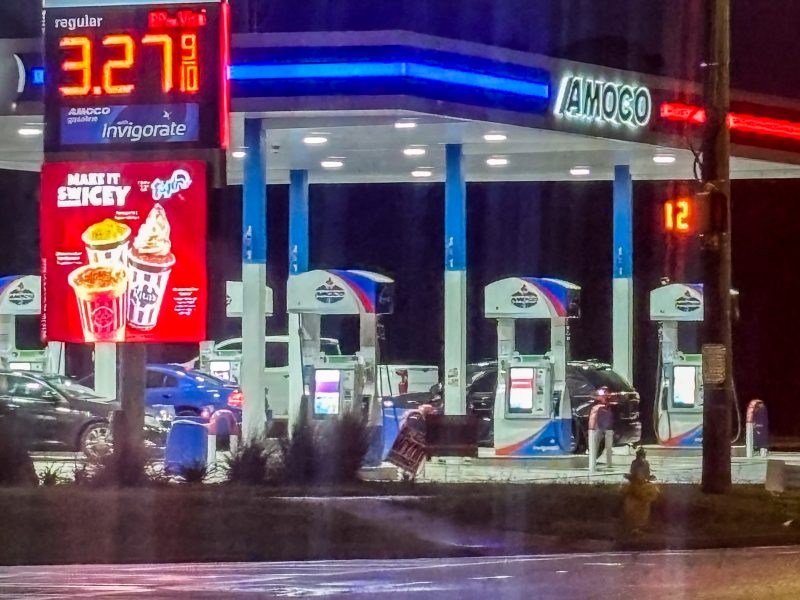
Albany gas prices among Georgia’s lowest as summer fuel costs decline
According to AAA, the average price for a gallon of regular gasoline in the Albany metro area was approximately $3.45 this week, making Albany the second-least expensive metro market in Georgia behind Dalton at $3.41 and slightly ahead of Brunswick at $3.48.

Classifieds – June 23, 2026
ALBANY HERALD CLASSIFIEDS JUNE 23 2026
