
Albany local election candidates face off on issues at ASU forum
By Lucille Lannigan
By Lucille Lannigan
[email protected]
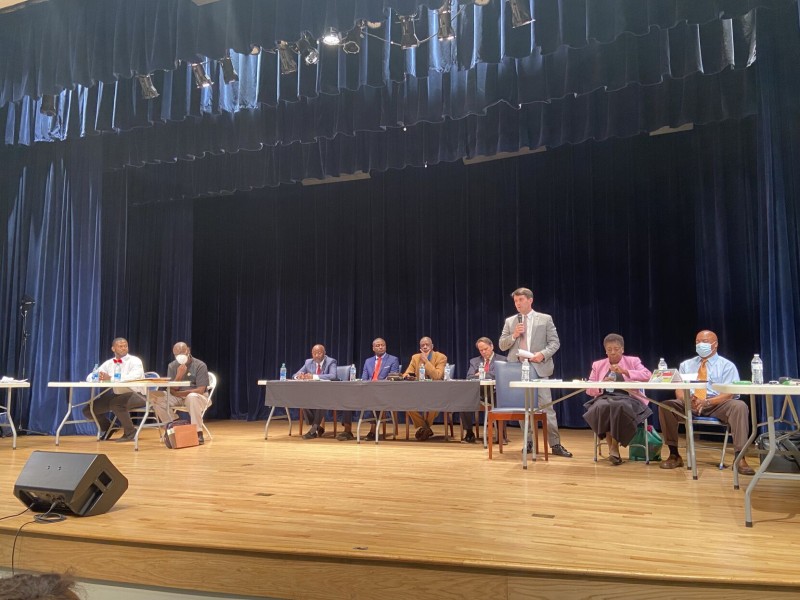
ALBANY — Albany mayoral, Ward IV and Ward I City Commission candidates debated a number of issues that have been pressing for the city, Thursday night at Albany State University.
Albany’s transportation center, city finances, economic development and health care were just some of the the topics candidates discussed in crunched time limits.
Candidates in each race were presented with three rounds of questions. and opponents were given time for rebuttal. Incumbent Mayor Bo Dorough, as well as mayoral candidates Omar Salaam, Henry Mathis and Antonio Screen Jr., answered questions about the Albany transportation system, Albany’s opportunities for college students and the increase in violent and property crime in the city.
Dorough focused on Albany’s population loss and solutions to overcome it — to him, the biggest step forward is increasing recreation in the city. He pointed out some successes from his time in office, such as renovating local parks, building community centers and finalizing the creation of a tennis recreation center.
“Something that the city can be proud of, something that we all can be proud of,” he said of the projects.
Dorough spoke about coming together as a city to overcome challenges.
“One thing we do too often is beat up each other and beat up ourselves when we start talking about one side of the town is this and one side of the town is that,” he said. “We at some point in time are gonna have to get together and recognize the challenges we face and overcome those challenges.”
Salaam, a long-time Albany resident and businessman, spoke on the importance of teaching entrepreneurship to youths.
Screen evoked the most response from the audience with cheers and shouts of agreement consistently following his speaking times. He didn’t hesitate to call out the current mayor on what Screen called his shortcomings and failures to solve problems. More jobs and more housing were emphasized in his campaign goals.
Mathis talked about education in Albany and how it should be amplified to work toward economic and community development.
“We must embrace Albany State University, Albany Technical College, and the business community in order to make sure that we can bring forth a qualified, competent work force,” the former Albany City Commissioner said. “We can make the city as safe as it can be, but without a qualified work force, we cannot get the job done.”
Mathis said he was running for mayor “because I love this city.”
Ward I Commissioner Jon Howard and Ward I candidate Lawrence McCray answered questions about safety around ASU’s campus, ensuring local tax dollars and federal funds aren’t wasted by the city, and the transformation of Albany Utilities into an economic engine without creating higher costs.
McCray talked about the lack of economic development in east Albany and his commitment to bringing change to the area.
“I’m willing … to bring change to east Albany from not a book but from experience from living in the impoverished areas of our community,” he said.
Howard talked about his commitment to strong leadership
Ward IV Commissioner Chad Warbington and his challengers, Marion Gaines-Jones and Larry Harris, answered questions about the divide in development and safety within Albany, Dougherty County’s low health ranking and transportation accessibility in the city.
All of the money shouldn’t be spent on the north side of Albany, Gaines-Jones said.
“It’s a shame,” she said. “We need to come together and work together, not just for a specific group of people or side of town but all of these citizens in Albany.”
She highlighted the need for a grocery store on the south side of Albany. She claimed a grocery in south Albany is price gouging by adding 10% to customers’ total bills.
High utility costs were brought up multiple times throughout the debate, although, some candidates argued that Albany has some of the lowest utility rates in the region.
There hasn’t been an increase in utilities, electric rates or property taxes in the last seven years, Warbington said.
McCray talked about pushing for energy efficiency within homes.
“One of the things that I think we need to do is hold the homeowners accountable for making their homes energy efficient within the next five years,” McCray said.
Howard echoed that sentiment, saying laws should be passed to hold slumlords accountable in fixing homes so that they are energy efficient.
The transportation center was brought up several times during the debate. Mathis talked about renegotiating the Greyhound contract to bring providers into the town’s center. Screen suggested looking into other bus lines like FlixBus, Mega Bus or Red Coach.
Regarding recreation centers, which both Dorough and Warbington highlighted as major points of success, other candidates disagreed on their importance.
“I’ve gotten a lot of criticism, a lot of ‘Why are you spending $8 million on Driskell Park?’ We have facilities — recreation facilities in lots of these areas that we’re talking about that have not been upgraded, have not been modernized for decades,” Warbington said.
He called it a waste of taxpayer dollars. From their response, many in the audience seemed to agree.
“You’re not listening to us,” Harris said. “The problem is poverty, OK? You need to have a place where people can live, work and play. You can’t live in these … parks that you’re building.”
[email protected]
Author

Related Articles
PHOTOS: Albany State’s Good Life City Expo
Photos by Reginald Christian, Albany State University

Dawson City Council uninformed as state freezes sewer loans, audits remain incomplete
With three overdue audits, no Mauldin & Jenkins briefing on Thursday’s agenda and funding deadlines approaching, the larger question is increasingly urgent: How will Dawson pay to finish the work, and what will further delay mean for the future reliability of the city’s water and wastewater systems?
Across a county line, foster care rates reveal stark divide
An abandoned home in Dawson sits overgrown and deteriorating, one example of the city’s ongoing struggle with blighted and unusable housing. Dawson’s long-range planning documents identify both a high vacancy rate and a need for more safe, affordable housing. Staff Photo: Kathryn Crockett
