
Albany’s King family seeks apology for 1962 police attack on Marion King
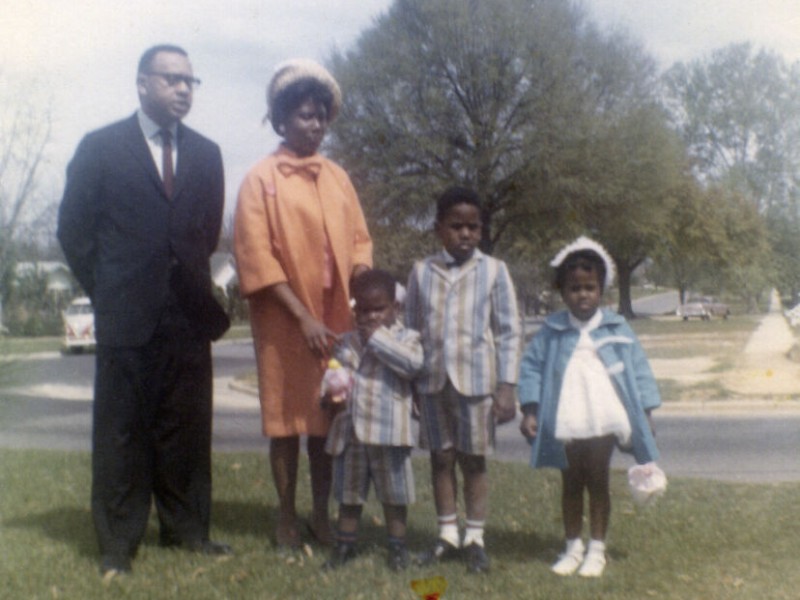
Photo Courtesy of the King family
By Lucille Lannigan
[email protected]
ALBANY — Marion King had a spiritual sense of forgiveness and optimism about her, Jonathan King, her eldest son, said.
Marion, the wife of prominent Georgia civil rights activist Slater King, never held grudges, a trait she taught her children.
“She filled up our home with love, despite the fact that she could have been an evil woman,” King said. “She could have been tainted and upset about what happened to her.”
King was just 5 years old when he watched his pregnant mother beaten and shoved by Camilla cops at the Mitchell County Jail. As a direct result of the attack, Marion lost her baby, according to the Civil Rights Digital Library. Now Jonathan King and his siblings are seeking justice in the form of an apology more than 50 years later.
The family, along with supporting organizations like SOWEGA Rising, a nonprofit working to revitalize southwest Georgia, is speaking with state and federal actors to bring Marion King’s story to light.
Marion King, Jonathon King and his two younger siblings were visiting the jail to bring supplies to their housekeeper’s teenage daughter, King said. It was 1962, and the Albany Civil Rights Movement was in full swing. Protestors and activists were being jailed in large numbers, often in jails outside of Albany to avoid overcrowding.
Jonathan King says he remembers searching a jail cell for the girl. He remembers excitement at finding her as she waved at the family. He remembers the moment when a police officer asked them to move. But because his mother was pregnant, she did not move fast enough. That’s when police officers rained a barrage of blows on her, knocking her to the ground.
“It wasn’t like there was any fear,” King said. “We weren’t told ‘these policemen are bad.’ I think that the idea was just to keep us calm, and not to incite that kind of fear in us. But when my mother did get attacked, I freaked out. When I saw that these guys had knocked her down, I blanked out.”
Major news outlets reported the story, he said. A clip from July 1962 shows WSB-TV reporter Richard Valeriani interviewing a recovering Marion King at her bedside. She explains the attack in detail while lying in bed, 5 1/2 months pregnant.
Later, Jonathan King would be sitting in a car, anxiously waiting while his mother was set to give birth to a younger brother. However, she was empty-handed when nurses at Phoebe Putney Memorial Hospital in Albany ushered her out.
“I didn’t see a baby,” King said. “I didn’t hear a baby. I asked adamantly ‘Mommy, where is the baby?’ There was no response. They didn’t say anything all the way home. That was the only and last time I asked about the baby.”
His family never discussed the incident or the lost child, King said. He didn’t start fully processing what happened until his adulthood.
“When I did … I got angry all over again,” he said. “I decided I need to go and resolve this issue because it has not been unpacked and dealt with.”
King met with Camilla’s city manager in 2013 and then the mayor and city council in 2021, along with other family members and community leaders. He told them he was looking for a written apology from the city, he said. King wasn’t asking for money.
However, aside from one councilman giving an informal apology, there has been silence from Camilla officials.
In an email to The Albany Herald, Camilla Mayor Kelvin Owens said the city had no comment at this time.
But King isn’t giving up. He’s calling for transparency not only in his mother’s case but in all Civil Rights-era crimes committed against people of color and white people who supported desegregation.
“Those crimes should be disclosed,” he said. “There should be some kind of acknowledgement, apologies or whatever, so that people can have a better sense of justice.”
SOWEGA Rising Co-founder Sherrell Byrd, said her organization is working to get the family’s story investigated by the Federal Civil Rights Cold Case Review Board, which is a federal board designed to help victims of unsolved civil rights crimes get justice.
She and the King family spoke with Democratic Georgia Sen. John Ossoff’s office at the end of August about what the process would look like. The senator co-sponsored the Civil Rights Cold Case Investigations Support Act of 2022, which brought back the committee. It was a favorable conversation that gave hope that justice is possible, she said.
Hank Klibanoff, an Emory University professor and Civil Rights Cold Case review board member, said the family may need medical records showing cause of death for Marion King’s baby, especially if the officer responsible for the attack was never prosecuted.
Although, King said, he isn’t sure if any exists. He doesn’t know what happened to the baby after his death.
Klibanoff said he is familiar with Civil Rights cold cases throughout southwest Georgia. The journalist directs the Georgia Civil Rights Cold Cases Project at Emory, where students examine Georgia’s civil rights history by investigating unsolved, racially motivated murders. He also hosts the WABE “Buried Truths” podcast during which he dives into these cases.
Camilla isn’t alone in lacking in its acknowledgement of black history, Klibanoff said. This is seen in something as small as town marker’s like Dawson’s, where Cole Swindell, a country singer, is mentioned but not Otis Redding, a black singer/songwriter, or Walter Washington, D.C’s first black mayor, he said.
At the state level, Byrd said she hopes to have the family’s story heard by Georgia Rep. Park Cannon. Cannon is co-sponsor of a bill that would protect mothers when they’re pregnant, when they encounter police officers by creating certain protocols. Byrd believes both state and federal attention on the Marion King case will compel Mitchell County and the city of Camilla to step up and give the King family an apology.
The city and county are most likely afraid of litigation ensuing if they give an apology, Byrd said.
“The family just simply wants an acknowledgement that this did happen,” she said. “No one’s holding the people today personally responsible for what happened. It’s time for these communities to reckon with the past, and to really start to have a conversation about healing.”
This is crucial, especially at a time when states like Georgia or Florida are threatening black histories in schools, she said. The Protect Students First Act was passed in 2022. The law limits classroom conversations that suggest “America is fundamentally racist” or that use “race scapegoating.”
“That’s why it’s so important that we tell these stories outside of those systems, so that people understand that this is a part of American history,” Byrd said. “We are living in a time where police brutality against African Americans still exists. If we don’t deal with the past, if we don’t reckon with the past, we will continue to repeat it.”
Seeking an apology 50 years later is just one step in healing from trauma, King said.
“This is something I’m always thinking about — the collective number of horrible tragedies that have impacted black families — and most of them have not had a chance to sit down and process and deal with this on a mental health level,” he said.
The memories were too painful for King to acknowledge for a long time, he said, adding that he hopes getting his mother justice and telling her story will encourage other black families to do the same.
Author

Related Articles
PHOTOS: Albany State’s Good Life City Expo
Photos by Reginald Christian, Albany State University

Dawson City Council uninformed as state freezes sewer loans, audits remain incomplete
With three overdue audits, no Mauldin & Jenkins briefing on Thursday’s agenda and funding deadlines approaching, the larger question is increasingly urgent: How will Dawson pay to finish the work, and what will further delay mean for the future reliability of the city’s water and wastewater systems?

Across a county line, foster care rates reveal stark divide
An abandoned home in Dawson sits overgrown and deteriorating, one example of the city’s ongoing struggle with blighted and unusable housing. Dawson’s long-range planning documents identify both a high vacancy rate and a need for more safe, affordable housing. Staff Photo: Kathryn Crockett
