
An unfortunate anniversary: COVID shut down Dougherty County four years ago
Special Photo
Special Photo
Special Photo
Alan Mauldin
[email protected]
ALBANY – It wasn’t the apocalypse, but the Dougherty County shelter-in-place order issued in March 20, 2020 to protect residents from the novel coronavirus brought an altered way of life for the community.
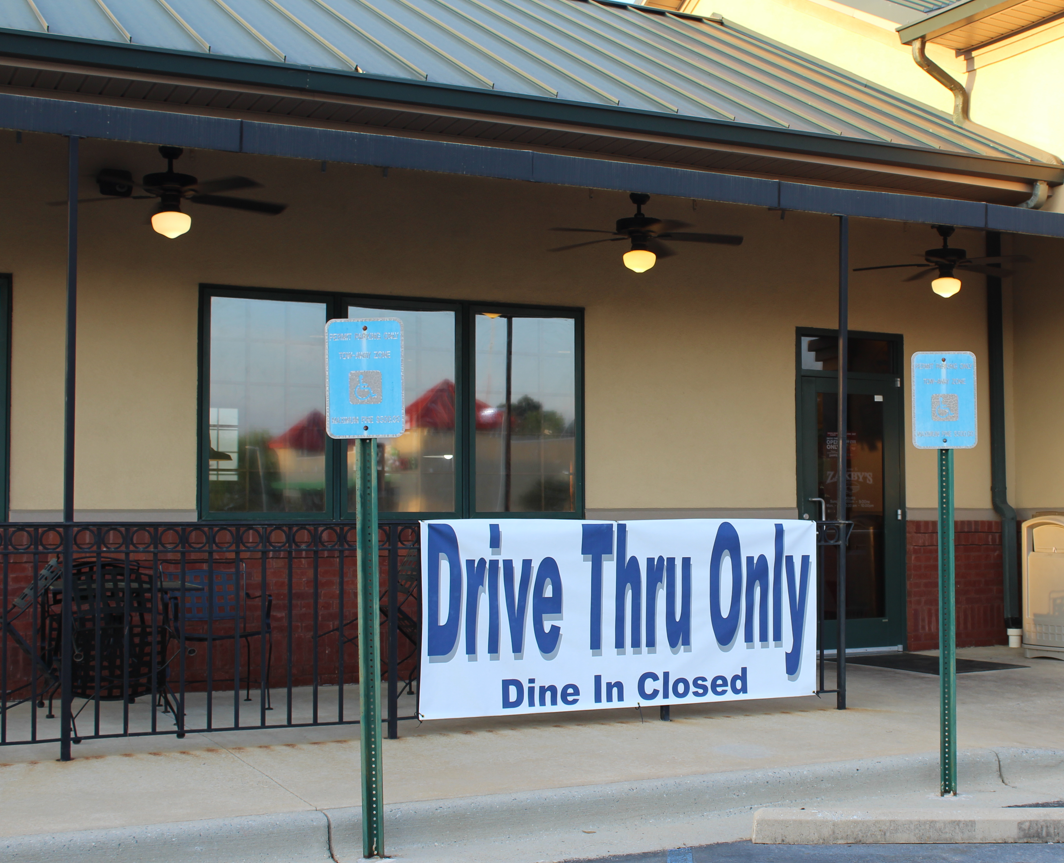
Restaurants were shuttered for dine-in eating, public schools already had been closed, working at home became the norm for those who could, and hospital patient visitation was halted while medical personnel battled the emerging threat.
Gyms, theaters, bowling alleys, other recreational activities and hair salons also were among those affected initially and to the greatest extent.
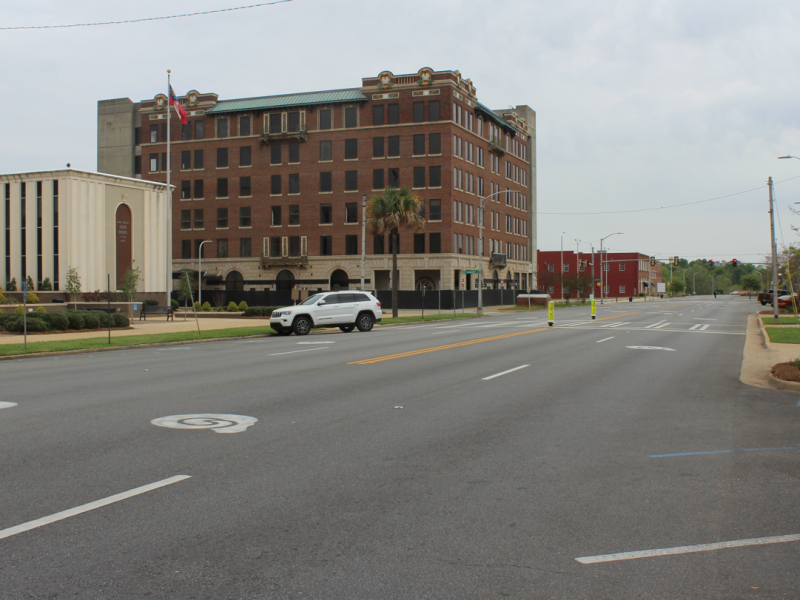
Responding to COVID-19 patients around the clock, the familiar streets had a ghost-like quality as the usual hustle and bustle halted.
“It was like watching some of the sci-fi movies,” Dougherty County Emergency Medical Services Director Sam Allen said. “The mall parking lot was empty; Slappey (Boulevard) was empty. It was just a strange feeling.”
When the killer virus hit, medical crews worked long hours transporting sick residents to Phoebe Putney Memorial Hospital, which was rapidly inundated with patients who were seriously ill.
Just taking a break to get something to eat was a challenge for emergency workers.
“How do your paramedics get things to eat and drink?” Allen said. “You can’t sit in the drive-through at Zaxby’s; it was an hour wait. We had to figure out how to adapt and overcome. The police, the hospital staff, the paramedics had to be there. We were steady rolling. We never slowed down.”
A little over a week prior to the shelter order, it was apparent that Dougherty County had become a COVID hotspot.
The first patient had been diagnosed earlier in the month, and the initial outbreak was linked to two funerals in Albany attended by a pastor from the Atlanta area who became the first confirmed COVID death in the state.
“We were notified that there were three COVID patients that had been identified in Dougherty County on March 11,” Allen said. “On receiving that information, we immediately transferred over to our policies and procedures for infectious control programs.
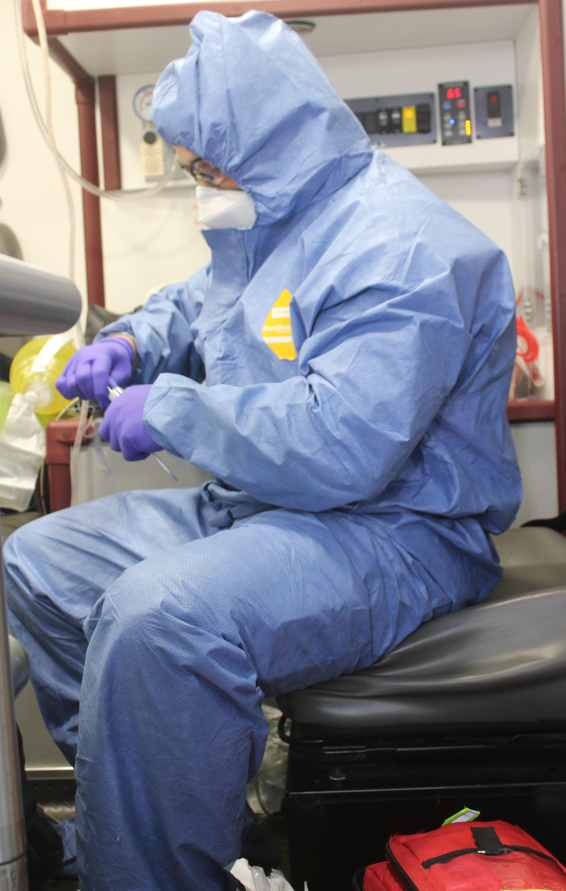
“So what that meant was on March 10, paramedics were out in regular uniform. On March 11, we shifted into the full CDC regulations for protective equipment for first responders. That was a big transformation to go to that higher threat level for protection for staff.”
While the disease was most dangerous to the elderly and individuals with pre-existing health conditions, in the early stages it also sickened and often killed younger, healthier patients. As one of the early flash points, Dougherty County became one of the most affected in the world on par with Wuhan, China; New York, and the Lombardy region in Italy.
“We had no idea what we were walking into,” Allen said. “The patients we were seeing. … It was a terrible time.”
Prior to the explosion in cases, officials were keeping an eye on the emerging virus. In mid-January 2020, the EMS began reviewing protocols. When the storm arrived, they donned Tyvek suits and N95 masks, which as spring turned into summer became “absolutely miserable,” Allen said.
“It was horrible,” he said “When you take a 100-degree day and you’re doing chest compressions or (other) life-saving procedures you’re doing, you want to pull that suit off for just two or three breaths of air. The paramedics and EMTS did the most amazing job I’ve ever seen. They took the threat seriously. They handled every patient with extreme care to provide the services they needed and also to protect themselves so they didn’t take it home to their families.
“They didn’t complain. They did it every day and met this situation head-on. They didn’t slow down.”
In 2021, the EMS treated 689 COVID-positive patients, and a total of 1,418 between March 11, 2020, and March 11, 2022.
“We were able to staff additional trucks, depending on the call volume, as needed,” Allen said. “We met the need. We never were in the situation where we didn’t have trucks to run or the staff to run them.”
The EMS was fortunate to have been alerted a couple of years before COVID arrived to a disinfecting system. The Dougherty County Commission approved the purchase of one of the units, and it allowed for disinfecting the ambulances in a matter of minutes as opposed to the couple of hours required to do it by hand.
During the worst spikes of COVID cases, the service’s normal volume of calls, which average about 65 per day, increased significantly, pushing 95 and up to 110 calls on some days. The EMS had to continue to respond to the usual medical emergencies and car accidents.
Although the number of auto accidents may have slowed due to less traffic on the roads, the number of overdose cases jumped significantly as some people stuck in place resorted to drug use and alcohol to help deal with the disruption in their lives.
“I think they did attribute that to people who tried to medicate and they couldn’t get medication so they turned to street drugs,” Allen said. “Unfortunately, that happened during this situation.”
The EMS also helped organize three mass-vaccination events in 2021 once vaccines became available, with more than 2,500 doses injected with the help of Phoebe Putney Health System and other health care providers. That included 538 on Sept. 18, 865 on Oct. 16 and 1,229 on Nov. 6, at a rate of 205 vaccinations per hour.
During those events and at other vaccination sites where paramedics were on standby, Allen recalled only two cases of individuals having a potential reaction from receiving the vaccine.
While COVID hasn’t disappeared, things are different now. Cases are not as severe, for the most part, Allen said. The director was impacted directly with his brother, who worked as an EMT, dying of the disease. His niece, a nurse, was diagnosed with a heart condition after contracting COVID and has been unable to return to on-site work, having recently taken a position working at home.
“That first wave was by far the worst pandemic situation,” Allen said. “It was just unbelievable this stuff was.”
On Thursday, when he spoke with The Albany Herald, Phoebe President and CEO Scott Steiner had a reason to vividly remember the pandemic.
“Yesterday was four years from the day we had our first patient,” he said. “We didn’t know what we were getting into, but we were ready.
“When I think back, you know, those first days, we had been preparing for several months, not knowing exactly what we were preparing for, whatever was happening in China, then it spread.”
In those early days, it was pretty much working in the dark with no effective treatment for patients against a pathogen for which there were no medical weapons. There had been some warnings of the severity for hospital officials, though.
“I realized early on in China, that they were building hospitals (with) shipping containers,” Steiner said. “I think we started to realize the scope of it. We were following CDC protocols. There was certainly a time when we didn’t know what we didn’t know.”
Even getting a diagnosis was difficult early on, as samples had to be shipped to the CDC.
“I got a call on the 10th (in March 2020) that a patient had been in town,” Steiner said. “He had chronic respiratory issues. I was called at about 10 o’clock that night. We opened the command center that evening. We quickly realized we had an all-out outbreak episode.”
While it hasn’t been confirmed that the minister was patient zero for Dougherty County, what is known is that after the first case, the number quickly began growing.
“(I was made aware) of eight or nine people with COVID, or who had similar symptoms,” Steiner said. “One of the commonalities among that group was that they had been at an area funeral. We were trying to put the protocol together and how do you stop it, not knowing there was no way to stop it.”
What followed were months of battling the disease, with staff working long hours and most of the hospital’s functions, including elective surgeries and screenings, halted. Much of it was frustrating as patients became so ill they required being intubated to assist with their breathing.
The prognosis for patients who had been placed into a coma for insertion of the breathing tube was not good.
“I remember Easter Sunday that year … a patient was ready for extubation (removal of breathing tube),” Steiner said. “It was a good sign. I remember looking at that patient, and she was looking at me. She was terrified to have that tube taken out.
“I realized the staff was crying. That was the first patient who survived in what seemed like three or four weeks. It provided hope.”
The hospital’s role wasn’t solely directed at treating patients. Staff made masks and helped distribute masks donated generously by the public.
“We provided more than 70,000 vaccinations,” Steiner said. “We didn’t have to do that. We said, ‘We’re going to be a leader and do everything we can to help keep our community safe.’”
The people also responded. School children sent cards. Groups sent food to staff.
“Everybody wanted to be a part of making it better,” Steiner said. “As a people in southwest Georgia, we locked arms and said, ‘Not today. Not today.’ It’s pretty emotional for me.
“One of the churches did a service. They stopped in cars in the front parking lot. We probably had 60 or 80 cars and they kept their lights on. These are people who didn’t know me. They didn’t know the patients. It was powerful.”
The hospital system reciprocated by being open with the public, providing updates on the numbers of patients and deaths. Phoebe also participated in weekly news conferences that included Albany and Dougherty County officials, Coroner Michael Fowler and others.
“Early on, we decided we were going to be transparent – the good, the bad and sometimes the ugly,” Steiner said. “We said we were going to provide all of the data. We put it online.”
When Dr. James Black, Phoebe’s director of emergency medicine, said he got the first dose of vaccine administered, “People said ‘I trust Dr. Black, and I’m going to get one, too,’” Black said. “It provided hope. It certainly was good to give people hope that it was going to be OK.
“In early May, I started to think, ‘OK, maybe we’re going to come out of this and get back to more of a state of normal, even though it will be a new normal.’”
On the way, there would be tremendous loss of life and sacrifice, with Phoebe opening a center at the former Palmyra Medical Center facility to handle the large number of patients. The last large surge came in the latter part of 2021 and early 2022 with the emergence of the Omicron COVID variant.
Some lingering impacts will last for years and have affected the health of individuals, like those who delayed getting cancer screenings during the pandemic. Some patients with long COVID are still suffering lingering symptoms.
Some people who delayed colonoscopies, mammograms and other screenings obviously had their cancers detected at a later stage of the disease, Steiner said, and the overall impact on the community may never be known.
The hospital system is building for the future, with new construction and renovation projects, including a new trauma center, neonatal intensive care unit, intensive care unit and training center.
If a new, more virulent strain of COVID emerges or another pathogen arrives, the system is better prepared.
“I think we’re in better shape than we’ve ever been before,” Steiner said. “I think we learned a lot. Our biggest Achille’s heel (nationally) was not being able to test for it. I can’t tell you if we’re better at that. We ask those questions.
“I think from a 1 to a 10, with 10 being ‘We’re ready, bring it on,’ I think we’re at about a 3.”
Author

Related Articles
Albany Herald – July 14, 2026
In Lee County, they saw it… Bigger budget will mean improvements at… Small actions can help save…

Classifieds – July 14, 2026
Albany Classifieds and Legals…

‘Just Africa’ festival scheduled for third weekend in September in downtown Albany
A taste of the Caribbean and Africa is coming to Albany with a fall festival that will also bring African dance, a parade of children’s fashions, as well as vendors, live bands, and arts and crafts.
