
ASU student expelled in ’61 awarded honorary doctorate
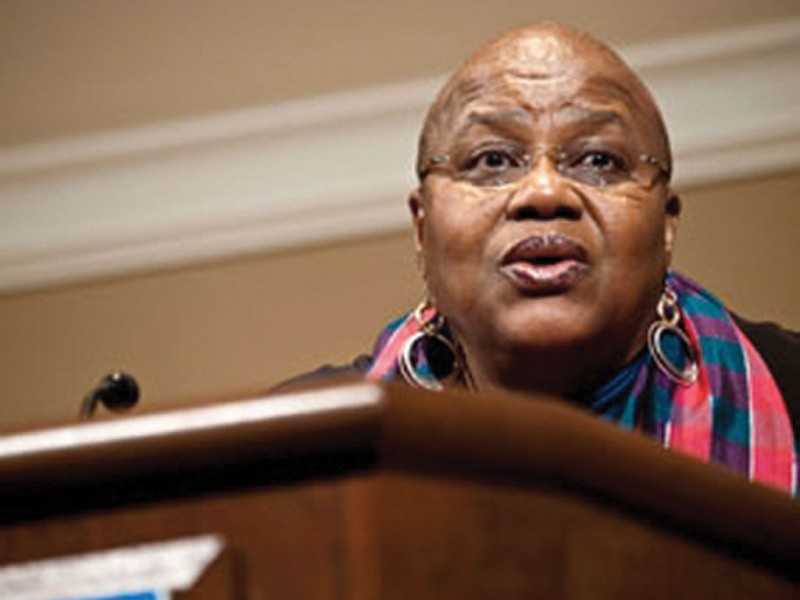
Bernice Johnson Reagon
Terry Lewis
ALBANY — The Board of the Regents of the University System of Georgia last week awarded an honorary doctorate to former Albany State University student Bernice Johnson Reagon, who was thrown out of school a half-century ago because of her participation in the Civil Rights Movement.
But that single recognition was far short of the 38 honorary degrees ASU was seeking to bestow next month, and Reagon says she will not accept hers if the others are not forthcoming.
ASU had petitioned the Board to award honorary baccalaureate degrees to 38 former students who were expelled from the university in 1961 for participating in protests during the early days of the Albany Civil Rights Movement. The honorary degrees were meant to coincide with ASU’s celebration of the 50th anniversary of The Albany Movement.
The Regents instead approved just one degree — an honorary doctorate to Albany native Reagon.
ASU Associate Professor of History Racquel Henry and the Student Government Association had led the recognition effort. She expressed disappointment at the failed effort.
“We are saddened that the board chose to issue just one honorary degree,” Henry said. “The decision is now up to the chancellor (Hank Huckaby) and we are asking him to issue an executive order.”
Reagon, who entered then Albany State College in 1959, is professor emerita of history at American University in Washington, D.C., and holds the title of curator emeritus at the Smithsonian Institution’s National Museum of American History in Washington, D.C. She was the 2002-04 Cosby Chair Professor of Fine Arts at Spelman College in Atlanta.
Reagon could not be reached for comment Tuesday.
She was one of 40 students who were expelled from ASU for taking part in protests and civil rights marches. The school located 38 of the students, 13 of whom had passed away.
After asking for the unusually high number of honorary degrees, ASU hit an immediate snag. The school was originally on the Regents’ agenda, then was suddenly disappeared.
Regents spokesman John Millsaps acknowledged then that the ASU request was on the agenda but then removed after several questions were raised about the honorary degrees.
Specifically, Millsaps pointed to section 3.8.4 in the Board of Regents’ Policy Manual regarding honorary degrees. That section reads: “Relatively few awards should be given. … The recipient must be present to receive the degree.”
With the Regents not scheduled to meet again until January, it appears hope is slim for the honorary degrees to be awarded. All ASU and Henry can do now is wait and see if the chancellor issues an executive order.
Related Articles

Classifieds – July 18, 2026
Classifieds; Legals;
Albany Herald – July 18, 2026
Georgia Trust for Local News partners with… Adult leadership group spreads concept to… Lee County homeowners have until Aug. 1 to claim…

Albany police make arrests in murder, robbery cases
Officials with the Albany Police Department have announced a number of arrests in cases that involved a homicide and a pair of thefts.
