
BARRY LEVINE: Fool make its way into song titles
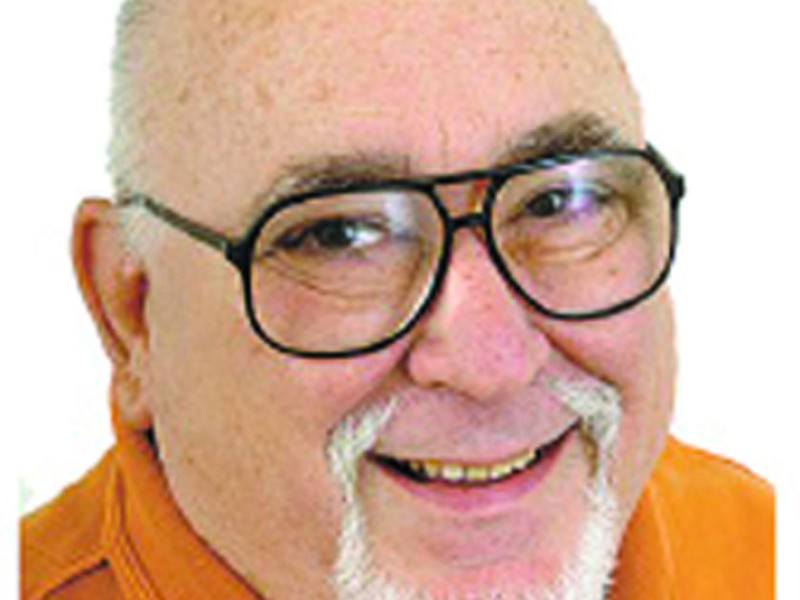
Barry Levine
Popular since the 19th century, April Fools’ Day is celebrated as a day when people play practical jokes and hoaxes on each other. The jokes and their victims are known as “April fools.”
The history of April Fools’ Day is cloudy. Ancient cultures celebrated New Year’s Day on or around April 1. It closely followed the vernal equinox (March 20 or March 21). In medieval times, much of Europe celebrated March 25, the Feast of Annunciation, as the beginning of the new year.
In 1582, Pope Gregory XIII ordered a new calendar, the Gregorian Calender, to replace the Julian Calendar. The new calendar called for New Year’s Day to be celebrated Jan. 1. France adopted the reformed calendar that year and shifted New Year’s Day to Jan. 1. Many reportedly either refused to accept the new date, or did not learn about it, and continued to celebrate New Year’s Day on April 1. Other people began to make fun of the traditionalists, sending them on “fool’s errands” or trying to trick them into believing something false. The change eventually spread.
To honor this unique celebration, here are some of my favorite songs with the word “fool” or a derivative of the word in the song’s title.
The first major Doo-Wop group from New York, Frankie Lymon & The Teenagers, had a massive hit in 1956 with “Why Do Fools Fall in Love.” When the quintet released the song, most of the groups who had been singing on the street corners in the inner cities realized that they, too, could become professional singers – and stars.
One of the hottest teen idols during the mid-1850s and early 1960s, Ricky Nelson amassed 34 Top 40 hits from 1957 to 1964. He had two No. 1 hits – the first of which was “Poor Little Fool” in 1958. His other top hit was “Travelin’ Man” in 1961.
Elvis Presley, “The King of Rock ‘n’ Roll,” had a staggering 114 songs that reached the Top 40, but only one had the word fool in the title. “(Now and Then There’s) A Fool Such as I” climbed to No. 2 in 1959. The song had been a Top 10 hit for Hank Snow in 1953.
In many ways, Connie Francis’ career paralleled Ricky Nelson’s. From 1958 until 1964, she had 35 Top 40 hits. Her first No. 1 hit was “Everybody’s Somebody’s Fool” in 1960. Like Nelson, Francis had only one other chart topper – “Don’t Break the Heart That Loves You” in 1962.
Brook Benton was one of the top R&B singers from the late 1859s until 1964, producing 23 Top 40 hits. Often forgotten, Benton had one of his biggest hits in the fall of 1960 when “Fools Rush In.” The song originally was a Top 5 hit for Glenn Miller in 1940. Benton’s last big hit was “A Rainy Night in Georgia” in 1970.
Ike and Tina Turner, the husband and wife R&B duo, had their first big hit in the fall of 1960 .when “A Fool in Love” reached the Top 30. They had several more before they divorced in 1976. At that juncture, Tina Turner started her highly successful career as a solo act. The duo’s biggest hit was “Proud Mary,” which rose to No. 4 in 1971.
The Shirelles were one of the most successful R&B female groups during the first half of the 1960s. The group’s last Top 5 hit was “Foolish Little Girl” in 1963. The group is more known for their other Top 10 hits – “Will You Love Me Tomorrow” in 1960, “Dedicated to the One I Love” and Mama Said” in 1961 and “Soldier Boy” in 1962.
Aretha Franklin, the “Queen of Soul,” was a regular on the pop charts beginning in 1967. That year, she had one of her biggest hits with “Respect” which became her signature song. Later that year, she had one of her biggest hits with “Chain of Fools.” She still was producing Top 40 hits three decades later.
This record is one of the strangest “fool” songs because the group who wrote the song and recorded it never released it as a single. “The Fool on the Hill” is a song by The Beatles and was written and sung by Paul McCartney in 1967. It was included on the “Magical Mystery Tour” album, and on the “Magical Mystery Tour” film. The Beatles never released the song as a single.
The “fool” in the song is a solitary figure who is misunderstood by the populace.
Because they had stopped doing concerts at that time, the Beatles never performed the song live. McCartney first performed it live with Wings during their 1979 tour,
The song, however, became a hit for Sergio Mendes & Brasil ’66, rising to No. 6 in 1968.
This week in rock history – Connie Francis has her first chart smash as “Who’s Sorry Now” reached No. 4 on March 29, 1958. … Buddy Knox became the first performer in the modern Rock ‘n’ Roll Era to write his own No. 1 hit when “Party Doll” reached No. 1 on March 30, 1957. … Macon’s Little Richard had his final Top 10 hit on March 30, 1958, with “Good Golly Miss Molly.” … RCA Victor introduced the 45 rpm record on March 31, 1949. …
The Marcels hit the top of the charts on April 3, 1961, with “Blue Moon.” Richard Rodgers and Lorenz Hart had written the song in 1934. … The Temptations had their third and final No.1 smash with “Just My Imagination” on April 3, 1971. … The Beatles established history on April 4, 1964, when they had the Top 5 positions on the chart. The songs were 1 – “Can’t Buy Me Love,” 2 – “Twist and Shout,” 3 – “She Loves You,” 4 — “I Want to Hold Your Hand” and 5 – “Please, Please Me.”
Barry Levine is an entertainment writer for The Albany Herald. He can be reached at [email protected].
Related Articles
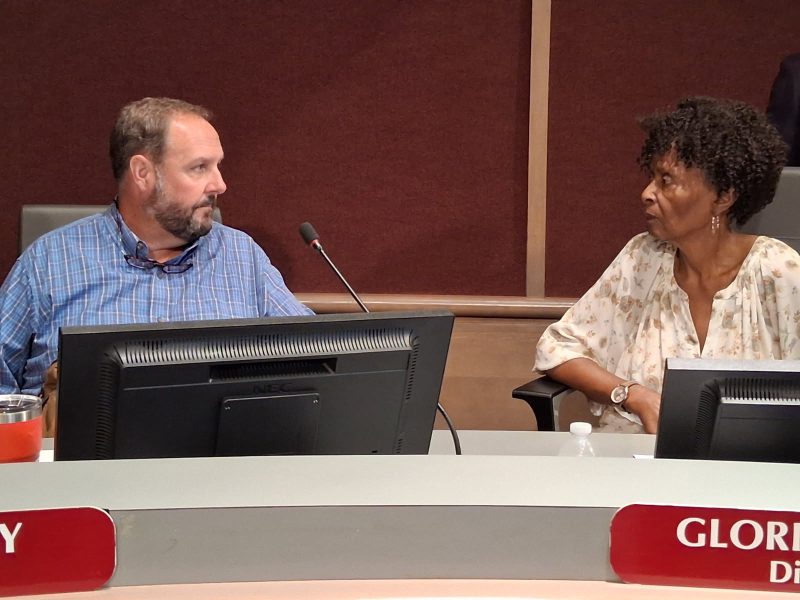
Dougherty Commission considers $104 million budget for 2026-2027 budget year
“The other side of the coin is you could have higher revenues than projected. We’re very conservative in budgeting revenues. That also reduces the need to use fund balance”
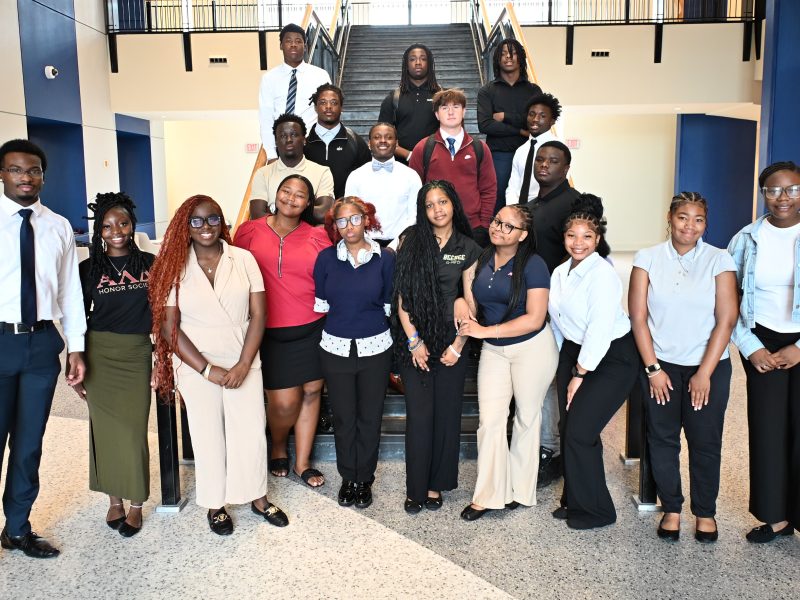
PHOTOS: Albany State Summer Success Academy
Photos by Reginald Christian, Albany State University
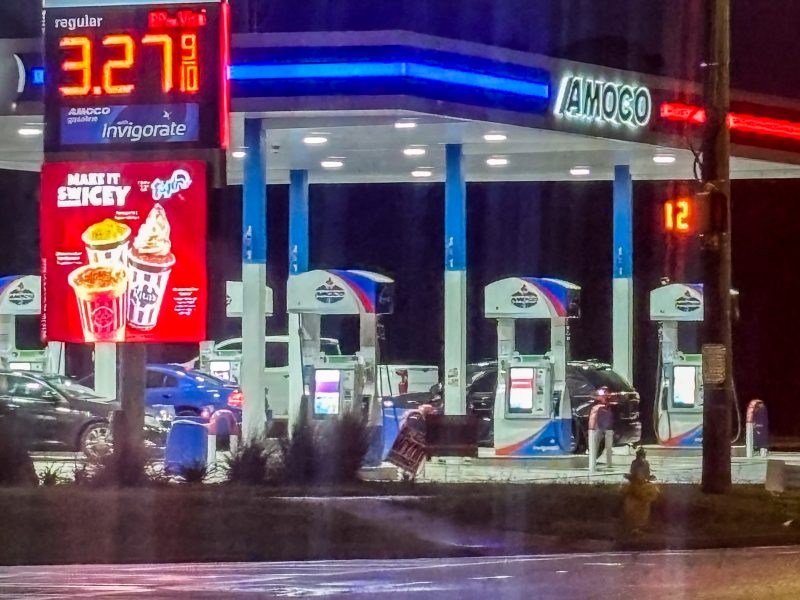
Albany gas prices among Georgia’s lowest as summer fuel costs decline
According to AAA, the average price for a gallon of regular gasoline in the Albany metro area was approximately $3.45 this week, making Albany the second-least expensive metro market in Georgia behind Dalton at $3.41 and slightly ahead of Brunswick at $3.48.
