
BARRY LEVINE: Tragedy a constant companion for Jackie Wilson
Barry Levine
There are certain tragic dates that resonate throughout rock ‘n’ roll history.
As examples, on Feb 4, 1959, an airplane crash in Iowa claimed the lives Buddy Holly, Richie Valens and J.P. “Big Bopper Richardson. … On Dec. 10, 1967, Otis Redding of Dawson died in an airplane crash in Wisconsin. … On Sept. 20, 1973, Jim Croce was killed in an airplane accident in Louisiana.
Other singers who died tragically during the 1950s and 1960s include Johnny Ace, Jesse Belvin, Eddie Cochran, Johnny Horton, Dinah Washington, Johnny Burnette, Sam Cooke and Frankie Lymon.
Sept. 29, 1975, is another of those dates.
That’s the day Jackie Wilson, one of the early rock ‘n’ roll superstars, collapsed of a heart attack while performing on stage for Dick Clark’s Good Ol’ Rock and Roll Revue at the Latin Casino in Cherry Hill, N.J. He quickly lapsed into a coma and was in a virtual vegetative state until his death on Jan. 21, 1984.
Wilson was in the process of singing his benchmark hit “Lonely Teardrops” when he suffered a massive heart attack.
When he collapsed on stage, audience members initially believed it was part of the singer’s act.
Dick Clark felt something was seriously wrong and ordered the musicians stop playing.
Cornell Gunter, the lead singer of the Coasters who was backstage, noticed Wilson was not breathing. Gunter was able to revive him and Wilson was rushed to a nearby hospital.
Medical personnel worked for a half-hour to stabilize him. However, the lack of oxygen to Wilson’s brain caused him to slip into a coma.
Wilson briefly emerged from the coma in early 1976, and was even able to take a few steps. Unfortunately, he slipped back into a semi-comatose state.
Wilson died on Jan. 21, 1984, at 49, of complications from pneumonia.
While his death closed one chapter, it did not end Wilson’s incredible saga. A posthumous indignity awaited him.
After a funeral attended by more than 1,000 in his native Detroit, he was buried in an unmarked grave in the Motor City. He was broke and was an estimated $300,000 in debt.
Months later, fans in Detroit raised money to purchase a mausoleum and re-interred him inside the structure at the Westlawn Cemetery in Wayne, Mich.
Dick Clark reportedly paid his entire medical bill.
Wilson’s career began in earnest in 1953 when he became the lead singer of Billy Ward and His Dominoes, replacing Clyde McPhatter. He left the group in 1957 to work as a solo performer.
Al Green – no relation to the R&B singer — managed singers Johnnie Ray, Della Reese and LaVern Baker and assumed management for Wilson. Green arranged to sign Wilson to the Decca label. The day before the deal was to be consummated, Green died.
Despite having no management experience, Nat Tarnopol, Green’s protege, convinced Wilson to let him become his manager. Wilson’s decision eventually led to his financial downfall and cost him millions.
Tarnopol eventually signed Wilson to the Decca stable. Wilson was, for years, the only singer on Decca’s subsidiary Brunswick label. The fast-talking Tarnopol managed to convince Decca’s bosses that he could successfully handle the label and attract more black talent. As part of the agreement, he was given 50 percent ownership of Brunswick.
Wilson trusted Tarnopol implicitly and foolishly gave him his power-of-attorney.
Tarnopol was smart enough not to limit Jackie’s career by concentrating solely on rock ‘n’ roll.
Jackie quickly became into a major star, often appearing on national TV shows and at New York’s Copacabana and the Las Vegas nightclub circuit. He toured the country tirelessly before sold-out audiences. Because of his acumen as a stage performer, he was nicknamed “Mr. Excitement.” His style had a strong influence on Elvis Presley, James Brown and Michael Jackson.
While Wilson was uber-successful at selling records, he sustained horrific financial difficulties because of Tarnopol’s gross mismanagement.
In 1961, the Internal Revenue Service seized Wilson’s Detroit house for unpaid taxes. Tarnopol and his accountants were supposed to take care of such things.
They obviously didn’t.
At this time, Wilson was making a staggering $260,000 a year. In comparison, New York Yankees star center fielder and future Hall of Famer Mickey Mantle earned $75,000 according to Baseball Almanac while the average salary for a U.S. worker was approximately $5,000 according to Social Security.
Wilson made arrangements with IRS to make restitution on the unpaid taxes and to re-purchase the family home.
As for his money troubles, this was not even the beginning for Wilson. Tarnopol had taken advantage of Wilson, mismanaging his money since he assumed the role of his manager.
Shortly before Wilson suffered a heart attack in 1975, Tarnopol and 18 other Brunswick executives were indicted on charges of mail fraud and tax evasion stemming from bribery and payola scandals. Also in the indictment was the charge that Tarnopol owed a whopping $1 million in royalties to Wilson.
Tarnopol and the others were found guilty in 1976.
An appeals court overturned their conviction 18 months later. Although the conviction was overturned, judges wrote that Tarnopol and Brunswick Records did defraud their artists of royalties. There was sufficient evidence for Wilson to file a lawsuit. However, a trial to sue Tarnopol for royalties never took place, as Wilson lay in a nursing home comatose. Wilson died riddled with debt to the IRS and Brunswick Records.
Interest in Wilson was dormant after his heart attack until the 1984 Grammy Awards.
Months after Wilson’s death, Michael Jackson honored the singer at the 1984 Grammys. Jackson dedicated his Album of the Year Grammy for “Thriller” to Wilson, saying, “In the entertainment business, there are leaders and there are followers. And I just want to say that I think Jackie Wilson was a wonderful entertainer. … I love you and thank you so much.”
In his autobiography “To Be Loved “ named for one of the hit tunes he wrote for Wilson, Motown founder Berry Gordy stated that Wilson was “the greatest singer I’ve ever heard. He was the epitome of natural greatness. Unfortunately for some, he set the standard I’d be looking for in singers forever.”
Gordy and his cohort, Bill Davis, wrote all of Wilson’s first nine hits. Gordy used the royalties from those hits to start Motown records.
Barry Levine writes entertainment columns for The Albany Herald. He can be reached at [email protected].
Related Articles
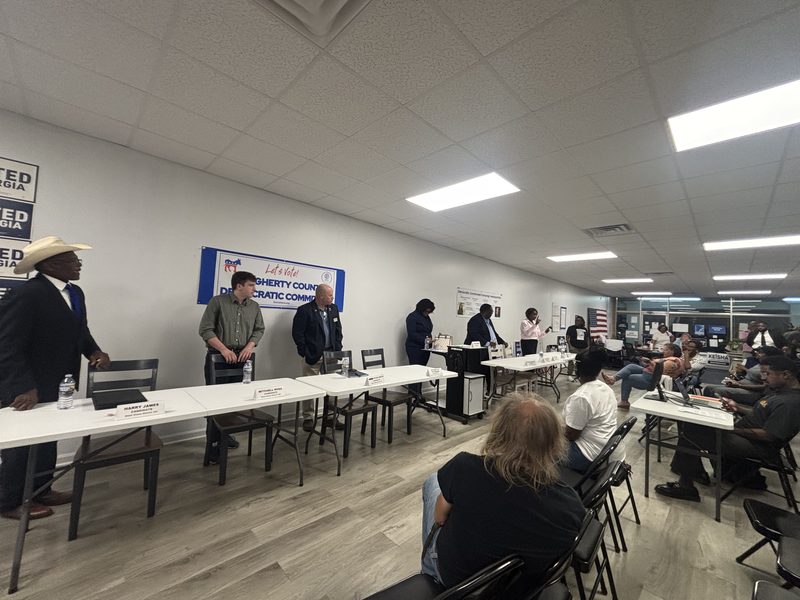
Candidates debate health care, development, rural investment at Albany forum
Candidates seeking to represent Southwest Georgia called for greater investment in health care, education and infrastructure during an Oct. 1 forum, but differed over data centers, economic development and how to work across party lines.

Former Dougherty Commissioner Harry James challenges ‘dean of legislature,’ Gerald Greene
Georgia voters go to the polls on Nov. 3.Among the state House races on the ballot in southwest Georgia is District 154, where incumbent Republican Gerald Greene will face Democratic nominee Harry James.
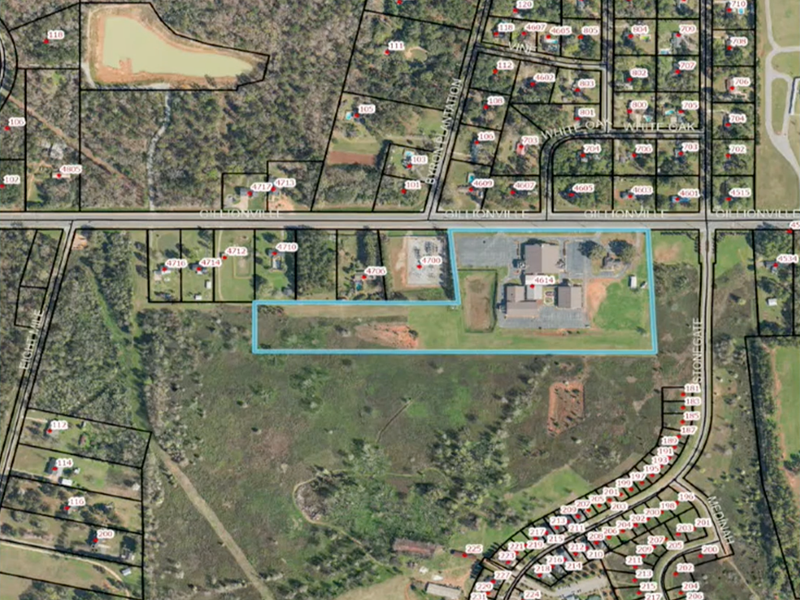
County approves 198-foot Gillionville Road cell tower; no speakers at public hearing
Dougherty County commissioners unanimously approved a 198-foot cell tower behind a church on Gillionville Road, with no one speaking for or against it at the public hearing.
