
Blackberry Smoke celebrate 25 years with tour supporting greatest hits: ‘Rattle, Ramble and Roll’
Blackberry Smoke frontman Charlie Starr talks to The Albany Herald about the band’s show here Oct. 22.
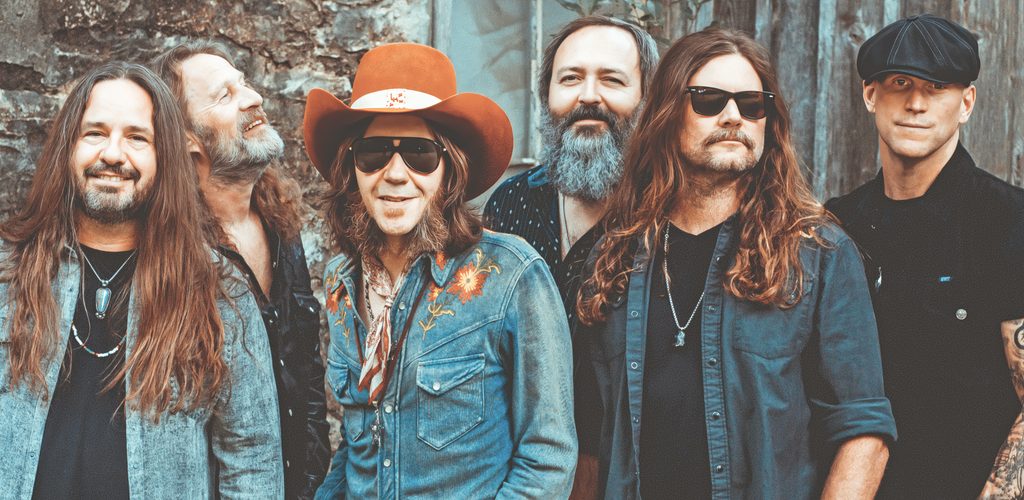
Area favorites Blackberry Smoke are scheduled to perform at the Albany Municipal Auditorium on Oct. 22. Special Photo: Andy Sapp
When Charlie Starr, one of the founders and the lead singer of Southern rock/Americana/country warriors Blackberry Smoke, answers the phone, I break the ice by mentioning that his band’s music is popular in the Fletcher household.
“My wife was program director/on-air personality in radio for more than 20 years, and at stations in Tifton and Albany she – and I, since she was kind enough to allow me air time – played a lot of you guys’ music … “What Comes Naturally,” “Ain’t Much Left of Me,” “You Got Lucky,” “Keep on Smilin,’” “Southern Child,” “Azalea” …,” I say as a way to break the ice.
“That’s cool,” Starr replies.
So I tell him my wife had asked a question that’s a pretty simple, straight-to-the-point one about how Blackberry Smoke got its name.
“Chris Robinson of the Black Crowes actually gave it to us,” Starr says. “Chris was best friends with our late drummer, Brit Turner, and we were sharing rehearsal space at the time. We’d formed our band out of another band, and when we came up with a name, we found out someone else already had that name. We were thinking about names because we’d already booked a show. Brit and Chris were talking, and Chris just says, ‘Dude, you need to call your band Blackberry Smoke.’ So we did.”
Starr and his bandmates in Blackberry Smoke, including original members keyboardist Brandon Still, guitarist Paul Jackson and bassist Richard Turner, will be in Albany Oct. 22, performing at the Albany Municipal Auditorium. The performance is a return for the road warriors, local favorites who’ve, for some reason, always been “too rock for country radio” and “too country for rock,” so they’ve left it to fans to find their music.
That’s been a given, as three of the band’s albums – “Holding All the Roses,” “Like an Arrow” and “Be Right Here” – have scored No. 1 chart positions on Billboard magazine’s Americana, country and folk charts. Blackberry Smoke are currently touring in support of last year’s best-of release, “Rattle, Ramble and Roll.”
Starr took some time to talk about the band with The Albany Herald.
ALBANY HERALD: Twenty-five years (as a band) … man, nobody stays together that long anymore. What does a milestone like that mean to you?
CHARLIE STARR: It means the world for us to kind of stand back far enough to see all that’s gone on in those years. It’s been great, but it doesn’t really feel like 25 years.
AH: Do you and the band find yourselves maybe getting a little nostalgic at times, maybe looking back over a career that’s lasted this long?
CS: There are so many things that stand out: Recording and singing with George Jones, making music and touring with people like Billy Gibbons, Gary Rossington, Bob Weir, Paul Riddle with the Marshall Tucker Band … the list just goes on and on. If I sat down and made a list of all the great musicians we’ve played with, it would be truly mind-blowing.
AH: Please don’t take offense – I know you guys have a lot of fans and you’ve had a lot of success – but there are a lot of people, myself included, who feel the band should be even bigger. Are you OK with y’all’s place in music?
CS: Yeah, I’m really OK with it. Sure, I’d love to play sold-out stadiums every night and have hit songs on the radio. I remember when we made our album “Whippoorwill” with Zac Brown, Zac felt that several songs on that album would be radio hits. He actually put his radio team on it, but they just came up with every excuse why the songs wouldn’t get played on country radio. And, of course, rock radio wouldn’t play it because it was ‘too country.’ Zac really felt “Ain’t Got the Blues,” “Pretty Little Lie,” “One-Horse Town” and “Ain’t Much Left of Me” all had a chance to be hits, but he ended up just as frustrated as we were when radio just wouldn’t play those songs. We’ve learned over the years to just take it as it comes. We’re too old to change now, so we do what we do. Maybe if the suits had caught us when we were 18, we might have cut our hair and sung pop songs.
AH: I kind of put y’all’s album “You Hear Georgia” in a category with drivin’ ‘n’ cryin’s “I See Georgia,” a category that pretty much excludes anyone outside the state. Was your album intended as a tribute to Georgia?
CS: Not really. We released the album around the time of COVID (2021), and it was election time. There was a politician I heard on TV who had a Southern accent, and I thought he had some good things to say. But the people doing the interviews obviously didn’t hear what he was saying. I’m from Alabama – we’re in Atlanta now – and I’ve found that people from up North are oversensitive to the past of the South. So I’ll be asked something like, “Is everyone down here still racist?” The way I see it, you can find that stuff if you look for it, but this is the 2020s, not the 1940s. There are no more Jim Crow laws on the books. I was in the studio, working with (producer) Dave Cobb, and I came up with this idea: “You hear Georgia when I open my mouth …” and the song took off from there. It’s an attitude people from the North have about Southerners.
AH: I’m reading a book in which Paul McCartney talks about all the songs he’s written, with The Beatles, Wings and as a solo artist. One of the things he said that struck me is that he and John Lennon started out writing what they thought fans wanted to hear and ended up writing more for themselves. What about when you write songs; who do you write for?
CS: It’s impossible for me to nail it if I try to write what I think people might like. I’ve done this thing where I’ll play a song for my wife, my best friend and for other band members, thinking it’s something they’ll like, and they’ll be like, “OK.” Then, I’ll write something that I really feel, and they’ll get it immediately. When I was writing “Azalea,” my wife and son walked in and heard just one word, and they said, “I love that. I felt it.” I think you have to write what you’re feeling. People can sniff out a fake from a mile away.
AH: What are the best songs you’ve written?
CS: I have no idea. I never pick favorites. It changes from week to week anyway. I might go a period of time and not sing a song, and someone will request it, and I say, “Oh, yeah, I like that one.”
AH: I know you’re a musical lifer, but with any job, there are always ups and downs. Was there ever a time you wished you were doing something else? And, if so, what would you be doing?
CS: I used to work at a body and paint shop growing up, and there are times I miss that. I miss that feeling of finishing a job, getting it done. My dad and I still have a place in Alabama that we were going to do some work at, but he’s retired now, so I don’t know if we’ll ever get to it.
AH: You guys are playing Albany, in a mid-sized market. Does the size of a community or venue influence how you do your shows?
CS: No, we just play the show.
AH: And so what can fans expect when you guys play here in Albany?
CS: We’re going to give y’all a little bit of everything.
Author
Related Articles

Albany burning
Albany firefighters battled a two-structure blaze in the city’s downtown just before noon Friday.
‘It’s time to listen to us’: Lee County school tax proposal draws fire
A longtime Lee County resident urged the school board to reject a proposed property tax increase during its first public hearing Oct. 8, questioning spending priorities and warning about the burden on families and older residents.
Incumbent Bill Yearta, newcomer Mitchell Rosa vie for state House District 152 seat
The Georgia House District 152 race features Republican incumbent Bill Yearta and Democrat Mitchell Rosa, who is making his first run at political office. The two candidates will be on the ballot for voters in Lee and Worth counties and southeastern Dougherty County on Nov. 3.
