
Bo Dorough: Albany’s ship headed in wrong direction, needs a change in course
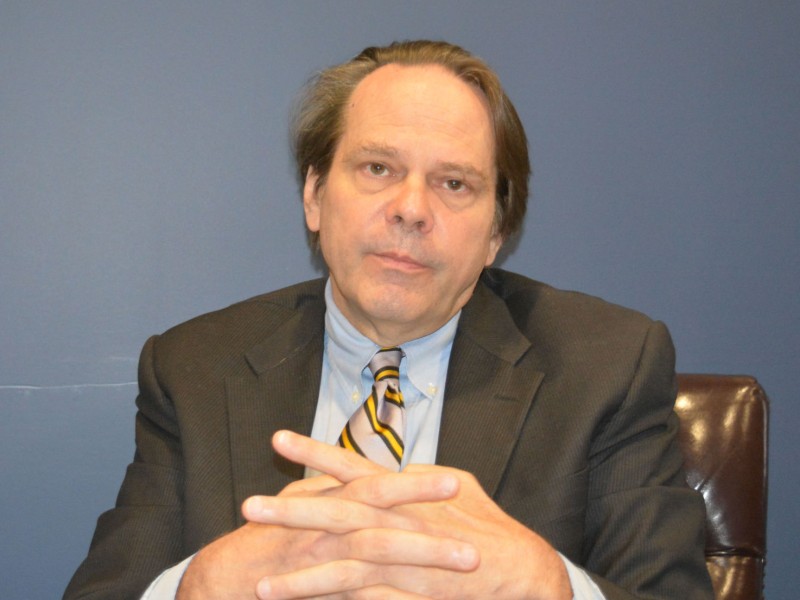
File Photo: Alan Mauldin
By Alan Mauldin
[email protected]
ALBANY – In the past decade, Albany has seen a seemingly perfect storm of negatives hitting the city, according to mayoral candidate Kermit “Bo” Dorough.
While violent crime rates have been flat nationally, the Albany attorney said, they have increased in Albany; where poverty is declining in much of the country, it’s going up here; there are less people employed in the city than there were 10 years ago.
“There’s no question Albany is moving in the wrong direction,” Dorough, a former Albany City Commissioner, said. “Our rates of property crime are three times the national average. Between 2011 and 2017, violent crime in Albany, Georgia, went up over 39 percent.”
One way Dorough said he would tackle the crime issue is returning police precincts to communities.
“We need a precinct in south Albany; we need a precinct in east Albany,” he said. “With technology, they can identify when the crimes are committed, where the crimes are committed and identify hot spots. There is a curfew on the books. When is the last time it’s been enforced?”
Recruiting – and keeping – qualified officers is a major hurdle for the Albany Police Department, Dorough said, and may require some creative solutions. Some departments, for example, pay officers a $5,000 bonus after five years on the job.
“We have a police department with 27 vacancies,” he said. “Of course public safety is going to be the priority of any local government. So somebody’s asleep at the switch (here). We should not lose any offices to any agencies in the southwest Georgia area because of the pay scale.”
Dorough said he also thinks the city should undertake a study to evaluate the reason behind the high number of vacant officer positions and how it can make their jobs more rewarding and, as a result, reduce turnover on the force. If the department is top heavy with officers at desks, some of them should return to the streets.
The city hired a consultant in 2010 to perform a poverty analysis, Dorough said. At the time, the poverty rate was 27 percent. Now it’s at 33 percent, while nationally, poverty dropped from 15 percent to 12.5 percent over the previous nine years. And in 2018, the 24/7 Wall St. website ranked Albany as the seventh-worst city in the nation among cities with populations of 50,000 or greater.
“That means one in three of our citizens lives below the poverty level,” he said. “You can’t say this is a national trend. These are unique problems that are a trend in this city.
“The objective is to reverse this higher poverty rate, and that’s going to take a combined effort: the school system, churches, the community, parents. What the city can do is (implement) plans that are already on the shelf that would improve the quality of life for the people.”
The city has developed plans for crime-prevention and dealing with blighted neighborhoods, Dorough said, but they are either “sitting on the shelf” unimplemented, not funded or both. That includes a land bank tasked with acquiring and fixing up salvageable properties for sale or demolishing those that aren’t salvageable.
“Albany has a blight tax,” that allows charging owners of blighted properties up to three times the assessed property tax rate, Dourough said. “I would like to find out how many times landowners have been assessed that property tax. If you have ordinances on the books and you don’t staff and enforce it, nothing is going to be done.”
The area’s economy has been dealt some major blows in recent years, including the loss of Bobs Candies and, in particular, the Cooper Tire Co. plant, Dorough said.
“All these problems are interconnected,” Dorough said. “Somebody’s got to bring leadership and vision. High-paying jobs are not a complete panacea, but that’s going to put us on the right course.”
One way the city could boost the economy, he says, is by building solar power plants. Green energy is both in demand and using some of the millions of dollars Albany received for its utilities arm. Two 200-acre and one 400-acre solar farm could become reality, and Dorough identified a ready-made funding source.
On the last, Dorough was referring to some $76 million in credits received from the Municipal Electric Authority of Georgia. Those proceeds were collected partially as a hedge against anticipated electricity deregulation that did not come to pass and have been coming in to the city since 2017. That money has been split equally between city utilities, the city government and a Job Enhancement Fund.
“This (money) is a windfall, a once-in-a-lifetime thing,” Dorough said. “We are putting solar farms all over. You could build a 200-acre solar farm for about $3.5 million (and) provide electricity for 6,000 homes. Some of that MEAG and SPLOST funds should be used for that.”
The current presidential administration has overturned some clean-air initiatives, but when the pendulum swings back the other way, the city would be perfectly positioned, Dorough said.
“Don’t you see how that demand for green energy is going to spike once that clean power plan comes back into effect,” he said. “We could reduce property taxes, our citizens would see reduced bills and there would ultimately be more revenue for local government. This is an exciting opportunity. It ought to be embraced.”
Dorough also said he thinks combining the former WG&L Commission with the city was a mistake, one the he would work to reverse if elected.
“The reason we have WG&L is to provide gas and electricity to customers at a competitive rate while augmenting the city budget,” he said. “The transfer of revenue from that (entity) should be transparent. It should be autonomous. Public Works should be separate. There’s no justification for Public Works to be under that board.”
Downtown, Dorough said he would like to see a tennis center. Funding for the project was collected years ago through sales taxes, but no action has been taken on making it a reality. Citywide, recreational facilities need to be better maintained.
He also criticized the current City Commission for cutting funding to Chehaw park.
With the last of his children moving out of the nest, Dorough said he has the time and ideas to help reverse some of the problems he outlined.
“I’ve thought about it,” he said. “Instead of saying they’re wrong, I need to do something to fix it.”
Author

Related Articles
Albany Herald – June 20, 2026
City Albany faces shortfall for police… Women’s Anchorage tentatively set to… Commissioner, school leaders clash over…

Classifieds – June 20, 2026
ALBANY HERALD CLASSIFIEDS JUNE 20, 2026
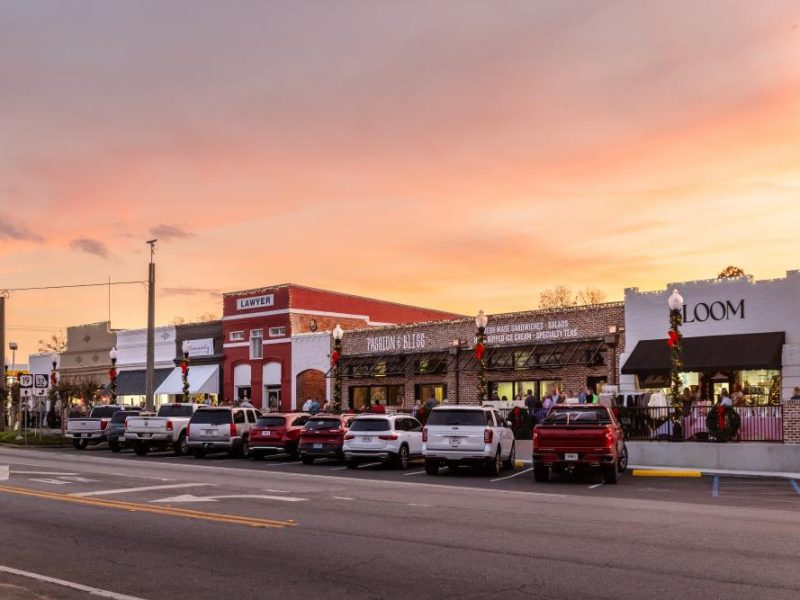
Public safety drives Leesburg’s $4.2 million Fiscal Year ’27 budget
The adopted spending plan reflects modest growth in city revenues and continued emphasis on maintaining core municipal services, particularly public safety and sanitation, which together account for a significant share of general fund expenditures.
