
BOB KORNEGAY: The bluff beckons
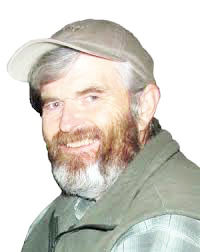
Bob Kornegay
It’s a strange place, an anomaly. Something of the proverbial “Lost World,” frozen in time.
Here geology, topography, botany and zoology have a sense of humor. They are practical jokesters. First thought: North Florida? No way.
But here it is. The map and GPS don’t lie. The coordinates are accurate. A few miles north of Bristol and a wee hop south of Chattahoochee. North Florida through and through.
The visitor isn’t at first astounded. He dons his pack, laces his boots, fills his canteen, and strides off through sandhill/scrub country. A rare environment; fast disappearing, but typical, familiar. It’s the descent into the first ravine that takes him aback. Sandhill and scrub giving way to what? Appalachian cove forest? Sure looks like it. Again the passing thought: North Florida? Can’t be.
This is the Nature Conservancy’s Apalachicola Bluffs and Ravines Preserve. Six thousand acres of uniqueness thoughtfully set aside and saved. Thank heaven. It now belongs to the ages, as is, one of the last great places on earth.
Eons ago, creeping Ice Age glaciers inexorably crept southward through what is now North America, carving deep scars into portions of coastal plain landscape and bringing with them flora from cooler climes and higher elevations. Upon their eventual retreat, these ice “rivers” left behind seeds, spores and soil in which these organisms could take root and grow. In seemingly calculated fashion, the land rose up and geologic sculpting continued.
Springs bubbled from the earth, giving birth to clear trickling streams that carved the deep ravines. The Apalachicola River, the master sculptor, twisted and turned, slowly but surely wearing away the land layer by layer. The river’s handiwork is evidenced here by steep, precarious bluffs, high-country terrain in a land otherwise inundated by lowland swamp and coastal plain pine forest. The bluffs are brittle. They succumb to the river’s manipulation and drop away. When shall they next do that? Tomorrow? A hundred years from now? Within the next few minutes? It’s something a visitor here thinks about as he stands near bluff’s edge. He can’t help it. It’s a long way down.
There’s a pathway, the Garden of Eden Trail. An ambitious name, but apt in some ways. Traversing it affects one a little like a religious experience. The feeling’s the same no matter how often one visits. The oneness of the place is awesome, almost overwhelming. It creates a dilemma, actually. What does the naturalist do here? Does he study the birds, the mammals, the reptiles and amphibians? Does he concentrate on the plant life alone? Does he spend his time contemplating the geological wonder, the topographical weirdness? Do one or the other or all and he’s bound to miss something. No matter. It’s a never-ending excuse to come back another day.
A trek here is no “walk in the park.” The bluffs and ravines refuse to make it easy. Tree roots impede one’s step. Slopes are slick with dewfall or recent rain. At best the heart must be sound. Each outing is a gauge of physical fitness. Even the sturdiest must pause for respite. Still, stopping in mid-climb or mid-descent to catch one’s breath does not deter. The hiker is merely reminded that what’s worth doing is worth the effort. He is also reminded that here is a road less traveled, a trail few traverse more than once. Those who return are dedicated lovers, persistent suitors. It is good to be counted in their number.
There are many great natural places on earth that lure me. Too many to name and too little time to see them all. Many are remote, far removed. All are wonderful. How strange to think I “discovered” this one so late in life, this other-worldly piece of Earth I should have trod years ago.
Ah, but the old adage is true. It is indeed better late than never. And how fortunate I am. A mere two-hour’s drive brings me here. What awaits me today? A new butterfly? A wildflower not yet seen? An elusive bird for my list? Perhaps even a brief glimpse of a Florida black bear?
That’s the real lure after all; never knowing what one might encounter, no matter how often he comes.
You come, too, why don’t you? The bluff beckons.
Related Articles

Classifieds – June 20, 2026
ALBANY HERALD CLASSIFIEDS JUNE 20, 2026
Albany Herald – June 20, 2026
City Albany faces shortfall for police… Women’s Anchorage tentatively set to… Commissioner, school leaders clash over…
Public safety drives Leesburg’s $4.2 million Fiscal Year ’27 budget
The adopted spending plan reflects modest growth in city revenues and continued emphasis on maintaining core municipal services, particularly public safety and sanitation, which together account for a significant share of general fund expenditures.
